The Current Federal Court System - Why You Get The Run-Around
From: Karl Granse kgranse@earthlink.net
Sent: Wednesday, January 23, 2002 2:21 AM
Subject: The Current Federal Court System - Why you get the run around, and
XXXXXX in the end!
I am re-sending this article, written by a number of Law Professors, (AT LEAST A
YEAR IN THE MAKING) they are politically correct, but even THEY are pulling out
their hair in frustration, they now want new laws from Congress, to impeach
federal judges for not obeying and not ruling upon the statutes as Congress has
written them in black and white. They are making recommendations to Congress to
put an end to these "ex post facto" writing bunch of judges. This is by far, the
best article I have ever read on the subject of judge made ex post facto law.
YOU AND I ARE NOT AT FAULT, IT'S NOT OUR PROCEDURES FOR THE MOST PART, THAT
CAUSE LOSSES IN THE COURT - IT IS THE JUDGES - AND HERE IS YOUR PROOF - - IN
BLACK AND WHITE
This is a must read, yes its long, but it gives you the word use knowledge and
examples of how the judges avoid the truth in law and fact, and instead support
their own agendas for their one world order, by use of your paper money and
slave labor. The article also contains 355 Footnotes, helpful case law, etc.
The greater the number of people that know about this evil, the greater amount
of energy can be generated to fix it! Judicial Watch is also a good team for
some solutions in addressing the corrupt federal courts.
IT IS A CRIME FOR JUDGES TO WRITE LAW - ONLY CONGRESS HAS THAT POWER AS GIVEN BY
THE CONSTUTION
ASK YOUR SELF - - - IF WE COULD GET THE JUDGES TO FOLLOW THE LAW AS WRITTEN AND
STARE DECISIS - HOW WOULD THAT CHANGE HOW THE GOVERNMENT ACTS TOWARDS THE
CITIZENS?
In all ways, the strategy and main theme of the government HAS BEEN AND IS to
secretly and slowly brainwash you into a belief concept, that is; the walls
oppression are closing in on you, and no matter what energy you put forth, you
will not be able to defend yourself against their oppression (changes), no
matter what law (case/constution/statute) you use as a sword to defend yourself,
it will have no effect. They want you to feel defense-less, hopless, broken,
isolated, and conqured, thusfore leaving you only one way out, that way out is
the complete acceptance of your new role as a mental and physical slave to the
666 system.
How do you reclaim your God given birthright?
What do bad bad bad judges, politictians, congressmen, senators, officers,
employees fear most, "being found out". How do you conqure them personally, use
the great power of "embarrassment", PUT A BIG STRONG PUBLIC LIGHT ON THEIR LIES
- DECEPTION - THIER UNCONSTITUTIONAL GOALS! Catch them in their lies (ENRON),
then take the ant hill, and turn it into a HUGE STINKY MOUNTIAN, (something the
public wants to get rid of) use three to five word sound bytes to destroy their
so called "good reputation or public impression". The smaller the lie, the more
easy it is for the public to understand it. If you have to explain the lie or
method of deception to the public - it won't be as effective. Use absolute back
and white documented proof at all times. Make the evil one feel insecure for
lack of public support, "after all why should the public support a low-life lier
like them". Should a judge get paid to lie or decieve the public? Should a
congessman, senator, or president get paid to line his pocket with ENRON money?
Should we pay for a war so corporations on the take, can steal other peoples
drugs and oil? Should we pay to support a intra-government that allows the WTC
disaster to take place in broad day light? Make them feel not wanted, and not
important, create the public illusion that their evil time on earth has come and
gone, and there is no room left for them on earth.
WE ARE NOT UN-AMERICIAN - - - - - - -
ONLY THEY THAT USE THEIR PUBLIC OFFICE TO LIE AND DECIEVE THE PUBLIC ARE UN-AMERICIAN
! ! !
AND THEY DON'T BELONG HERE IN AMERICA - THERE IS NO ROOM LEFT FOR THEM
Karl G. (Bacon) Granse . . . . the dragon slayer . . . now give me my damn sword
back you guys!
THE STATUTORY TERM ANALYSIS (STA) METHOD
Vincent P. Tassinari*
TABLE OF CONTENTS
ABSTRACT
SYNOPSIS
INTRODUCTION
I. ELEMENTS OF A STATUTE
II. STATUTORY TERM ANALYSIS & CONSTITUTIONAL TERM ANALYSIS
A. Patent Claim Construction
B. Statutory Term Analysis (The STA Method)
1. The Relevant Statute for Analysis
2. Law Text Change from Old Law to New Law
3. The Statute at Issue
a. The Statute's Text Body
b. The Statute's Preamble & Title
c. Floor Discussions, Bills, Reports
i. Floor Discussions
(A). The President's Legislative Power
(B). Other Issues
ii. Bills
iii. Reports
d. The Statute's Progression History Estoppel
e. Extrinsic Evidence
i. The Role of Interest Groups in
Procuring Legislation
ii. Existing Legislation and Judicial
Analysis
iii. Transcripts from Committee Hearings
iv. How the Rules of the STA Method Work
f. Conclusion: The Term at Issue
4. Conclusion: The Statute at Issue
5. Comments on the STA Method
C. Constitutional Term Analysis (The CTA Method)
1. Intrinsic Evidence Use
2. Extrinsic Evidence Use
III. THE SOLUTION TO TRIER OF LAW JUDICIAL ACTIVISM
A. Trier of Law Judicial Activism
B. Current Solutions Are Ineffective
C. The Three-Pronged Approach
1. The Proposed Temporary Solution
a. Divide the Ninth Circuit
b. The Federal Circuit as the Additional Appellate
Tier
2. The Proposed Permanent Solution
a. Constitutional Authority
b. The Judicial Activist Movement
c. The STA Method Advantage
i. The Judiciary Will Benefit
ii. The Legislature Will Benefit
iii. Others Will Benefit
3. Non-Legislative Contributions
a. Impeachment
b. Law Students, Attorneys, & the Courts
c. The Role of the Judiciary in Updating Statutory
Law
IV. RECOMMENDATIONS
ABSTRACT
In 1986, Chief Justice Rehnquist observed that "what lawyers and litigants in
our country's federal courts are seeking to know [is] the meaning of a
particular [term in a statute]."1 To this end,
Professor Tassinari asserts the Statutory Term Analysis (STA) Method as a
useful, new, and nonobvious method of analyzing for Congress' meaning of a term
in a federal statute. After thoroughly analyzing the current state of Congress'
power to make all laws, judicial activism, and separation of powers, Professor
Tassinari establishes that Congress is to blame for the judiciary's inability to
confine itself to its assigned responsibilities by reason of Congress' failure
to enact laws necessary and proper for carrying into execution Congress' Article
I, Section 8, Clause 18 power.2 This is contrary
to the political, economic, religious, social, intellectual, and artistic
thinking of the last 211 years. To shield Congress' power to make all laws from
the continued, exponential growth of the unchecked Judicial Activist Movement of
the late 1930's, Professor Tassinari concludes that Congress must enact the
rules of the STA Method into the Federal Rules of Evidence as a necessary and
proper means for carrying into execution Congress' Article I, Section 8, Clause
18 exclusive power. In this way, the excessive power of the Supreme Court will
then fill in the deficient power of Congress to balance and bring to separation,
coordination, and cooperation the powers granted by the People under our
Constitution to these two branches.
SYNOPSIS
Figure 4 and Figure 2 below are discussed separately in this article but are
provided here for comparison. Figure 4 represents the current state of Congress'
power to make all laws under Article I, Section 8, Clause 18. As shown in Figure
4, the trier of law implements that judge's own meaning of a term in Congress'
statute by supplying factual evidence from any available information to
establish the scope of the subject matter of that statutory term. This judicial
activism by the trier of law is behavior that is not maintained above Article
III, Section 1 "good Behaviour."3 Figure 2 shows
the changes proposed by this article. As illustrated in Figure 2, the Statutory
Term Analysis (STA) Method replaces the objectionable practice of trier of law
judicial activism in favor of Congress supplying the factual evidence from the
Congressional Record to establish the scope of the meaning of each statutory
term. These proposed changes work towards vesting Congress' power to make all
laws in one Congress.
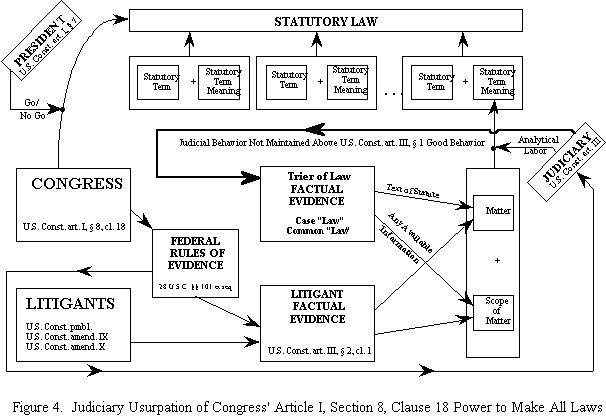
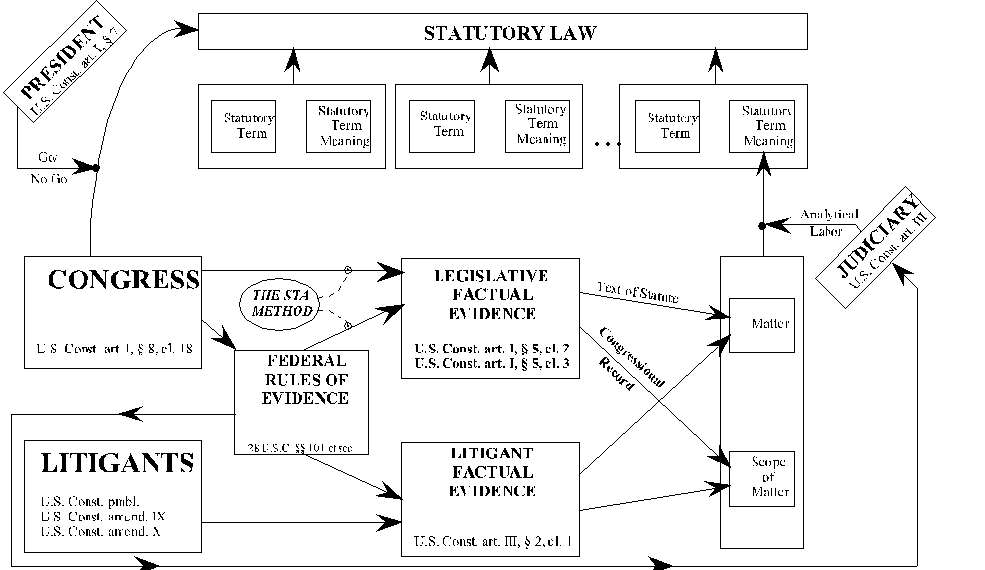
Figure 2. Congress' Article I, Section 8, Clause 18 Power to
Make All Laws
INTRODUCTION
In April, 1997, I began writing a law review article concerning the amount of
statutory compensation a holder of an invention patent was entitled to under the
federal patent infringement compensation statute 35 U.S.C. § 284.4
Several clues indicated that the practice of law in the courts regarding this
statute was inconsistent with the law enacted by Congress. In other words, there
were several indications that the courts were not complying with Congress'
statutory law. For example, in one paragraph of an issued opinion, the court
correctly pointed out that § 284 expressly stated that a "reasonable royalty" is
a floor measurement below which no award could fall, rather than an amount to be
awarded. In the next paragraph of that same opinion, however, the court
contradicted its "floor" statement and actually award a reasonable royalty.
Another clue was that the courts treated Congress' statutory law as common law
to derive support from the common law of contracts for the courts' conclusions
as to the federal tort of patent infringement. The strongest clue was that the
term "lost profits" was routinely used in §284 court opinions, even though that
term did not appear in the text of 35 U.S.C. § 284.
In developing the resulting article titled Patent Compensation Under 35
U.S.C. § 284 (hereinafter "Patent Compensation"),5
I faced the same problem that courts have routinely faced since Congress'
declared our Constitution in effect in 1789: determining the meaning of terms in
a statute through the use of an appropriate analytical tool. Regarding such an
analytical tool, Justice Frankfurter observed in 1947 that:
No matter how one states the problem of statutory
construction, for me at least it does not carry its own answer. Though my
business throughout most of my professional life has been with statutes, I
come to you empty-handed. I bring no answers. I suspect the answers to the
problems of an art are in its exercise. Not that one does not inherit, if one
is capable of receiving it, the wisdom of the wise. But I confess unashamedly
that I do not get much nourishment from books on statutory construction, and I
say this after freshly reexamining them all, scores of them.6
Judge Posner of the Seventh Circuit noted in 1983 that:
It has been almost fifty years since James Landis
complained that academic lawyers did not study legislation in a scientific
(i.e., rigorous, systematic) spirit, and the situation is unchanged. There are
countless studies, many of high distinction, of particular statutes, but they
are not guided by any overall theory of legislation, and most academic
lawyers, like most judges and practicing lawyers, would consider it otiose,
impractical, and pretentious to try to develop one. No one has ever done for
legislation what Holmes did for the common law.7
Moreover, Justice Scalia came to a similar conclusion five years later:
I am left with a sense of dissatisfaction, as I am sure you
are, that a discourse concerning what one would suppose to be a rather
fundamental-indeed, the most fundamental-aspect of constitutional
theory and practice should end so inconclusively. But it should come as no
surprise. We do not yet have an agreed-upon theory for interpreting statutes,
either. I find it perhaps too laudatory to say that this is the genius of the
common law system; but it is at least its nature.8
During the summer of 1996, while writing an amicus brief to the Supreme Court
on the equitable tolling of the federal income tax refund statute 26 U.S.C. §
6511,9 I discovered that there is no overall
analytical theory of legislation. Since no one had developed an appropriate
statutory term analysis tool in the 210 years following the 1787 Constitutional
Convention, I created the Statutory Term Analysis Method (hereinafter "STA
Method") during the summer of 1997 and applied this powerful analytical tool to
the terms in 35 U.S.C. § 284. In doing so, I was able to show that, through the
Patent Act of 1946, Congress enacted into law the authority and responsibility
for the courts to award patent compensation as the wrongdoer's gross income less
fixed costs, irrespective of the plaintiff's economic capacity.10
This conclusion is contrary to the patent reasonable royalty practice of every
federal court since 1964.
During the thirty-four years since 1964, individual inventors and small
businesses have lost millions of dollars in patent infringement compensation,
contrary to Congress' meaning of the terms in 35 U.S.C. § 284, whereas large
corporations have remained unaffected by this practice of patent law in the
federal courts. The burden of this huge disparity between Congress' statutory
award scheme for the strict liability tort of patent infringement and the
economic capacity award practice of the federal courts under what is essentially
the common law of contracts, fell on the shoulders of plaintiffs who were poor,
whereas the rich received the compensation authorized by Congress under § 284.
This begs the question of why the courts have favored rich, large corporations
in patent infringement cases and discriminated against individual inventors and
small businesses, contrary to the law enacted by Congress. The answers that I
found through my analysis in Patent Compensation were disturbing. I
traced the economic capacity distinction to obiter dictum in the 1964 Supreme
Court case of Aro Manufacturing v. Convertible Top Replacement Co.
(hereinafter "Aro II").11 Through
egregious trier of law judicial activism, Justice Brennan and three other
Justices subverted the Constitution by usurping Congress' vested power to make
all laws to gut the meanings of the terms in Congress' patent law and judicially
enacting their own meanings for Congress' statutory terms.12
This behavior of the four Justices in Aro II caused devastating effects
on court opinions and the rule of law, on litigants who sought and continue to
seek justice, on Congress, and on the entire judicial system.13
In researching Patent Compensation, I concluded that trier of law
judicial activism was not endemic to the Aro II case or even to patent
law, but pandemic to all federal law. Thus, the primary purpose of this article
is to convince Congress to enact the rules of the STA Method into the Federal
Rules of Evidence as a means of rebalancing the powers between the Legislative
Branch and Judicial Branch, consistent with Congress' vested power to make all
laws under Article I, Section 8, Clause 18. In Part I, I classify the elements
that make up a statute and characterize the difficult task of analyzing
Congress' meaning of a term in a statute. Part II provides the justifications
for the rules of the STA Method. Since the rules of the STA Method will also
work for terms found in the Constitution, Part II provides justifications for
the rules of the Constitutional Term Analysis Method (hereinafter the "CTA
Method"). Part III discusses judicial activism, separation of powers, and the
current solutions being implemented to combat judicial activism. Part III
continues on to offer a three pronged approach led by the rules of the STA
Method as the solution to the serious, separation of powers' problem caused by
those involved in the Judicial Activist Movement. Part IV contains a compilation
of ten recommendations for Congress. The main recommendation being enacting the
rules of the STA Method into the Federal Rules of Evidence.
I. ELEMENTS OF A STATUTE
A federal statute is a group of written terms tangibly fixed as a unit in a
government issued document specifying the subject matter that the Constitution,
through Congress as a whole body, regards as the claimed law. A statute may
contain more than one unit, and each unit may be regarded as a law in and of
itself. For example, in the fictional statute 99 U.S.C. § 201, assume that
section 201(a) sets out the requirements for liability and section 201(b) sets
out the requirements for remedy. Here, section 201(a) may be regarded as one law
and section 201(b) may be regarded as the second law within the same statute.
The seven articles and twenty-seven amendments of the Federal Constitution may
also be delineated in a similar way.
Regarding a specific unit identified as a law such as section 201(a)
mentioned above, each law is comprised of one or more terms. Moreover, the terms
that make up that law may contain one or more words. Where a term contains more
than one word, each word of the phrase may be regarded as a term in and of
itself. For example, if section 201(a) contained the term phrase "deadly
weapon," there would be three terms to this term phrase: (i) weapon; (ii)
deadly; and (iii) deadly weapon. Each of these three terms has its own meaning.
That meaning is comprised of subject matter of a finite scope. In other words,
meaning = subject matter + scope of subject matter. In the case of the term
"deadly weapon", the matter and scope of the terms "weapon" and "deadly"
contribute to the matter and scope of the third term, "deadly weapon."
In court, the matter and scope of a statutory term are dependent on the
context of the factual issues brought before the court by the litigants. The
context of the litigant factual issues brought before the court is what
comprises a case or controversy as required by the Constitution.14
Thus, limited by the context of these litigant facts, the trier of law must
analyze the relevant and timely legislative factual evidence to conclude as to
the matter and scope of each term at issue. For example, assume that the only
term at issue before the court is the term "deadly weapon" in the above
fictional law section 201(a). Here, the overall duty of the trier of law is to
determine whether the litigant's factual issues are within, or outside of (i.e.,
without), either (A) the matter or (B) the scope the term "deadly weapon."
Under Boolean logic, there are four possible outcomes to the propositions of
whether the litigant's factual issues are within or without either (A) the
matter or (B) the scope. That is, the four possible propositions are: (1) within
the matter and within the scope; (2) without the matter, but within the scope;
(3) within the matter, but without the scope; and (4) without the matter and
without the scope. The relationship among four propositions and the four
possible outcomes can be made explicit through the use of a diagram called a
truth table.
Proposition |
Matter (A) |
Scope (B) |
A |
B |
A & B |
Possible Outcome |
Defense |
(1) |
Within |
Within |
T |
T |
T |
Liable/Guilty |
Affirmative |
(2) |
Without |
Within |
F |
T |
F |
Not Liable |
Prima Facie |
(3) |
Within |
Without |
T |
F |
F |
Not Liable |
Prima Facie |
(4) |
Without |
Without |
F |
F |
F |
Not Liable |
Prima Facie |
Figure 1. Conjunction Truth Table for Term at Issue
Under Boolean logic, Figure 1 above represents what is called a conjunction
(A & B). Only in Proposition (1) circumstances, where the litigant's factual
issues are within both (A) the matter and (B) the scope of the term at issue,
can the defendant ultimately be found liable or guilty, as the case may be. In
the other three propositions, the defendant retains its property or liberty
since the litigant's factual issues are without either the matter or the scope
or both the matter and the scope. Regarding the defenses, affirmative defenses
arise under Proposition (1) whereas prima facie defenses arise under
Propositions (2) through (4).
Figure 2 below is a schematic of Congress' power to make all laws under
Article I, Section 8, Clause 18. The role played by the Congress, the President,
and the Judiciary in legislation is directed by the Constitution and is
illustrated in Figure 2. Regarding Congress' role, the Constitution directs
Congress to establish the legislative factual evidence and Federal Rules of
Evidence concerning this legislative factual evidence,15
each playing a part in the matter and scope of the subject matter of a statutory
term. These are shown labeled as "The STA Method" in Figure 2. As discussed
later in this article, Congress has never implemented into practice these two
structural pieces of Congress' power to make all laws. To this end, the proposed
STA Method bridges the existing gaps from Congress directly to the legislative
factual evidence and indirectly to the legislative factual evidence. Once
enacted into the Federal Rules of Evidence, the Rules of the STA Method will
vest in practice the power to make all laws in one Congress.
Figure 2. Congress' Article I, Section 8, Clause 18 Power to
Make All Laws
Typically, statutory law is comprised of several statutory terms, each term
having a unique meaning. Figure 2 above shows three statutory term/statutory
term meaning combinations. More than three such combinations exist and are
represented in Figure 2 by ". . ."-the ellipsis mark. Typically, only one
statutory term/meaning combination will be at issue during a courtroom trial.
For each statutory term/meaning combination, Congress supplies the legislative
factual evidence for both the subject matter and the scope of that subject
matter. The matter is established in the text of the statute. Moreover, for
reasons discussed in Part II of this article, the scope of this matter is set
out by Congress as a whole in the Congressional Record as floor discussions,
bills, and reports.
At the end of the floor discussions, Congress may vote to pass a bill into
law. After a successful vote, the bill is presented to the President. As shown
in the upper left-hand corner of Figure 2, the President asserts the President's
power to sign this bill into statutory law or return and object (i.e., go/no go
power) as the President so chooses.
Litigants generate litigant facts through their behavior. Where these facts
generate a legal dispute over the meaning of a term in a federal statute, the
entire concern may be brought to court. In court, the trier of law applies
analytical labor to determine Congress' meaning of the term at issue, subject to
the Federal Rules of Evidence and as limited by the litigant factual evidence.
Note that as directed by the Federal Rules of Evidence, the matter and scope of
a statutory term as well as the litigant factual evidence are tested by the
trier of law against a particular level of assuredness (e.g. preponderance,
clear and convincing, etc.). The level of assuredness varies according to what
the trier of law applies it against. In any case, determining Congress' meaning
of a statutory term is the exclusive realm of the trier of law despite any mixed
fact/law issues that may arise.16
Assume that the litigant's behavior brought into legal issue the meaning of
the term "deadly weapon" from the fictional statute section 201(a). Establishing
to a specific level of certainty whether the litigant's factual issues are
within or without either (A) the matter or (B) the scope of the section 201(a)
term "deadly weapon" is a difficult task for the trier of law. The task is made
even more difficult since the matter and scope of the term "deadly weapon" in
the fictional statute are substantially dependent upon the matter and scope of
the term "weapon" and the matter and scope of the modifying term "deadly." Thus,
before even getting to the overall duty of determining whether the litigant's
factual issues are within or without either the matter or the scope of the term
"deadly weapon," the trier of law must analyze the relevant legislative factual
evidence to determine the matter and the scope of the term "weapon", then the
term "deadly", and then the term "deadly weapon." Note that each of these terms
are limited by the context of the litigant factual issues brought before the
court by the litigants.
The good news is that even without knowing the extent of the theoretical
scope of a term in Congress' statute, a court still may conclude as to whether
the litigant's facts fall within or without the theoretical scope. Moreover,
once this primary legislative analysis is done properly for a set of litigant
facts by a court, federal agency, or even within a law review article, the
meaning of that term will be expressly known for that set of litigant facts.
Falling within or without the overall theoretical scope is represented in Figure
3 below.
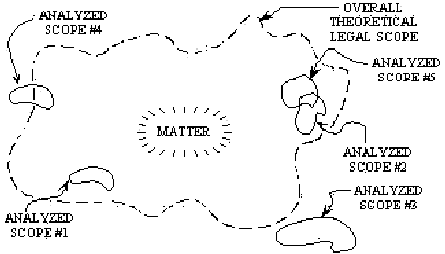
Figure 3. Theoretical and Analyzed Scope of the Matter of a Statutory Term
As shown in Figure 3, both Analyzed Scope #1 and Analyzed Scope #2 fall
within the matter and theoretical scope of the particular statutory term at
issue. The overall theoretical legal scope is shown in dashed lines because the
overall theoretical scope can never be completely known. Analyzed Scope #3, as
shown, falls outside at least the overall theoretical scope, if not the matter,
of the particular statutory term at issue. With Analyzed Scope #4 partially
outside of the overall theoretical scope, no liability can be maintained and
thus Analyzed Scope #4 is deemed outside the overall theoretical scope of the
particular term at issue. Analyzed Scope #5 is shown within the overall
theoretical scope having some litigant facts in common with Analyzed Scope #2.
Other scope scenarios are possible.
Each analyzed scope represents cases with unique facts. As each analyzed
scope of a particular term in Congress' law becomes revealed, subsequent courts
then need only cite to the relevant, primary analysis of that judge, executive
branch employee, or author to support that subsequent court's conclusion
regarding that term. Where the primary analysis is binding precedent, the
subsequent court will adhere to the principle of law under the Doctrine of
Precedent Adherence (in the dead language of Latin, Doctrine of Stare
Decisis). Where the primary analysis is not binding precedent, the court may
adopt the principle of law under the Doctrine of Precedent Adoption (in
the dead language of Latin, Doctrine of Quieta Non Movere). Under either
Doctrine, the subsequent court is exercising its lawful authority rather
than impermissibly deferring to another court, federal agency, or law review
author.17
Over time, each new analyzed scope may fill in the space within the overall
theoretical scope. It is important to note, however, that since the courts are
restricted by the case or controversy requirement to the factual issues before
it, Congress' overall theoretical scope of the subject matter of a particular
statutory term will most likely never be brought out over time by the courts.
Thus, the overall theoretical scope is shown in dashed lines. Just as important,
there is insufficient justification for a court to expressly identify and rule
on the overall theoretical scope of a statutory term since Congress' statutes
regulate behavior in fact, not behavior in the abstract.
What I have been discussing above is intangible; that is to say, it cannot be
touched by the human hand. Real property and personal property can be touched
and, thus, quantified by human hands. In contrast, law is equivalent to
intellectual property in that both are intangible properties of the mind. As
property of the mind, there is no tangible item by which to quantify the
theoretical scope of a meaning of a term in Congress' law. Although Congress'
agreed upon ideas of regulating behavior are tangibly embodied in a federal
document, the overall theoretical scope of these agreed upon ideas is not
susceptible to quantification in the abstract. It is because the overall
theoretical scope of these agreed upon ideas is not susceptible to
quantification in the abstract that the Article III, Section 2, Clause 2 "case
or controversy" requirement restricts the matter and scope of a statutory term
to the context of the factual issues brought before the court by the litigants.
This explains why the case or controversy requirement was placed into our
Federal Constitution by the founders of the United States.
In short, the good news is that our Constitution as it currently exists, is
sufficient for permitting judges to analyze the terms within one of Congress'
statutes. Now for the bad news. The judicial duty of analyzing the terms within
Congress' statute is hard work. This duty actually requires the litigants and
ultimately the trier of law to analyze the relevant and timely Congressional
Record entries that make up the entire realm of the legislative factual
evidence. These Congressional Record entries are made over many months
(sometimes years), are designed for political persuasion, not legal persuasion,
and are generally numerous. Although our Government by Constitution delegates
the burden of proving a legal proposition to the litigants who come before the
court, the judge always retains the responsibility of ensuring that the proofs
set out in the court's written opinion meet the legal certainty necessary to
support its conclusion. Thus, even where the litigants get away with "slacking"
in their professional responsibility to their clients and the court, the court
cannot avoid its responsibility and must support its conclusions through cogent
analysis as published in a written opinion.
The time it takes for a federal judge to analytically address each applicable
Congressional Record entry is in direct conflict with that judge's duty to
process the court's docket in a timely fashion. These docket pressures, as well
as other pressures faced by a federal judge, are sometimes so great that the
trier of law's human nature overcomes the trier of law's self-restraint. Where
the judge's human nature predominates over self-restraint, a particular judge
avoids the hard work of actual judging and instead implements the judge's own
meaning of a term in a statute, even though such behavior falls below the
particular level of good behavior established under Article III, Section I of
the Federal Constitution.18 Where a judge
implements that judge's own meaning of a term in a statute, that trier of law is
referred to as a judicial activist, whose behavior is judicial activism.
The rules of the STA Method can be used to shield Congress' power to make all
laws from trier of law judicial activism as the rules work toward rebalancing
the powers between Congress and the Judiciary. In order to come to agreement
that the rules of the STA Method must be enacted into the Federal Rules of
Evidence to shield Congress' power to make all laws, it is first important to
understand what these rules are and how they interplay with the structure of our
Government. Part II and Part III address these areas, respectively.
II. STATUTORY TERM ANALYSIS & CONSTITUTIONAL TERM
ANALYSIS
Determining whether Congress as a whole reasonably gave a statutory term a
different and particular meaning from that term's ordinary and reasonable
meaning requires structured analysis. By loose analogy to the arcane area of
patent claim construction, this article asserts a useful, new, and nonobvious
method of Statutory Term Analysis (STA) and a useful, new, and nonobvious method
of Constitutional Term Analysis (CTA), both of which may be used in all bodies
of law.19
A. Patent Claim Construction
A patent claim is a group of written terms tangibly fixed as a unit in a
government issued document specifying the subject matter that the inventor
regards as the claimed invention.20 Patent law
revolves around patent claim term analysis (in patent law nomenclature "claim
construction"). Every patent claim term within each issued patent must be
construed in all cases because it is only possible to determine whether the
accused matter reasonably falls within the claim's scope by construing the
claim's terms. Similar to the legislative representative's meaning of a
statutory term or Constitutional term, a patent claim term at issue must be
construed by considering the inventor's meaning of that claim term as expressed
through the undisputed, timely and relevant public record.21
In the case of a patent claim term, the undisputed public records that may
properly be used for term analysis comprise (1) the patent specification with
its (a) claims and (b) written description and (2) the in-evidence patent file
history which contains "the complete record of all the proceedings before the
Patent and Trademark Office"22 by the inventor
or the inventor's agent. Since the patent specification and in-evidence patent
file history is evidence that is intrinsic to the meaning of a term in a patent
claim, it is "always necessary to review the specifications to determine whether
the inventor has used any terms in a manner inconsistent with their ordinary
[and reasonable] meaning."23
Patent claim construction is a critical and recurring problem for every
patent system participant.24 In the same way
that Congress drafts a law, patent attorneys draft a patent claim to cover
future issues for which they have no way of presently conceiving. In the same
way defense lawyers attempt to show that their client's behavior falls outside
the matter or scope of a term in a law drafted by Congress, patent defense
lawyers attempt to show that their client's product or process falls outside the
matter or scope of a patent claim drafted by a patent prosecution attorney. With
the future unknown and the imagination of the inventors of products and
processes unlimited, the need for theoretical legitimacy in patent claim
construction is paramount.
Taking this need for theoretical legitimacy seriously, the United States
Court of Appeals for the Federal Circuit25
responded by developing the most comprehensive set of structured term analysis
rules for any body of law. The Federal Circuit's structured term analysis rules
formed the basis for the Statutory Term Analysis rules and Constitutional Term
Analysis rules set out below.
B. Statutory Term Analysis (The STA Method)
The Statutory Term Analysis Method (hereinafter the "STA Method") is the
analytical method of determining Congress', as a whole body (hereinafter "the
body Congress"), meaning of a statutory term at issue. The STA Method complies
with the Constitution's mandate that vests power to make all laws in one
Congress while maintaining the balance between the judiciary's independence from
politics and the judiciary's accountability to Congress for extrajudicial
actions. It is important to note that, unlike other methods such as
constitutional interpretation or statutory interpretation, the STA Method
focuses on analysis and not on the document containing the term to be analyzed.
Moreover, the STA Method focuses on the term to be analyzed rather than the
method of analysis, such as in originalism and textualism (adumbrative, outlined
analytical methods for which this article supplies the specific analytical
rules); or the Judiciary-end-run-around-Congress-and-the-Constitution-dynamism
model (corrupting analytical method in response to which this article seeks to
shift Congress' usurped power to make all laws from the unelected judiciary back
to the elected members of Congress).
Eisegesis is the method of analyzing the terms of a text by sneaking in one's
own meaning as the author's meaning. For example, the court in Simmons v.
Prudential Insurance Company of America26
stated that if it "were to allow extra-contractual or punitive relief to be
implied in [ERISA 29 U.S.C.] § 1104, it would be reading meaning into a statute
instead of studying [the C]ongressional [Record] to determine meaning reposed in
the statute. It is the difference between eisegesis in the former exercise and
exegesis in the latter."27 However, the purpose
of statutory term analysis by the trier of law is to ascertain the body
Congress' meaning of a term in a statute.28
Thus, "every consideration brought to bear for the solution of that problem must
be devoted to that end alone."29 To address
these considerations, the rules of the STA Method are centered around Article I,
Section 5, Clause 3 of the Constitution. This Clause mandates that "[e]ach House
shall keep a Journal of its Proceedings, and from time to time publish the
same."30 This Congressional Journal has had a
total of four titles: Annals of Congress (1789-1824); Register of Debates in
Congress (1824-1837); Congressional Globe (1837-1873); and Congressional Record
(1873 to present). Under the STA Method, the entire realm of evidence regarding
a term at issue is first divided into two categories concerning the
Congressional Record. Rules of analysis are then set out regarding these two
categories. Each category is then divided into subcategories with rules of
analysis set out for each subcategory. Below are the rules of the STA Method.
In determining the body Congress' meaning of a statutory term at issue under
the rules of the STA Method, there are only two sources of guidance: intrinsic
evidence and extrinsic evidence. Intrinsic evidence is that evidence from the
Congressional Record that is internal to body Congress' meaning of a statutory
term. As stated by the Court in 1982:
It is not the function of this Court . . . to apply the
finishing touches needed to perfect legislation. Our job does not extend
beyond attempting to fathom what it is that Congress produced, blemished as
the Court may perceive that creation to be. Our task is solely to give effect
to the [meanings], as best they can be determined, of the [terms] . . . that
[Congress] enacted [in] the legislation. Absent compelling evidence requiring
a contrary conclusion, the best indication of Congress' [meaning of a term] is
Congress' own language.31
Contrary to Justice Holmes' assertion that lawyers do not identify issues and
rules by which to analyze and conclude, analyzing all useful documents is the
only way to derive what Justice Holmes called the "felt meaning"32
of a term in a statute. This intrinsic evidence is exclusively comprised of the
relevant Congressional Record entries that were both presented on the floor of
Congress and in existence at any time before the enactment date of the statute.
This will be evidenced by that entry being applicably set out in the
Congressional Record. The intrinsic evidence comprises the entire realm of
established legislative facts and the trier of law is to expressly address and
analyze each intrinsic fact; colloquially, to take friendship with all the
intrinsic evidence. Importantly, this relevant intrinsic evidence is not
restricted to any timely session of Congress, although the date of the timely
session may affect the evidentiary weight of the intrinsic item.
Requiring the use of timely legislative factual evidence makes sense.
Permitting the Judicial Branch to use evidence that came into existence after
the enactment date of the statute diminishes Congress' law into nothing more
than an abstract proposal with which the Judiciary may do as it pleases ex post
facto. Moreover, as explained in United States v. American-Foreign S.S.
Corp.,33 "[l]aws are not abstract
propositions. They are expressions of policy arising out of specific situations
and addressed to the attainment of particular ends."34
There is little doubt that words do grow from their roots, whose linguistic
meanings may and often do change over time. In fact, outside the context of law,
a continuous path from established meaning to changed meaning should be taken
over time for definitions within linguistic dictionaries. However, where
Congress captures these words into law as terms in a statute at some point in
time along this path, the legal meaning of each term is established by Congress
as the law of the land as of the enactment date of that statute. Thus, in the
context of Congress' law, words used as statutory terms indeed are omiom words,
that is, words in which "Original Meaning Is the Only Meaning."35
To this end, a time-established linguistic meaning becomes a legal meaning only
when Congress elevates that linguistic meaning to law through Congress' power to
make all laws under Article I, Section 8, Clause 18.
Extrinsic evidence is that evidence that is external to the body Congress'
meaning of a statutory term. More specifically, extrinsic evidence is comprised
of the relevant document evidence that was not applicably set out in the
Congressional Record, but was in existence at any time before the enactment date
of the statute.36 This relevant extrinsic
evidence is not restricted to any timely source, although the relevant and
timely source may affect the evidentiary weight of the extrinsic item.
In determining the body Congress' meaning of a term at issue in a statute,
the intrinsic evidence is always analyzed first. That is, intrinsic evidence is
always analyzed before extrinsic evidence under the rules of the STA Method. The
rationale for this is that the intrinsic evidence was applicably set out in the
Congressional Record and thus represents the most significant source for the
body Congress' meaning of a term at issue.
1. The Relevant Statute for Analysis
To begin the four part statutory term analysis, it is critical that the
relevant statute is selected for the analysis. A statute may be the relevant
statute if the term at issue first appeared in that statute, regardless of the
form Congress used to express the term at issue.
2. Law Text Change from Old Law to New Law
In analyzing the intrinsic evidence under the STA Method, the relevant
statutory text change from the old law to the new law is set out as the second
part of the STA Method. As Justice Frankfurter stated, "[t]hough we may not end
with the words in construing a disputed statut[ory term], one certainly begins
there."37 This intrinsic evidence is then
analyzed to draw proper conclusions from the facial change in the text and to
dispel any improperly drawn conclusions. Where there is no old statutory law,
this STA Method step does not apply to the analysis.
3. The Statute at Issue
With the relevant statute for analysis selected and the change from the old
law to the new law analyzed, the third part of the STA Method is to identify the
terms in the statute that the litigants have taken before the court38
and then analyze these terms.
The main analytical construct to the rules of the STA Method is set out as
follows:
The Different & Particular Meaning Rule
With the terms at issue identified, each term at issue is
given Congress' expressed statutory definition for that term. However, where
Congress does not make an expressed statutory definition for a term at issue,
the body Congress is assumed to have given that term its ordinary and
reasonable meaning unless the body Congress reasonably gave that term a
meaning that is different and particular from that term's assumed ordinary and
reasonable meaning. Where the body Congress has not in fact given that tern an
ordinary and reasonable meaning or a different and particular meaning, the law
is to be voided by the courts.
Congress enacts laws to cause effects, regardless of whether the Judiciary
can discern a purpose for Congress' actions. In other words, Sovereign power is
exercised to cause results, whether the trier of law extrajudicially classifies
the results as foreseeable or unforeseeable, harsh or benevolent, knowable or
unknowable. Thus, the Different & Particular Meaning rule supplants any
remaining use of the "representational" model, "fundamental aspirational"
theory, the "reasonable purpose" rule, the "congressional intent" rule, "public
choice" theory, "ascribed purpose" rule, "conservative revisionism," "liberal
revisionism," "cannons of interpretation," the "clear statement" model, the
"attribution of purpose" approach, "human dignity" theory, the "balancing test,"
"the plain meaning" rule, "economic liberty" theory, "interest group" theory,
"natural law" theory, "pluralism" theory, "imaginative reconstruction" theory,
"totality of the circumstances" test, or other like concepts as applied to the
body Congress' meaning of a statutory term since these theories are currently
used to aggrandize the Judiciary and enable that branch to create the appearance
that judicial decisions are constrained. Although it is true that, under any
analytical method, "the irresponsible judge will twist any approach to yield the
outcomes that he desires and the stupid judge will do the same thing
unconsciously,"39 the STA Method is
distinguished from all other approaches in that the rules of STA Method prevent
a judge from creating the appearance that twisted judicial outcomes are
constrained. Under the STA Method, twisted judicial outcomes stand out as a
beacon that signals to Congress to gear up Congress' Article I persuasion powers
over mumpsimic judicial activists.
Analyzing a term at issue under part three of the four part rules of STA
Method is a six step process. However, the inconsistent language used by
Congress in statutes to reference the same term creates a minor issue that
nonetheless must be analytically addressed at the outset. As Judge Posner
observed, "a statute that is the product of compromise may contain redundant
language as a byproduct of the strains of the negotiating process."40
Thus, each possible manifestation of the term at issue within the statute is to
be set out and analyzed to determine whether that manifestation analytically
subsumes the other manifestations, is analytically merged into the other
manifestations, or is found not relevant concerning the term at issue so that
only one term at issue remains.41 The body
Congress' meaning of this one remaining term at issue is then derived through
the six steps of analyzing Congress' specification of the law. The six steps are
titled: a. The Statute's Text Body; b. The Statute's Preamble & Title; c. Floor
Discussions, Bills, Reports; d. The Statute's Progression History Estoppel; e.
Extrinsic Evidence; f. Conclusion: the Term at Issue.
a. The Statute's Text Body
Where a term at issue is defined expressly in the statute, it is improper to
give any weight to further evidence, either intrinsic or extrinsic, to alter the
body Congress' definition of that term.42 The
reason for this is that the text of a statute is clear only where a term at
issue is defined expressly in the statute. This express definition gives due
weight to the facility with words that has been developed by legislators since
the founding of the United States.
In just about all cases, however, the body Congress' meaning of a statutory
term cannot be determined without going beyond the statute itself and into the
Congressional Record. This limitation on written language is the direct result
of what Justice Frankfurter refers to as the inexactitude of words in his 1947
article, Some Reflections on the Reading of Statutes.43
In his article, Justice Frankfurter notes that since words are symbols of
meaning with shifting variables, the configuration of words by Congress into
statutory terms-themselves symbols of meaning-"can hardly achieve invariant
meaning or assured definiteness."44
The People of the United States recognized this inexactitude of words at the
founding of our Country and provided a two-pronged approach in the Constitution
to overcome this problem. The first prong was the interdependency of Congress,
the Congressional Record, and Congress' rules regarding the Congressional
Record. The second prong was the decision to form an independent Judiciary as
the third branch of our Government.
Recall that meaning = subject matter + scope of subject matter. For the first
prong of the two pronged approach, it is important to reiterate that a statute
or division thereof is a group of written terms tangibly fixed as a unit in a
government issued document specifying the subject matter that the Constitution,
through the body Congress, regards as the claimed law. Moreover, making a law
entails both making the terms of the law and making the meaning of the terms of
the law. As part of its vested power to make the terms of all laws, Congress is
the branch with the exclusive Constitutional power to make the meaning of the
terms in the law.45 To this end, Congress may be
its own lexicographer and need not use conventional terminology. As Judge Mikva
put it, "Congress is like Humpty Dumpty in Through the Looking Glass.
When Congress uses a word, the word means what Congress says it means, all the
dictionary definitions to the contrary notwithstanding."46
It is also important to note that Congress may give subject matter or scope
of that subject matter to the terms in a statute through any means necessary and
proper for carrying the terms of that law into execution.47
Pursuant to this, Congress establishes the subject matter portion of the meaning
of a statutory term within the text of the statute. However, as a result of the
inexactitude of words, a statutory term has a meaning that is not usually
subject to a cogent, statutory definition. This limitation on language prevents
Congress from supplying both the matter and scope of each statutory term within
the text of the statute. In other words, this limitation on language demands
that Congress leave as facially or textually ambiguous the scope of most terms
in a statute. Thus, as a necessary means of giving meaning to these delphic
terms of the law, Article I of the Constitution authorizes Congress to use the
Section 5, Clause 3 Congressional Record to establish the scope of the subject
matter of a term in a statute.48 Moreover,
Article I authorizes Congress to use the Congressional Record as a proper means
of giving scope to the terms in the law, since the Section 5, Clause 3
Congressional Record is a Journal that may neither be changed nor altered once
published and disseminated to the public.
In the 1983 case of Immigration and Naturalization Service v. Chadha,49
the Court observed that "[t]he division of Congress into two distinctive bodies
assures that the legislative power [is] exercised only after opportunity for
full study and debate."50 Thus, Congress'
necessary and proper use of the Congressional Record to establish the scope of
the matter of the terms in a statute is subject only to the rules of its
proceedings under Article I, Section 5, Clause 2.51
The rules of Congress' proceedings are, of course, subject to scrutiny by the
Judiciary as the necessary check to balance Congress' legislative power. Merely
because the Judiciary might be inconvenienced, have to work harder or put more
effort into analyzing each of the relevant and timely Congressional Record
entries to conclude what the body Congress' meaning of a statutory term is, does
not make Congress' use of the Congressional Record unnecessary or improper under
the Constitution. Such an analytical conclusion by the Judiciary of Congress'
law making right under Article I, Section 8, Clause 18 would disparage the
people's right to vest their entire legislative power into the capable hands of
their chosen representatives. Thus, the Constitution designed the necessary and
purposeful facial ambiguities of the scope of most statutory terms for future
unfolding through judicial analysis of the intrinsic evidence of the
Congressional Record.52
This leads to the second prong authorized by the Constitution to overcome the
inexactitude of words. With the scope of most terms in a statute set out in the
Congressional Record rather than solely in the text of a statute, the people of
the United States needed a hard working, intelligent group, independent of the
now completed legislative process, to do the bulk of the "unfolding" analytical
work. Thus, as the second prong, the Constitution delegates the authority and
responsibility of performing this mundane, but vital task of analysis to an
independent Judiciary as the third branch of our Government.53
In other words, without the analytical labor of the Judicial Branch, "the
effectiveness and rationality of congressional commands are inevitably
eviscerated."54 Thus, the ambiguity in the body
Congress' meaning of a statutory term does not represent a failure of the
legislative process, as is so often the conclusion of living constitutionalists,
but rather, the ambiguity flows from the inexactitude of words that in turn
gives rise to the need for a third branch of government to act as a referee55
in conflicts among the groups consisting of the people, the President, Congress,
the States, the Judiciary, and those periodically subject to the United States
Constitution.
An ambiguous meaning of a statutory term requires an inference of law by the
trier of law. For an inference of law, a process of logic and reason-an
illation-must be made in writing by a judge before concluding, as a matter of
law, what the body Congress' meaning of a statutory term is. This dianoetic
process entails applying the established legislative facts to the disputed term
in the statute according to the rules of the STA Method in light of the issues
of the litigants before the court. However, inconsequent illations from improper
inception of the instituted information. To prevent inconsequent, the intrinsic
evidence comprises the entire realm of established legislative facts and the
trier of law is to expressly address and analyze each intrinsic fact;
colloquially, "to take friendship" with all the intrinsic evidence.
The Judiciary's relationship to federal statutes is the same as the
construction worker's relationship to architectural blueprints: both have the
duty to implement the architect's meaning of the terms in that document.
Moreover, the legislative expression of one thing may or may not be the legal
exclusion of the other. Thus, where a statutory term requires an inference of
law, the judge is bound by oath of office56 and
the duty set out in Marbury v. Madison57
to analyze the statute's terms and their legislative specification- weighing all
the relevant and timely legislative facts, not just some-before drawing any
conclusion as a matter of law. In short, whenever the court must make an
inference of law regarding a statutory term, the trier of law must proceed
through the entire STA Method. To help litigants and the trier of law to locate
all of the timely and relevant intrinsic evidence concerning an enacted bill, I
recommend that Congress publish a list of Congressional Record page citations
that correspond to the intrinsic evidence of an enacted bill as defined by the
rules of the STA Method.58
The required level of legislative clarity is relatively low for the trier of
law to conclude that the intrinsic evidence is necessarily clear as to support
one legislative proposition over another. From his study of legislation, Justice
Frankfurter concluded that legislative materials need only demonstrate with
reasonable clarity that Congress has in fact used a private code, so that what
appears to be violence to language is merely respect to special usage of a more
probable meaning.59 In BFP v. Resolution
Trust Corp.,60 the Court found that "those
charged with the duty of legislating [need only be] reasonably explicit."61
Given the adiaphorous, winner and loser nature of the legislative process,
this preponderance level of proof makes sense. Our system of government is not
an isocracy; that is, ours is not a system in which everybody has equal
political power. Ours is a government by written Constitution where the governed
control the government. Elected representatives serve so long as they meet the
"basic human or societal needs"62 of the
American People who make up the ever-changing political majority. As James
Madison wrote, "[the government's] dependence on the people is, no doubt, the
primary control on the government."63 There will
be political winners. There will be political losers. The dividing point between
political winners and political losers is the political majority, whose
superiority in Congress needs only to be outweighing under our Government by
Constitution. To effectuate this outweighing, an analysis of the intrinsic
evidence alone need only reasonably determine the body Congress' meaning of a
statutory term for a court to conclude that the intrinsic evidence is
necessarily clear in the support of one legislative proposition over another.
In light of the above discussion, the STA Method rule include the following.
Where a term at issue is not expressly defined in the statute itself, the term
at issue is deemed a disputed term. Under such circumstances, Justice
Frankfurter advised the trier of law to assumed that "Congress uses common words
in their popular meaning, as used in the common speech of men."64
Thus, where the term at issue is a disputed term, the body Congress is assumed
to have given that term its ordinary and reasonable meaning as of the enactment
date of the statute. However, Justice Frankfurter also advised cryptically that
"if a word is obviously transplanted from another legal source, whether the
common law or other legislation, it brings the old soil with it."65
Thus, if the body Congress reasonably gave the disputed term a different and
particular meaning from the disputed term's assumed ordinary and reasonable
meaning, then the different and particular meaning controls. In other words, the
key issue in just about all cases is whether the body Congress reasonably gave
the disputed term a different and particular meaning from the disputed term's
assumed ordinary and reasonable meaning.
Where the body Congress has not reasonable given that term a different and
particular meaning, it is important to go back and challenge the assumption that
Congress gave that term and ordinary and reasonable meaning. If, after analyzing
the relevant and timely legislative factual evidence from the Congressional
Record, the conclusion is that Congress did not reasonably give that term an
ordinary and reasonable meaning, the law is to be voided by the courts, not
judicially reenacted thought extrinsic evidence. In other works, where the
Congressional Record reasonable does not contain the necessary and proper
written description of the scope of the subject matter of the term at issue, the
law is to be voided by the courts, not judicially reenacted thought extrinsic
evidence. Circumstances where Congress neither gave the term at issue a
different and particular meaning or an ordinary and reasonable meaning may
include amendments to bills for which the floor discussion is insufficient or
nonexistent.
As one heuristic technique for beginning the analysis under the STA Method,
the relevant and timely extrinsic evidence may be consulted to arrive at the
body Congress' assumed ordinary and reasonable meaning of the disputed term. For
example, the Court in Nix v. Hedden66
addressed whether a tomato was within the scope of the subject matter of the
term "fruit" or the term "vegetable" by stating that "[o]f that [linguistic]
meaning the court is bound to take judicial notice, as it does in regard to all
words in our own tongue; and upon such a question dictionaries are admitted, not
as [intrinsic] evidence, but only as aids to the memory and understanding of the
court."67 Thus, although relevant and timely
extrinsic evidence may be consulted to arrive at this initial meaning, the body
Congress' meaning for the disputed term, as determined under the STA Method,
commutes for the assumed meaning initially taken from the intrinsic or extrinsic
evidence.
b. The Statute's Preamble & Title
The relevant parts of the preamble and title to the Act are next analyzed as
the second step in part three of the STA Method. Chief Justice Marshall struck
early at the notion that the title to an Act carries no weight as a legislative
fact by remarking in his common sense fashion that, where the trier of law
analyzes for the body Congress' meaning of a statutory term, that judge "seizes
every thing from which aid can be derived; and in such case the title claims a
degree of notice, and will have its due share of consideration."68
Moreover, Justice Cardozo observed that "the meaning of a statut[ory term] is to
be looked for, not in any single part, but in all the parts together and in
their relation to the end in view."69 Thus, the
preamble and title to an act may be used as intrinsic evidence to determine
whether the body Congress reasonably gave a disputed term a different and
particular meaning from that disputed term's assumed ordinary and reasonable
meaning.
In most circumstances, the preamble and title to an act are outside the
statute's enacting clause. In those circumstances where either the preamble or
title to an act is outside the statute's enacting clause, the preamble or title
is not enacted into law and thus is not law. Since the statute's preamble and
title require brevity, this brevity is to be considered when giving weight to
the jejune preamble and jejune title language. Thus, the statute's preamble and
title are far from conclusive evidence of the body Congress' meaning of the
disputed term.
c. Floor Discussions, Bills, Reports
Among the intrinsic evidence, relevant floor discussion, bill, and report
evidence is the best guide to the body Congress' meaning of a disputed term. The
rationale for this is that, this evidence was applicably entered in the
Congressional Record. In just about all cases, the Congressional Record will
contain the necessary and proper written description of the scope of the subject
matter of a term in a statute as to enable those subject to the statute to
conform their behavior to that statute. Where the Congressional Record does not
contain the necessary and proper written description for either an ordinary and
reasonable meaning or a different and particular meaning, the law is to be
voided by the courts, not judicially reenacted through extrinsic evidence. As
Senator Hatch put it, "if the Congress does not enact a discernible principle
for the resolution of cases, then justices or judges have no law to apply."70
One of the most endearing features of this public record evidence is that it
is widely available in hard-bound, print form. Federal law requires the wide
distribution of published compilations of separately bound legislative
histories, the index to the Congressional Record, bill and resolution status
tables in the Congressional Record index, and bill tracking reports.71
Legal scholars may obtain parts of the Congressional Record from a local member
of Congress, who may send any part of the Congressional Record as franked mail
under 39 U.S.C. § 3212(a).72 Moreover, members
of press bureaus such as a newspaper correspondent need only make an application
under 44 U.S.C. § 90673 to receive a semimonthly
edition of the Congressional Record from the Public Printer.
The Congressional Record is also making its appearance in electronic formats.
The academic legal community has access to an electronic version of the
Congressional Record through LEXIS-NEXIS and WESTLAW which presently makes the
search for Congressional Record entries regarding a particular bill introduced
after 1984, relatively easy. Under 44 U.S.C. § 4101(a)(2),74
the Superintendent of Documents, under the direction of the Public Printer, is
required to provide a system of online access to the Congressional Record. At
present the National Digital Library Program of the Library of Congress75
is working over the next few years to bring the records of the U.S. Congress
from 1774 up to 1873. From the Library of Congress' THOMAS: U.S. Congress on
the Internet,76 the text of the
Congressional Record from 1989 up to present is covered. However, there is a
large gap in searchable Congressional Record information between 1873 and 1989,
precisely the period in which most of the current federal statutes were enacted.
It is well known that the federal government mandates that United States
citizens conform their behavior to the laws made pursuant to the United States
Constitution. To conform their behavior to the laws of the United States (e.g.,
the federal statutes), the people must have a reasonable opportunity to
determine the meaning of the terms of each federal statute. As discussed above,
the meaning of a statutory term is comprised of the subject matter of that
statutory term plus the scope of the subject matter of that statutory term
(e.g., meaning = matter + scope). The subject matter of a statutory term is set
out in the text of a federal statute. The scope of the subject matter of a
statutory term is set out in the Congressional Record. Therefore, the people
need reasonable access to the Congressional Record to determine the scope of the
meaning of the terms in a statute in order to comply with the mandate from the
federal government that the people conform their behavior to the laws made
pursuant to the U.S. Constitution. Given the insignificant cost of making the
Congressional Record available to every U.S. citizen over the Internet on one
hand, and the necessity for reasonable access to the Congressional Record on the
other hand, due process under the U.S. Constitution requires that Congress place
the entire Congressional Record on the Internet. In other words, the process
that is due from the federal government in response to its mandate that U.S.
citizens conform their behavior to laws made pursuant to the U.S. Constitution,
is that the federal government must place the entire Congressional Record on the
Internet. Thus, as Congress' part in complying with the due process rights
retained by the People, I recommend that Congress make the Congressional Record,
from its 1789 inception to present, available on the Internet in a keyword,
searchable format.77
Judicial activists misuse Congressional Record entries by looking partially
past the statutory language to manipulate legislative history, thereby creating
the appearance that their pre-determined conclusion as to the body Congress'
meaning of a statutory term is constrained by the legislative process. As Judge
Kozinski has noted,
The fact of the matter is that legislative history can be
cited to support almost any proposition, and frequently is. The propensity of
judges to look past the statutory language is well known to legislators. It
creates strong incentives for manipulating legislative history to achieve
through the courts results not achievable during the enactment process. The
potential for abuse is great.78
In concurrence with this is Justice Breyer who stated that "[t]he problem of
legislative history is its abuse, not its use."79
By compelling the trier of law to expressly address and analyze each
intrinsic legislative fact, the rules of the STA Method prevent judges from
abusing the legislative process by "looking over a crowd and picking out [their]
friends," in the words of Judge Leventhal,80 or
from looking over a crowd and eschewing all as not friendly. Only those meanings
of individual members that are voted into law by a majority of Congress are
elevated to law, the subject matter of which is in the text of the statute and
the scope of which is set out in the Congressional Record. The other meanings
residing in the Congressional Record that are neither voted upon, nor receive a
majority vote, become discarded political ideas regarding that statutory term
and shall not be revived by judicial activists. Supporting the actions of the
majority in Congress over the actions of individual members of Congress is Chief
Justice Roger Taney who stated in 1845 that "[i]n expounding . . . law, the
judgment of the court cannot, in any degree, be influenced by the construction
placed upon it by individual members of Congress in the debate which took place
on its passage, nor by the motives or reasons assigned by them for supporting or
opposing amendments that were offered."81 To
this end, the trier of law must comb the Congressional Record backwards and
forwards for any entry that is relevant and timely to the statutory term being
addressed and analyze this legislative factual evidence. As a good guideline by
which to initially operate, those timely Congressional Record entries that refer
to the bill that enacted the disputed term into law may be entries that have
relevance to the disputed term.82
Thus, the third step in analyzing for the body Congress' meaning of the term
at issue is to organize the relevant and timely (A) floor discussions, (B)
bills, and (C) reports into groups. Next, each Congressional Record entry within
each group is set out expressly and analyzed in reverse chronological order to
give proper weight to each entry. (Note that in the fourth step of this part of
the STA Method, titled The Statute's Progression History Estoppel, the entries
are analyzed in forward chronological order to identify disclaimed meanings.)
Under "The STA Rule of Omniscience," the relevant upstream-in-time floor
discussion, bill, and report intrinsic evidence is irrebuttably presumed to be
known by each member of the body Congress, the President, and the public prior
to the current floor discussion, bill, or report being analyzed. The reason for
this is that these intrinsic entries were applicably entered into the printed
and published Congressional Record. Since the relevant upstream floor
discussion, bill, and report evidence is irrebuttably presumed to be known by
each member of the body Congress prior to the current floor discussion, bill, or
report being analyzed, the weight of relevancy dictates that the downstream
relevant floor discussions, bills, and reports-those later in time-are more
relevant to whether the body Congress reasonably gave a disputed term a
different and particular meaning than the earlier, upstream floor discussion,
bill, and report evidence. Since more weight is given to the relevant floor
discussions, bills, and reports that are later in time than are earlier in time,
the grouped Congressional Record entries are set out and analyzed in reverse
chronological order, i.e., the later entries are analyzed first to give effect
to this difference in weight.
The order in which each group is analyzed gives the judiciary further
guidance to the body Congress' meaning of a disputed term. In concluding that
floor discussion evidence should be analyzed first, Senator Hatch reasoned that
"Congress often does not know how to resolve a problem until it has engaged in a
lengthy debate."83 Moreover, since all
legislative meanings of a disputed term are presented, challenged, amended, or
voted upon during floor discussions, floor discussion evidence is analyzed
before bill and report intrinsic evidence.
i. Floor Discussions
The Congress of the United States is made up of the House of Representatives
and the Senate, with each member of Congress similarly elected to their position
by the People of the several states. As one of the benefits of their position,
elected representatives are entrusted by the People with the authority and
responsibility to decide the legal meaning of a statutory term that they want to
envelop into that statute. The Constitution gives effect to this by entitling
each member of Congress to legislator isonomy; that is by entitling each member
to equal floor speaking rights and privileges subject to the legislative rules
concerning the statements made on the floor of Congress under Article I, Section
5, Clause 2. For this reason, the majority of the text in the Congressional
Record is of congressional floor discussions (sometimes provocatively referred
to as congressional debates). Under the rules of the STA Method, this honor and
privilege of serving as an individual member of Congress is to be given full
effect by the trier of law. Thus, Congressional Record entries of floor
discussion testimony from one member is accorded equal weight with that of
another member subject only to the other rules of the STA Method.
There are certain issues regarding the Congressional Record floor discussion
entries that require further clarification as to how these issues are addressed
by rules of the STA Method. These issues include: (a) the President's
legislative power; (b) post-discussion printing devices; (c) the manner of
delivery in making statements on the floor; (d) the member's position within
Congress, position concerning the procedural progression of the bill, or
position likewise; (e) whether a certain member actually hears, reads, or
otherwise has genuine knowledge of floor discussions; and (f) whether the
legislature was made up of reasonable persons pursuing reasonable purposes
reasonably during floor discussions.
(A). The President's Legislative Power
The Constitution gives the President powers that allow the President to
uniquely contribute to the legislative process. Under Article I, Section 7, the
President has approval power over bills as well as orders, resolutions, and
votes that require bicameral concurrence.84
Under various other sections of the Constitution, the President is authorized
expressly to make State of the Union Addresses, budget messages, economic
reports, and measure recommendations directly to Congress. Moreover, the
President can make speeches, signing remarks and the like that influence
legislation.
Even with these presidential powers made explicit by the Constitution, the
President's direct role in making law is ancillary in every respect to Congress'
power to make all laws. The President's Article I, Section 7 approval power is
at most a "go-no go" test, a "sign-return and objections" test, or an
"approve-disapprove" test. For example, the Court held the Line Item Veto an
unconstitutional delegation of power from Congress to the President in
Clinton v. City of New York.85 In the case
of a two-thirds congressional majority, the President's sign-return (pocket
veto) power is made legally irrelevant by Congress. Even if the President signs
into law a statute without fully understanding the body Congress' meaning of the
terms in that statute, that law is still given full effect in the courts.
Ignorance of the law is no excuse, whether you are the President of the United
States or the average citizen.
With a few exceptions (some listed above), the President's ability to make
entries into the Congressional Record is the same as that of the average
citizen. A member of Congress may applicably place pre-enactment statements of
the President in Congress' journal as a negotiation tactic to obtain the
President's signature on a bill in the same way that a member may applicably
place a statement of a constituent in the Congressional Record to appease that
constituent. Thus, President and Vice President messages, statements, or
declarations, like other entries applicably set out in the Congressional Record
(such as "hot" debates, newspaper clippings, or canned colloquies), are accorded
equal weight with floor discussion testimony of a member of Congress since all
these entries essentially have been adopted by an individual member of Congress.
This is consistent with the above rule that Congressional Record entries of
floor discussion testimony from one member is accorded equal weight with that of
another member subject only to the other rules of the STA Method.
Given the broad nature of State of the Union Addresses, budget messages, and
economic reports, it is unlikely that legislative platforms made by the
President during such speeches will be relevant toward a particular term within
a particular bill. Moreover, presidential messages and other information not
applicably set out in the Congressional Record are accorded no more weight than
extrinsic evidence. Further, a pre-enactment recommendation by the President
under Article II, Section 3 is extrinsic evidence unless a member of Congress
applicably sets out such evidence in the Congressional Record.
Since a member of Congress cannot timely set out in the Congressional Record
the remarks made by the President at the signing of a bill, presidential signing
remarks are always extrinsic evidence regarding that bill. For example, then
Attorney General Edwin Meese had it right when he persuaded the publishers of
U.S. Code Congressional and Administrative News (hereinafter "U.S.C.C.A.N.") to
include presidential signing remarks as extrinsic evidence in that publication's
non-binding-on-the-courts legislative history collection. Others reacted poorly
to Mr. Meese's actions.86 Thus, for these and
other political questions, the judiciary is to defer to Congress' application of
its Article I, Section 5, Clause 2 legislative rules concerning whether a
statement made on the floor of Congress or elsewhere is to be applicably set out
in the Congressional Record.
(B). Other Issues
Statements applicably set out in the Congressional Record are irrebuttably
presumed to be statements of a member on the floor.87
Consequently, post-discussion printing devices such as Congressional Record page
numbers, headlines, and anonymous bullets are at most extrinsic evidence since
they are not statements applicably set out in the Congressional Record. This
leads to the conclusion that the use of an anonymous bullet as a
post-discussion, extrinsic evidence printing device in the Congressional Record
to indicate that a statement was not actually delivered on the floor is not
sufficient to change the intrinsic evidence status of that statement to
extrinsic. Individual, unidentified members of Congress may not look over the
Congressional Record after the conclusion of a floor discussion and pick out
which entries the Judiciary is to befriend and which entries the Judiciary is to
eschew as not friendly through the use of an anonymous bullet. Under the rules
of the STA Method, the Judiciary is compelled to take friendship with all of the
relevant and timely intrinsic evidence. Moreover, as the Laws and Rules of
Publication of the Congressional Record state, the bullet is for historical
accuracy; the bullet is not for evidentiary purposes in a court of law.88
Congress must either exclude non-proceeding statements from the Congressional
Record-the "Journal of its Proceedings" as the Constitution mandates in Article
I, Section 5, Clause 3-or adopt Article I, Section 5, Clause 2 rules that
inherently carry with them an irrebuttable showing of reliability concerning
non-proceeding statements. In other words, political winners in Congress assume
the risk of altering the legal meaning of a term in a statute to the degree the
political winners allow individual members of Congress to applicably include
statements in the record "that are not the subject of debate" as a means of
satisfying a constituent "who was not happy with the outcome of the law."89
Under the rules of the STA Method, the courts remain independent of such
parliamentary tactics. Where an individual member requesting publication of
statements not subject to debate concurrently disclaims any augmentation of any
term meaning in any bill or statute regarding the unspoken Congressional Record
entry, such a timely and relevant concurrent disclaimer statement applicably set
out in the Congressional Record may achieve the legal goal of the anonymous
bullet, where a post-discussion printing device links the concurrent disclaimer
statement with the unspoken Congressional Record entry. A spoken example would
be, "The following is not to be used to contribute to the scope of the subject
matter of any statutory term." This progression history estoppel method may also
open the judicial activist door; thus more study by Congress on this proposed
solution is warranted.
Politics are the realm of the legislature and the American voter; not of a
judiciary desiring to remain independent. Thus, a legislator's skill at being a
legislator has no legal weight under The STA Rule of Omniscience. In other
words, under The STA Rule of Omniscience, parliamentary tactics (such as whether
a certain member actually hears, reads, or otherwise has genuine knowledge of
the presentations on the congressional floor to the body Congress as evidenced
by their applicable entries in the Congressional Record) have no legal weight.
It is ironic that on one hand, some members of the Judiciary disparage the
legislative process by complaining that few members of Congress actually have
genuine knowledge of the intrinsic evidence, and on the other hand have no
qualms about holding all legislatures bound to the judiciary's unwritten,
inconsistent rules concerning the code the courts use to analyze statutes, where
it is almost a sure bet that few members of Congress or the public have genuine
knowledge of such a code.90
The trier of law is not to give any weight to the parliamentary tactic of
using different manners of delivery to make statements on the floor. Moreover,
in analyzing floor discussion evidence, the trier of law is not to give any
weight to the member's position (i) within Congress, (ii) concerning the
procedural progression of the bill, or (iii) otherwise. Furthermore, whether
"the legislature was made up of reasonable persons pursuing reasonable purposes
reasonably"91 is for the voters to decide, not
the Judiciary. The exclusive power to account for absent members, whether in
body or mind, is vested in one Congress by the Constitution under Article I,
Section 5, Clause 1 and 2 or in the People through their power to elect their
representatives. Certainly, the power to account for absent members of Congress
is not in the hands of the unelected Judiciary.
One final issue in this area: in 1988, Senator Orrin Hatch set out a list of
factors that the Judiciary should consider when using legislative history under
the judicial self-restraint, encraty method.92
It is true that an actual vote and the revealed bounds of a proposition help a
judge decide which propositions are political winners and which propositions are
political losers. However, concerning the STA Method, the other factors listed
for the encraty method are predominately political questions as discussed above.
Allowing the Judiciary to consider even one of these political questions under
the guise that it is a legal factor will create a loophole in the STA Method
that will allow the Judiciary to implement its own meaning of a term in a
statute.
On the line is our political process for which we as a people depend upon
Congress as "a human institution" to serve our "basic human or societal needs."93
Senator Orrin Hatch poignantly summarized this when he stated that:
[w]hat is at stake . . . is nothing less than our right to
democratic self-government as opposed to . . . 'Government by Judiciary.' For
when we commission judicial activist who distort the Constitution to impose
their own values, policy preferences, or visions of what is just or right, we
are in effect sacrificing our ability to govern ourselves through the
democratic political process to the whims and preferences of unelected,
life-tenured platonic guardians.94
To this end, the life of the law has never been logic: it has been the
experience of the elected members of Congress.95
Because of the experiences of the members of Congress and the stakes involved in
enacting law, there is nothing genteel or civil about politics. Congress is
better off following the Judiciary's lead and keeping such politics in the
confines of its own branch, rather than passing them onto the other branch.96
ii. Bills
Bill evidence is analyzed second because a bill embodies the potential law
that is voted upon during the floor discussion. The text of a series of related
bills is amended through the legislative process where the last bill represents
the text of the enacted statute. In conjunction with notification of the
President signing a bill into law, the text of the statute is reprinted in the
Congressional Record. Thus, the statute itself contributes to the scope of the
meaning of each term in that statute both in its various bill forms and as an
enacted statute.
iii. Reports
Report evidence is analyzed after floor discussion and bill evidence since
report evidence at best gives insight into the context of the floor discussions
and bills. Ideally, staff members of Congress will write such reports to embody
the collective understanding of those members of Congress involved in drafting
and studying the proposed legislation as set out in the transcripts of
congressional hearings. Human nature being what it is, the members of Congress,
like the members of the Judiciary, will delegate the more mundane tasks of
government to their staff. The Constitution accounts for such human nature97
and so do the rules of the STA Method. Of course, the report will be subject to
the checks and balances of signatory, publication, and distribution approval of
one or more members of Congress under Article I, Section 5, Clause 2 of the
United States Constitution.
Judge Abner Mikva, a former twenty-plus year member of Congress, has warned
against wholesale acceptance of committee reports since "[c]ommittee reports are
too frequently used for political horse-trading and individual ego trips."98
Moreover, Senator Hatch has noted that committee staff reports are "only
tangentially related to the actual legislative process. Courts [as directed by
the Federal Rules of Evidence] ought to accord such reports very little . . .
significance."99 Overemphasizing this
staff-prepared, "collective understanding" by analyzing it before floor
discussion or bill evidence relaxes the pressure on legislatures "to discharge
their responsibility with care, understanding and imagination,"100
politically minimizes each elected member of Congress' floor-speaking rights and
privileges, and usurps Congress Article I, Section 5, Clause 2 political power.
Elected members of Congress who not directly involved in the procedural
progression of a bill have every right to wait until the floor discussion
concerning the bill, or its reports, as an outflanking, parliamentary tactic to
surprise their unprepared political adversaries with cogent arguments that will
sway the body Congress to vote or amend in opposition to the drafters or
preparers of the bill. An elected member of Congress who is involved directly in
the procedural progression of a bill may add that member's voice to the
collective understanding of the report during the floor discussion concerning
the bill or its reports as a pincers movement to cut off their unprepared
political adversaries with substantially simultaneous cogent arguments that will
sway the body Congress to vote or amend in favor of the drafters or preparers of
the bill.101
By overemphasizing report evidence, no member of Congress will bother to
attend the floor discussions since the game will have already concluded once the
staff-prepared report is issued. Although far-fetched in thought, by
overemphasizing report evidence in the courts, we may eventually end up with a
congressional floor discussion with only two members in attendance: the
presiding member and a C-SPAN television camera pointed at the member who is
speaking on the floor, pretending that in each seat is a member attentively
listening and learning. If parliamentary tactics such as outflanking, pincers
movement, bait and switch, and filibustering are perceived by the Judiciary
through the Judiciary's incomplete analysis to produce absurd, anomalous, or
unfair results, it is for Congress-not the Judiciary-to apply or augment its
Article I, Section 5, Clause 2 rules of proceedings concerning such
parliamentary tactics. Thus, the Judiciary is to analyze report evidence after
floor discussion and bill evidence.
d. The Statute's Progression History Estoppel
For the fourth of the six steps in analyzing a term at issue in the statute
itself, each relevant and timely floor discussion, bill, and report entry is
analyzed sequentially by record entry date (e.g., forward chronological order)
to determine whether any congressional meaning of a disputed term found in
analyzing the grouped floor discussions, bills, and reports was effectively
disclaimed in subsequent congressional entries. Although floor discussions,
bills, and reports are analyzed as groups, the entries within each group
influence and may supersede one another as each entry of each group individually
makes its appearance on the congressional floor. Thus, this forward entry
progression history limits the body Congress' meaning of a disputed term or
estops assertion of the body Congress' meaning of a disputed term to exclude any
meaning of a term at issue in a statute that was effectively disclaimed during
downstream progression of that term through Congress. To coin a phrase, this is
the "Progression History Estoppel."102
e. Extrinsic Evidence
As discussed above, extrinsic evidence is evidence that is not applicably set
out in the Congressional Record and thus is external to the body Congress'
meaning of a statutory term. Favoring extrinsic evidence over intrinsic evidence
is not only in the opposite direction of getting the meaning precisely right,
but is at odds with the principles of democracy established by the People of the
United States. If the Constitution does not elevate the bits and pieces that
make up the legislative history to the status of law, there is no way that the
Constitution elevates the bits and pieces that make up the extrinsic evidence to
the status of law or even to legislative factual evidence. The members of the
body Congress have no opportunity to disapprove or approve of extrinsic
evidence, and the President has no chance to sign or return and object to
extrinsic evidence or approve or disapprove of extrinsic evidence. Extrinsic
evidence does not contain any "matter which is properly to be regarded as
legislative in its character and effect."103 Of
course, "[n]ot every action taken by either House is subject to the bicameralism
and presentment requirements of Art. I."104 In
the case of the floor discussion intrinsic evidence and report intrinsic
evidence, it is illogical as well as impracticable to subject it to either the
bicameralism or presentment requirements. Unlike intrinsic evidence, however,
even the most thorough analysis of extrinsic evidence represents no view of any
legislator. In short, extrinsic evidence does not represent any of the views of
any actor in the legislative process, including lobbyists and committee staff
people, who are intimately involved with particular legislation.
Judicial activism is destructive. At best, it contaminates the legislative
process. At worst, it subverts our system of Government by Constitution. While
the Judiciary's misuse of intrinsic evidence can distort the proper voice of
each branch of our Government by Constitution,105
the use of extrinsic evidence over intrinsic evidence distorts this proper voice
in all cases. If intrinsic evidence at best can shed light only on what a small
portion of Congress gave as the meaning of a term in a statute,106
extrinsic evidence will never shed any light on what a small portion of Congress
gave as the meaning of that same term. This is because it is impossible to
reconstruct, accurately or otherwise, what transpired when extrinsic evidence
was created as the body Congress used its vested legislative power to pass a
bill.
Relying on extrinsic evidence over intrinsic evidence subverts the
Constitution by accepting extralegislative materials as legislative authority.
The idea that the diverse membership of the entire world from which the
extrinsic evidence may be drawn can ever have one collective "intent" on
anything, is not only a myth but may be used to allow those foreign to the
United States to influence our legislative process. If there is any perceived
ambiguity in the body Congress' meaning of the terms in a statute after complete
analysis under the STA Method, it is most likely because some members of the
unelected Judiciary and some members of the legal academic world will have
intentionally maintained this perception of ambiguity to further their political
goals through the ever-present, nonlinear paths in the hierarchy of the Judicial
Branch.
The extralegislative nature of extrinsic evidence dictates that extrinsic
evidence is at most adminiclar evidence. Thus, extrinsic evidence may be used by
the Judiciary only to aid in understanding the body Congress' meaning of a vague
or ambiguous term used in a floor discussion, bill or report. Thus, the
hierarchy of legislative factual evidence is as follows: The body Congress'
legal meaning of an expressly defined statutory term is determined from the text
of the statute. The body Congress' legal meaning of a disputed statutory term is
determined from the intrinsic evidence of the text of the statute, as well as
floor discussion, bill, and report intrinsic evidence. The body Congress
linguistic meaning of a vague or ambiguous term in a floor discussion, bill or
report may be clarified from extrinsic evidence, subject to the rules of the STA
Method.
To limit the power of the government, the People of the United States
enumerated and sandwiched the government's powers between the individual liberty
of the People (as declared in the Preamble to the Constitution) and the
individual liberty of the People (as declared in the Ninth and Tenth Amendment
of the Bill of Rights). Thus, where the factual issues of the litigants fall
within the scope of Congress' exercised power to make all laws, the Judicial
Branch of the government may not use extrinsic evidence to subtract from, alter,
or vary the scope of the subject matter of a term in Congress' law. Moreover,
where the factual issues of the litigants appearing before the court fall
outside the scope of Congress' exercised power to make all laws, the Judicial
Branch of the government may not use extrinsic evidence to add to, supplement or
extend the scope of the subject matter of a term in Congress' law. To do so in
either case would be to bypass the Constitution's restriction on the Judicial
Branch of the government to proceed only with that power the Judicial Branch is
given.
Limiting the use of extrinsic evidence to at most explaining the language
used by a member of Congress, allows the people subject to the laws of the
United States the right to review the undisputed intrinsic evidence as set out
in the public Congressional Record, apply the rules of the STA Method to
ascertain the matter and scope of the law and, thus, comport their behavior to
the terms of the law enacted by Congress. Construing Congress'
right to use the Article I, Section 5, Clause 3 public record in making all laws
in a way that implicitly or explicitly allows any branch of the government to
use the extrinsic evidence to alter or change the intrinsic evidence, disparages
the due process rights of the People.
With the above discussion in mind, rules under the STA Method regarding
extrinsic evidence can be established. Where analysis of the intrinsic evidence
alone will reasonably determine the body Congress' meaning of a disputed term,
it is improper to give any weight to extrinsic evidence to alter the disputed
term's reasonably determined meaning. The rationale for this is that intrinsic
evidence-the text change of the statute, the act, floor discussions, bills, and
reports-rather than extrinsic evidence, constitutes the Article I, Section 5,
Clause 3 record of the elected members that make up the body Congress.
Where the body Congress' linguistic meaning of a term in a floor discussion
or report cannot reasonably be determined from the intrinsic evidence alone,
extrinsic evidence may be considered, not as legislative factual evidence, but
as an aid to getting the trier of law thought process within the linguistic area
of Congress' actions. In these very narrow circumstances, extrinsic evidence
such as legislation, judicial cases, learned treatises, and dictionary
definitions107 may be used as extrinsic
evidence of the body Congress' linguistic meaning of a term in the Congressional
Record. In other words, extrinsic evidence may be admitted only as a linguistic
aid to the memory and understanding of the court.108
Extrinsic evidence may neither be admitted to subtract from, alter, vary, add
to, change, or supplement intrinsic evidence or the legal meaning of a term in
Congress' law.
While an argument can be asserted that the body Congress knows all knowledge
prior to passing the act, there is no logical (and therefore no legal) way to
conclude that such knowledge had any influence on whether the body Congress
reasonably gave a disputed term a different and particular meaning from that
body term's assumed ordinary and reasonable meaning unless a member of Congress
applicably set out this evidence in the Congressional Record. Thus, although
timely legislation, judicial cases, learned treatises, and dictionary
definitions may be relevant as extrinsic evidence where not applicably set out
in the Congressional Record, under "The STA Corollary" to The STA Rule of
Omniscience, timely extrinsic evidence is not legislative factual evidence.
Certain extrinsic evidence issues require further discussion to clarify how
these issues are addressed by rules of the STA Method. These issues include: (i)
the role of interest groups in procuring legislation; (ii) existing
legislation and judicial analysis; (iii) transcripts from Committee
Hearings; and (iv) how the rules of the STA Method work.
i. The Role of Interest Groups in
Procuring Legislation
Judge Posner correctly observed that the role of interest groups in procuring
legislation is fundamental.109 The President,
business organizations, labor unions, public interest groups, civil servants,
legislative staffs, the average citizen, and the Judiciary all have an interest
in Congress' legislation. Thus, after consulting the writings or statements of
the groups and individuals with special interest in legislation ("special
interest" is used in this article melioratively), an individual member of
Congress should manufacture legislative history by planting legislative meaning
of a statutory term in the Congressional Record per the Article I, Section 8,
Clause 2 rules with the intent that the courts find and use this meaning to the
extent that it is the body Congress' meaning of the statutory term at issue.110
The Constitution accounts for such human nature111
and so do the rules of the STA Method. Since "[e]very legislative staff member
wants to write a speech or report that determines the outcome of a future case,"112
the political winners will cancel out the political losers, thereby mitigating
any perception of abuse or adulteration of the political process.
It is important to note that mere citation to a case during a floor
discussion or in a bill or report is not sufficient to rise to the STA Method
level of "applicably set out in the Congressional Record." For example, in the
1989 Supreme Court case of Blanchard v. Bergeron,113
a congressional committee report made reference to the Fifth Circuit case of
Johnson v. Georgia Highway Express, Inc.,114
without describing the twelve factors within the Johnson case.
Correctly reasoning that the members of Congress "have better uses for their
time than [setting off for the nearest law library to pour] over . . . Court
opinions," Justice Scalia's concurring opinion indicated that the twelve
Johnson factors would have to have been sufficiently described in the
committee report to be deemed applicably set out in the Congressional Record.115
Thus, any "heady feeling" of legislative immortality that a young staffer has
through inserting a citation to a Supreme Court, appellate court, or district
court case in a committee report will be short-lived under the rules of the STA
Method.
Members of Congress have exclusive control over whether the interests of
groups and individuals with special interest in legislation become intrinsic
evidence by reason of Congress' control over the Congressional Record through
Article I, Sections, Clause 2 and 3. For example, a judge or Supreme Court
Justice having a special interest in a linguistic definition must exercise a
dedication to the rule of law as well as self-restraint by waiting for Congress
to elevate that linguistic definition to an applicable legal definition through
the Congressional Record before applying that definition as law. Thus, the
timely interests of these special interest groups are deemed intrinsic evidence
only if these interests are applicably set out in the Congressional Record by an
elected member of Congress. Such applicable entries are accorded equal weight
with floor discussion testimony of a member of Congress since these applicable
entries essentially have been adopted by an individual member of Congress. This
is consistent with the STA Method rule that Congressional Record entries of
floor discussion testimony from one member is accorded equal weight with that of
another member subject only to the other rules of the STA Method.
ii. Existing Legislation and Judicial
Analysis
Under the rules of the STA Method, each member of Congress, like others
subject to the laws of the United States, is assumed to know of existing
legislation and analysis thereunder. As the Court said in 1990, "[w]e assume
that Congress is aware of existing law when it passes legislation,"116
in 1988 "[w]e generally presume that Congress is knowledgeable about existing
law pertinent to the legislation it enacts,"117
and in 1987 "Congress is presumed to act with full awareness of existing
judicial interpretation."118 In 1979, the Court
drew the conclusion that "[i]t is always appropriate to assume that our elected
representatives, like other citizens, know the law."119
One year earlier, the Court relied on 1975, 1951, and 1920 Supreme Court cases
to state that "Congress is presumed to be aware of an administrative or judicial
interpretation of a statute and to adopt that interpretation [as extrinsic
evidence] when it re-enacts a statute without change."120
Moreover, as early as 1835, the Court stated that "Congress must be presumed to
have legislated under this known state of the laws and usage of the treasury
department."121
Thus, consistent with the Court's holdings, when enacting new legislation,
timely legislation, legal cases, and other evidence not applicably set out in
the Congressional Record concerning that new legislation is at most relevant as
extrinsic evidence under the rules of the STA Method. In other words,
information merely written down somewhere, without more, is not sufficient to
rise to the level of intrinsic evidence. Using such extrinsic evidence as
intrinsic evidence is another trick used by judicial activists to sidestep
Congress' meaning of a statutory term and implement that judicial activist's
meaning for that same statutory term.
Congress has the power to enact statutes in whole or in part. Where Congress
enacts a statute in various parts, the other subsections are intrinsic to the
subsection at issue only if the other subsections are applicably set out in the
Congressional Record concerning the subsection at issue. As Senator Hatch
observed, "[i]t is undeniable that some legislative history plays no legitimate
role in the legislative process."122 Thus,
being part of a statute, without more, is not sufficient to be used as intrinsic
evidence of another part of that same statute.
The rationale for deeming as extrinsic evidence text merely written down
somewhere and deeming some text within a statute extrinsic to other text within
that same statute centers on the act of applicably making Congressional Record
entries. By definition under the Rules of the STA Method, extrinsic evidence is
evidence that is not applicably set out in the Congressional Record. If a member
of Congress did not know of this extralegislative information, the information
could not have had influence on the meaning of a statutory term. If each member
of Congress knows about this information (as is presumed by the Supreme Court),
every member of Congress irrebuttably elected not to applicably enter the
information in the Congressional Record. Thus, the information had no influence
on Congress' meaning of the statutory term. In other words, "to analogize
silence to legislating goes rather far . . . . [S]ilence seems quite far removed
from the Constitution's paths of bicameralism and presentation to the
President."123 Either way, Justice Stevens'
admonishment bolsters this rationale: "Justice Frankfurter's scholarly
observation concerning the [analysis] of a statutory [term] also applies to the
analysis of legislative history: 'One must . . . listen attentively to what it
does not say.'"124 If the Congressional Record
does not "say it," it is not intrinsic evidence.
The Constitution is the supreme law of the land.125
Moreover, Congress, not the Judiciary, is the architect for the basic human or
societal needs of the people under our Government by Constitution.126
Although Court opinions are the supreme legal precedents of the land, the body
Congress' meaning of a disputed term in a statute is set out by the elected
members of Congress in the Congressional Record as authorized by the
Constitution and not set out in case law by unelected judges. Thus, case
opinions at any level-including the U.S. Supreme Court-not applicably set out in
the Congressional Record by a member of Congress essentially carry no legal
weight as to the body Congress' meaning of a term in a statute. This distinction
between statutory law and common "law" may be hard to accept by attorneys
trained only in the common law system. However, the Constitution's Article I,
Section 8, Clause 18 directive that Congress shall have the power to make all
laws in term - and especially in term meaning - must be obeyed.
iii. Transcripts from Committee
Hearings
In general, transcripts from Committee Hearings are extrinsic evidence since
these transcripts are usually embodied into intrinsic committee reports, where
such reports subsequently are presented to the body Congress. Thus, where
transcripts from committee hearings are not applicably set out in the
Congressional Record, transcripts (and portions of transcripts) from committee
hearings are extrinsic evidence. The rationale for this is that an extrinsic
evidence committee meeting statement is merely an isolated excerpt from a
statement made by an unelected witness to a single committee meeting of a single
House as ultimately embodied in a single intrinsic committee report by unelected
staff members, where the single intrinsic committee report is analyzed along
with all the other intrinsic evidence for use in determining the body Congress'
meaning of a statutory term enacted by the body Congress. Under the STA Method,
transcripts from committee meetings are not bestowed encyclical weight. The best
use of an extrinsic evidence committee meeting transcript that I have found is
to use it to identify the legislative proposals that lose during the political
process but are impermissibly revived by judicial activists during the judicial
process.127
What presents itself as an exception to the above rule occurs when the House
resolves itself into the Committee of the Whole House. For example, in
considering House Bill 5037-the Law Enforcement and Criminal Justice
Assistance Act of 1967128-the House
resolved itself into the Committee of the Whole House on the State of the Union
where transcripts of this Committee meeting were reproduced in the Congressional
Record.129 The STA Method rule is that a piece
of evidence is intrinsic if that evidence was applicably set out into the
Congressional Record. Thus, under circumstances where the transcript of the
Committee of the Whole House meeting is applicably set out in the Congressional
Record, such a transcript is intrinsic evidence and thus is not an exception to
this rule.
iv. How the Rules of the STA Method Work
The STA Method relies on Article I, Section 5 of the Constitution to compel
the Judiciary to implement the body Congress' meaning of a statutory term. The
congressional proceedings rule, that only elected members of the body Congress
may make Congressional Record entries, serves as the gatekeeper to Congress'
power to make all laws.130 Since only elected
members of the body Congress may make Congressional Record entries, The STA Rule
of Omniscience allows each member of the body Congress that member's
Constitutional authority and responsibility to decide the meaning of a statutory
term that the member wants to envelop into the body Congress. Since only elected
members of the body Congress may make Congressional Record entries, The STA
Corollary to The STA Rule of Omniscience keeps out a non-member's meaning of a
statutory term. Since only elected members of the body Congress may make
Congressional Record entries, the interrelationship between The STA Rule of
Omniscience and The STA Corollary is the impenetrable wall of "We the People"
that keeps the elected body Congress' Article I, Section 8, Clause 18
legislative power to make all laws-in both word and word meaning-out of the
hands of the unelected Judiciary.
There is a general concern in the legal community about the use of the
Congressional Record. However, published compilations of separately bound
legislative histories, the index to the Congressional Record, bill and
resolution status tables in the Congressional Record index, and bill tracking
reports aid the trier of law in obtaining all Congressional Record entries that
are relevant and timely to the enacted bill being addressed. Although at times
there may be a bulky amount of material to analyze, the adversarial process will
help ensure that all of the relevant and timely intrinsic evidence will be
brought to the attention of the trier of law. And, although there might be some
concern about the bulk of the material in the Congressional record, under 44
U.S.C. § 901 the Joint Committee on Printing is required to take all needed
action for the reduction of unnecessary bulk in the Congressional Record as part
of its duty to provide that the Congressional record be substantially a verbatim
report of the proceedings of Congress. Moreover, the academic legal community's
access to an electronic version of the Congressional Record presently makes the
search for Congressional Record entries regarding a particular bill introduced
after 1984 relatively easy.
It is important to reiterate that evidence is untimely if not in existence at
the time the statutory term was enacted. As stated above, using intempestive
evidence (evidence that came into existence after the enactment date of the
statute at issue) diminishes Congress' law into nothing more than an abstract
proposal with which the Judiciary may do as it pleases ex post facto. Thus,
untimely judicial opinions are inadmissible evidence in analyzing the body
Congress' meaning of a statutory term. Moreover, since a judge's own meaning of
a statutory term is always irrelevant, an issued judicial opinion implementing
that judge's own meaning of a term in a statute is outside the Judiciary's
Article III power granted by the People through the Constitution.
f. Conclusion: The Term at Issue
The above rules of evidence of the STA Method concerning the relevancy,
timing, weight and order of analysis of the intrinsic and extrinsic evidence
will ensure that the body Congress' meaning of a statutory term will be flushed
out by the Judiciary from the Congressional record. In this way, Congress will
in practice have the power to make all laws. Thus, with the appropriate evidence
set out and analyzed, a proper conclusion may be drawn about the body Congress'
meaning of a term at issue in a statute.
4. Conclusion: The Statute at Issue
As the fourth and final part of the STA Method, the trier of law draws a
conclusion as to the statute at issue and applies that conclusion to the issues
of the litigants before the court. In other words, with the body Congress'
meaning of each term at issue properly defined, the statute at issue may be
applied to the issues at hand. It is important to note that, with the body
Congress' meaning of each term in a statute determined under the STA Method, the
body Congress' "intent" becomes a foregone conclusion. Congress does not enact
its "intent" into law. Rather, Congress enacts the authority and responsibility
for the courts to carry out Congress' directions as ordered. Thus, any
conclusion by the trier of law as to the body Congress' intent can only have
importance as a heuristic technique of determining the body Congress' meaning of
a term in a statute. It is Congress' action that the Judiciary must react to,
not Congress' state of mind.131
5. Comments on the STA Method
I have intentionally not discussed the patent law term analysis techniques of
equivalency thereof and Doctrine of Equivalents as they apply to the STA Method.
Although these may play a role in some form under the STA Method, "the answers
to the problems of an art are in its exercise,"132
and not in some abstract proposal. Thus, the discussion of other patent law term
analysis techniques as they apply to the STA Method must wait until a real life
situation from the past or the future is properly analyzed. For this same
reason, the discussion of the effect of a series of enacted statutes has on one
statute in that series will have to wait for another day. As Judge Posner has
observed, "[o]bviously a statute can change the meaning of an earlier statute
even if the later statute does not expressly amend the earlier."133
However, when the majority in Congress repeals a statute, both the text of that
statute and the Congressional Record entries associated with the terms in that
statute become extrinsic evidence for the purpose of determining Congress'
meaning of a term in a statute.
One question that may arise in enacting the Rules of the STA method into the
Federal Rules of Evidence is 'How can a culture of twenty or one hundred years
ago govern us today?' The answer is that, although the tangible embodiment of
the subject matter within litigant facts at issue may not have existed at the
time the law was passed, the intangible aspects of this same subject matter most
likely exist at the time the statute was passed. For example, although the
Internet did not exist at the time most federal laws were passed, those same
federal laws still cover legal issues, surrounding the Internet. The reason that
those same federal laws still cover legal issues surrounding the Internet is
that, similar to a patent claim written in the present to cover future behavior,
those same laws those same laws govern the intangible, communicative aspects
that eventually were embodied into a tangible network of communication devices
known as the Internet.
In particular, the rules relating to the analysis of the terms in a
prospectus, a contract, a deed, a will, a patent, a warrant, an order, a
resolution, a statute, a treaty, a constitution, the Bible or any other document
open to public inspection are similar, whether the document is from a local,
state, or federal government of the United States or other government. Thus,
like the Rosetta stone found in 1799 at Rosetta, Egypt, the rules of the STA
Method can be adapted to any area that analyzes the information contained in
public documents that have the same or different date. For example, the rules of
the STA Method can be adapted to analyze historical documents, political science
documents, state and federal agency regulations, statutes of the several States
and other countries, the Constitutions of the several States and other
countries, international treaties, and other international documents, as well as
documents in the Catholic Church and Roman Law.134
For the purposes of this article, the rules of the STA Method next will be
adapted as the Constitutional Term Analysis (CTA) Method.
C. Constitutional Term Analysis (The CTA Method)
The United States Constitution is an inanimate, written document that allows
the living American society to adapt, change, and grow while ensconced within
the Constitution's warm, protective bounds. However, complying with the
Judiciary's Marbury v. Madison duty to say what the law is concerning
the Constitution is difficult. The temptation for an overworked judge to take
short cuts or a judicial activist to claim that words have no meaning is always
present and to date has had little consequence. Addressing the idea of
constitutional term analysis, Justice Scalia wrote in 1988:
Let me turn next to originalism, which is also not without
its warts. Its greatest defect, in my view, is the difficulty of applying it
correctly. Not that I agree with, or even take very seriously, the intricately
elaborated scholarly criticisms to the effect that (believe it or not) words
have no meaning. They have meaning enough, as the scholarly critics themselves
must surely believe when they choose to express their views in text rather
than music. But what is true is that it is often exceedingly
difficult to plumb the original understanding of an ancient text. Properly
done, the task requires the consideration of an enormous mass of material-in
the case of the Constitution and its Amendments, for example, to mention only
one element, the records of the ratifying debates in all the states.135
Although constitutional term analysis is an enormous task, a judge is bound
by oath as well as the Marbury v. Madison136
duty to say what the law is. "Nothing worthwhile is easy."137
No matter how great the task or the opposition to the success of that task, the
struggle to legitimize the Court's constitutional jurisprudence must be
constantly waged, even if success is not in view and will be achieved by others
down the line. The people of the United States have a right to expect no less
from their judges and Justices. Thus, the time has come for the courts to comply
with constitutional term analysis under our Government by Constitution.
The trenchant, analytical structure set out above was shown in my article
Patent Compensation to provide a fair and comprehensive statutory term
analysis method that allows one to cut to the heart of the matter concerning
statutory terms.138 By enlarging the scope of
the intrinsic evidence to include the several states' Legislature Record entries
and the Constitutional Convention Record entries, this trenchant analytical
structure also will provide a fair and comprehensive method of constitutional
term analysis that allows one to determine the subject matter and the scope of
that subject matter for the terms in the Constitution. Similar to the STA
Method, this new method of constitutional term analysis can be used to flush out
the representatives' meaning of the terms in the United States Constitution. The
following is an outline of how Congress could make additions to the Federal
Rules of Evidence concerning the U.S. Constitution.
1. Intrinsic Evidence Use
Regarding the intrinsic evidence of a term in the Constitution, the
constitutional term analysis rules in this article are similar to the statutory
term analysis rules set out above. However, unlike the single area of the
Congressional Record for statutory term analysis, three areas comprise the
intrinsic evidence for constitutional term analysis where such evidence is
timely and relevant: (i) the Congressional Record entries introduced on the
floor of Congress, (ii) the state Legislatures Record entries introduced on the
floor of the Legislatures of the several states (e.g., the "records of the
ratifying debates in all the states"),139 and
(iii) the Constitutional Convention Record entries introduced on the floor of a
Constitutional Convention.
Document evidence for constitutional term analysis is generated during the
proposal phase and the ratification phase in adopting a new Constitutional term.140
Depending upon our Constitution's article or amendment, document evidence will
exist from the floor of Congress,141 the floor
of the state legislatures, or the floor of a Constitutional Convention.142
For the seven articles and the twenty-seven amendments of the Constitution, this
intrinsic evidence already exists and is finite, but voluminous. Since
evaluating the reliability of documents is a common practice in the federal
courts, a federal court, special master, or congressional task force would be
able to evaluate the reliability of any record of the ratifying debates in a
state, should the unlikely need arise.143
However, no court or litigant has the resources to compile this information.
The task of this compilation is better suited to the historian than the lawyer.144
At present, analyzing a term in the Constitution remains an unfunded,
constitutional mandate that has led to the judiciary's multifarious, mystical
approaches to the Consitiution. Thus, absent funding for this mandate, Congress
forces validation of all constitutional law approaches by the Supreme Court.
Since there are seven articles and twenty-seven amendments to the United States
Constitution, I recommend that Congress compile the intrinsic evidence relating
to the articles and amendments into thirty-four volumes as published on the
Internet for use by the Judicial Branch and others.145
Paralleling the rules of the STA Method, under "The CTA Rule of Omniscience,"
relevant upstream-earlier in time-floor discussions, bills, and reports are
irrebuttably presumed known by each member of Congress, by each member of each
legislature of the several states, or by each member of the Constitutional
Convention prior to the current floor discussion, bill, or report being
analyzed, depending upon which legislative body produced the document. In
analyzing the representatives' meaning of the constitutional term at issue, the
individual entries of the Congressional Record, Legislatures Record, and
Constitutional Convention Record are to be weighted according to that party's
respective vote weight in adopting the term at issue. Importantly, the vested
right of the states to make constitutional amendments must not be ignored by the
Courts. As Judge Cameron of the Fifth Circuit admonished:
History combines with the cases above discussed and the
Acts of Congress treated in them to admonish us to be not over-persuaded by
the unctuous voices of the concatenate coteries of coddled claques, chanting
their well-rehearsed clichés into permitting the reverence all courts hold for
due process and equal protection, to tempt us to forget that the bedrock of
our constitutional system rests upon faith in and respect for the states and
their rights.146
Similar to federal statutes, the judiciary's relationship to our Constitution
parallels the construction worker's relationship to architectural blueprints:
Both have the duty to implement the architect's meaning of the terms in that
document. However, some judges actually intend to legislate with their analysis,
not adjudicate, despite their Article VI, Clause 3 oath of office. Of course,
all judges will state for the record that the Judiciary's "intent" is not
relevant to Congress' meaning of a statute's term or Congress' and the several
States' meaning of a constitutional term, even within the same analysis that
crosscuts judicial legislation under the guise of judicial adjudication.
The representative's meaning of a term in the Constitution is relevant in the
judiciary's analysis because our Constitution provides for article/amendment
ratification by Congress and the several States. Thus, within the judiciary's
analysis, the issue is exclusively whether Congress and the States reasonably
adopted a different and particular meaning for the term at issue or reasonably
adopted that term's ordinary and reasonable meaning. Only by analyzing and
drawing a conclusion as to Congress' and the States' meaning of a disputed term
will the judiciary be able to implement the representatives' meaning of a term
in the Constitution.
2. Extrinsic Evidence Use
Regarding the use of extrinsic evidence in determining the meaning of a term
in the Constitution, the constitutional term analysis rules are similar to
statutory term analysis rules set out above. Where an analysis of the intrinsic
evidence alone will reasonably determine the representatives' meaning of a
disputed constitutional term, it is improper to give any weight to extrinsic
evidence to alter the disputed constitutional term's reasonably determined
meaning. The rationale for this is that the entries introduced on the floors of
the representatives, rather than extrinsic evidence, constitute the record of
the representatives of Congress and the representatives of the Legislatures of
the several States.
Although timely legislation, judicial cases, learned treatises, and
dictionary definitions may be relevant as extrinsic evidence where not
applicably set out in the records of Congress, the State, and Constitutional
Convention, under "The CTA Corollary" to The CTA Rule of Omniscience, extrinsic
evidence is constitutional factual evidence.
The CTA Method relies on undisputed, relevant and timely public records and
the rules concerning these Records to compel the Judiciary to implement the
representatives' meaning of a Constitutional term. Since only representatives
may make record entries, The CTA Rule of Omniscience allows each member federal
or state constitutional authority and responsibility to decide the meaning of a
constitutional term that the member wants to envelop into the relevant body,
legislature, or convention. Moreover, the CTA Corollary to The CTA Rule of
Omniscience keeps out a non-representative's meaning of a constitutional term.
Since only representatives may make record entries, the interrelationship
between The CTA Rule of Omniscience and The CTA Corollary is the impenetrable
wall of "We the People" that keeps Congress' and the Legislatures of the States'
Article V Constitutional term adoption power-in both word and word meaning-out
of the hands of the unelected Judiciary.
It is important to note that extrinsic evidence is untimely if not in
existence at the time the constitutional term was adopted. Using evidence that
came into existence after the adoption date of the constitutional term
diminishes our Constitution into nothing more than an abstract proposal with
which the Judiciary may do as it pleases ex post facto. Thus, untimely judicial
opinions are inadmissible evidence in analyzing the representatives' meaning of
a constitutional term. Moreover, since the Judiciary's own meaning of a disputed
constitutional term is always irrelevant, judicial opinions using the
Judiciary's own meaning of a constitutional term are outside the Judiciary's
Article III power. As Justice Black concluded, "[d]eciding what the Constitution
is, not from what it says, but from what we think it would have been wise for
the Framers to put in it . . . [is] 'judicial activism' at its worst."147
Despite the belief of some judges and law professors, the judiciary is not
the architect of the United States as a society. Moreover, our Constitution is
not a burning bush from which frightened lawyers are to avert their eyes toward
the human or societal wisdom of the members of Supreme Court. Our Constitution
is an invention; a method of operating our Government where the meaning of each
term in our Constitution, similar to the terms in a statute, patent, or other
Government document, is to be implemented after the trier of law analyzes the
undisputed public record and concludes what Congress and the several States'
meaning of that term is. All things are relative. Matter, time, space, and
graviton are interdependent. Law itself is invention.
III. THE SOLUTION TO TRIER OF LAW JUDICIAL
ACTIVISM
Judicial activism is prevalent in our system of Government. In the context of
the trier of law, judicial activism is when a judge implements that judge's own
meaning of a term in a statute. Contrary to popular thinking, this is not caused
by liberal or conservative ideologies, but by the serious, growing imbalance of
power between Congress and the judiciary.
Judicial activism is power driven, not issue driven. Those with conservative
ideologies have used judicial activism in weak, ennomic attempts to return
Congress' power to make all laws back to Congress or in pathetic attempts to
exploit it. Those with the less popular liberal ideologies have successfully
used judicial activism to take more and more of Congress' power to make all laws
on behalf of the judiciary and to enjoy the episodic spoils that flow from
asserting Congress' power through the courts. In either case, political
ideologies that fare poorly in the ordinary political process are given effect
in the courts through judicial activism. Moreover, judicial activism is used to
the disadvantage of Congress in either case since Congress' statutes are not
implemented as enacted into law.148 The overall
effect is a continuously growing imbalance of power between Congress and the
judiciary.
Those who practice judicial activism deny its existence or cloud its meaning.
Those who seek to prove the existence of judicial activism to a legal degree of
certainty have so far failed to do so. Moreover, attempts by members of the
Judiciary and Congress to hold back the judicial tide of usurpation of Congress'
powers have, at best, slowed down judicial activism and, at worst, defamed and
degraded our system of Government. Below, this article discusses judicial
activism, separation of powers, and the current solutions being implemented to
combat judicial activism, as well as offers a three-pronged approach led by the
rules of the STA Method as the solution to the serious separation of powers'
problem caused by those involved in the Judicial Activist Movement. Before
reading this Part, however, the words from the Court's own Justice Frankfurter
and Justice Stevens about criticizing our profession are relevant here. Justice
Frankfurter writes that "judges must be kept mindful of their limitations and of
their ultimate public responsibility by a vigorous stream of criticism expressed
with candor however blunt."149 Justice Stevens
writes that "[d]isagreements with . . . judges is a characteristic of our
profession that implies no disrespect and no lack of faith in the inherent
strength of our institution. We must begin to talk about our problems before we
can solve them."150 The frank discussion below
was written with these words in mind.
A. Trier of Law Judicial Activism
From the statutory term analysis set out in my article Patent
Compensation,151 it is clear that there is
a serious problem with patent law legal theory as the direct result of egregious
trier of law judicial activism. However, the problem of trier of law judicial
activism is not endemic to patent law. Trier of law judicial activism is
pandemic to all bodies of law and has as its roots the development of our
country after the 1787 Convention. The following discussion sets out the serious
problem of trier of law judicial activism.
Each term in a statute has a meaning that is not usually susceptible to a
cogent definition.152 The meaning of a
statutory term is embodied within the symbiotic relationship between normative
rules and legislative factual evidence in the context of the particular
circumstances of the litigants appearing before the court.153
The legislative factual evidence is comprised of the intrinsic evidence. Without
the legislative factual evidence, the normative rules have no purpose. Without
the normative rules, the legislative factual evidence has no meaning. As the
trier of law, the judicial department is tasked under their mundane, Marbury
v. Madison duty to analyze the intrinsic and extrinsic evidence and draw a
conclusion as to the body Congress' meaning of a statutory term.154
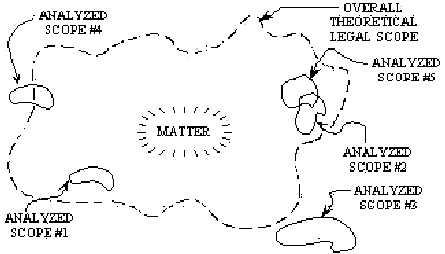
Figure 4 above shows how the Judiciary usurps Congress' Article I, Section 8,
Clause 18 (I-8-18) power to make all laws. If the judicial department uses their
own normative rules of evidence, then the judicial department will draw a
conclusion as to the unelected judiciary's meaning of a statutory term. The
unelected judiciary's meaning of a statutory term then will be implemented by
federal judges. This is schematically illustrated in Figure 4 by the arrow drawn
from the "Judiciary" to the "Trier of Law Factual Evidence." If the judicial
department uses the normative rules of evidence enacted by the elected members
of Congress, then the judicial department will draw a conclusion as to the body
Congress' meaning of a statutory term. The body Congress' meaning of a statutory
term then will be implemented by federal judges. This is schematically
illustrated by Figure 2 set out in Part I of this article. Thus, similar to the
powers to propose, apply for, and subsequently ratify amendments to our
Constitution, whoever controls the rules of evidence concerning the intrinsic
and extrinsic evidence controls the Constitutional power to make all laws or the
Constitutional power to make amendments, overtly or covertly. As shown in Figure
4, that control and, thus, the power is now in the hands of the unelected
judiciary whose rules of evidence "to say what the law is" are firmly grounded
in the unlimited imagination of the trier of law such that, in the words of
Justice Scalia, "each conscience is a law unto itself."155
There are thousands of examples of the judiciary bypassing Congress'
legislative factual evidence to use its own factual evidence to supply the
meaning to the terms in Congress' law. The 1993 criminal law case of Smith
v. United States156 serves as a typical
example of the unlimited imagination of the trier of law.157
In Smith, Tennesseean John Angus Smith received an additional thirty
years in prison under 18 U.S.C. § 924(c)(1) after he was arrested in 1989 and
tried and convicted of agreeing to sell a MAC-10 submachine gun and silencer in
exchange for two ounces of cocaine to an undercover sheriff's officer in Broward
County, Florida.158 The Supreme Court addressed
whether Congress reasonably gave the term "use" in the phrase "use of a firearm
in relation to a drug trafficking crime" under 18 U.S.C. § 924(c)(1) a different
and particular meaning from that term's ordinary and reasonable meaning.159
Since Smith was arrested in 1989, the relevant statute for the Smith
Court analysis is 18 U.S.C. § 924(c)(1) enacted on November 18, 1988, not on
November 29, 1990 or any other date.
Confucius stated that when words lose their meaning, people lose their
liberty.160 This is no less true in Mr. Smith's
case. Substantially ignoring the tremendous amount of timely and relevant
legislative intrinsic evidence of the Congressional Record that the body
Congress generated in enacting 18 U.S.C. § 924(c)(1) on November 18, 1988, the
Court supported its different and particular meaning holding that a criminal
defendant's "trading of a firearm" for drugs "constitutes use of a firearm in
relation to a drug trafficking crime" under § 924(c)(1) by conjuring up the
following six categories of damning evidence:
(i) UNTIMELY EXTRINSIC EVIDENCE (e.g., post-November 18,
1988): Black's Law Dictionary (6th ed. 1990); United States v. Long, 905 F.2d
1572 (D.C. Cir. 1990); United States v. Harris, 959 F.2d 246 (D.C. Cir. 1992)
(by the court); District of Columbia v. Greater Washington Board of Trade, 506
U.S. 125 (1992); The American Enterprise 100 (Jan.-Feb. 1991); Taylor v.
United States, 495 U.S. 575 (1990); United States Sentencing Commission,
Guidelines Manual (Nov. 1992);
(ii) TIMELY BUT IRRELEVANT EXTRINSIC EVIDENCE: Astor v.
Merritt, 111 U.S. 202 (1884); J. McPherson, Battle Cry of Freedom 150 (1988)
(anecdotally describing the May 22, 1856 in chambers caning of Republican
Senator Charles Sumner, R-Mass. by Democrat Rep. Preston Brooks, D-S.C. for
the Republican Senator's anti-slavery stance);
(iii) MIS-CITED EVIDENCE: the original version of 18 U.S.C.
§ 924(c) (the original, June 19, 1968, version of § 924(c) dealt with seizure
and forfeiture, not enhanced penalties);
(iv) IRRELEVANT TRUISMS or TAUTOLOGY: judicial notice that
"the words 'as a weapon' [and 'for trade'] appear nowhere in the statute";
judicial notice that "[we can not] imagine any reason why [pre-Nov. 18, 1988,]
Congress [would or] would not have wished its language to cover this
situation"; judicial notice that Congress did not indicate whether § 924(c)(1)
was to have a narrow or broad construction; judicial notice that " court
[has] ever held that trading a firearm for drugs [falls within or] falls short
of being [within the body Congress' meaning of the term] use";
(v) TIMELY EXTRINSIC EVIDENCE (i.e., lacks proof set out in
the written Smith opinion that the cited evidence is timely
legislation applicably set out in the Congressional Record concerning §
924(c)(1)): the Webster's New International Dictionary (2d ed. 1950); United
States v. One Assortment of 89 Firearms, 465 U.S. 354 (1984); United States v.
Phelps, 877 F.2d 28 (9th Cir. 1989) (here, the Smith Court cited to
pre-Nov. 18, 1988 information within the 1989 Phelps case); United
States v. Stewart, 779 F.2d 538 (9th Cir. 1985); United States v. Ocampo, 890
F.2d 1363 (7th Cir. 1989); 18 U.S.C. § 924(d) (May 19, 1986)161;
judicial notice that "[pre-Nov. 18, 1988,] experience make ['s it] clear, one
can use a firearm in a number of ways"; judicial notice that "No [pre-Nov. 18,
1988,] court of appeals ever has held that using a gun to pistol-whip a victim
is anything but the use of a firearm"; judicial notice that "[the introduction
of guns] into the scene of drug transactions dramatically heightens the danger
to society"; judicial notice that the pre-Nov. 18, 1988 body Congress was
"aware that drugs and guns are a dangerous combination"; judicial notice that
a gun "can be converted instantaneously from currency to cannon"; judicial
notice of "the evident care with which Congress chose the language of §
924(d)(1)"; and
(vi) TIMELY AND RELEVANT INTRINSIC EVIDENCE: the text of §
924(c)(1) (Nov. 18, 1988).162
The meable, easily penetrated arguments above, by which the majority in
Smith reached its conclusion, speak for themselves. Without express rules
enacted by Congress to compel the judiciary to use all the relevant and timely
intrinsic evidence, the judiciary avoids intrinsic evidence and uses the
convenient tool of extrinsic evidence and other information as "an escape from
the hard work of actual judging."163 This
sophistry, in turn, has introduced an unacceptable level of sloth into modern
judicial opinions that attacks the Court's essential legitimacy and holds out as
disreputable the entire profession of law.164
In particular to Mr. Smith's case, does anyone actually believe that the
Court's unwritten conclusory process of selecting from all information provides
the damning evidence that our pre-1791 ancestors had in mind when they
guaranteed each person their Fifth Amendment right to liberty subject only to
due process? How can Congress, judges, and lawyers sit idly by while Mr. Smith
and defendants in similar circumstances lose their liberty through mandatory
"Smith increases" in their incarceration time based on such damning, ex post
facto evidence garnered under the guise of an independent judiciary through
"judicial verbicide?"165 The majority in the
Smith case felt so secure about their holding that they used
approximately 40% of the majority opinion to address the dissent's arguments.
Now that the Smith Court had gutted Congress' meaning of a term in a
statute while textually retaining that same term, the destructive, judicial
activist process repeated itself. Lines of "common law" cases have started to
form under the judiciary's doctrine of stare decisis in the hollowed
out, academic fly-covered carcass of Congress' dead statute § 924(c)(1),
egg-laden by the opinion in Smith v. United States. So far, the first
case to emerge is the 1995 case of Bailey v. United States.166
One day before our country observed the fifty-fourth anniversary of Pearl
Harbor Day,167 the Bailey Court
announced that Congress' meaning of the term "use" in § 924(c)(1) includes "an
active employment of a firearm" that "makes the firearm an operative factor in
relation to the predicate offense," even though the Court failed to provide any
legislative factual evidence to support its new judicial statutory common law.168
The integument of the Bailey Court's holding is the text of §
924(c)(1), thereby creating the appearance that the holding in Bailey
is Congress' law. The subcutaneous matter, however, is judicial law enacted by
the Bailey Court as spawned by the Court in Smith v. United States
through that Court's usurpation of Congress' power to make all laws.
So now we see that the Court eschewed Congress' meaning of the term "use"
under § 924 (c)(1) to develop the Court's own, ex post facto federal criminal
common law regarding Congress' term "use." It is hard to escape the assertion
that the behavior of those participating Court members in the Smith-Bailey
majority violated Article I, Section 8, Clause 18 (Congress' power to make all
laws), Article I, Section 9, Clause 3 (no ex post facto laws), Article VI
(judge's oath), Amendment V (due process); Amendment VI (informed of the nature
and cause of the accusation); and Amendment X (criminal indictment at common law
cannot be maintained in the federal courts).169
Is there really any surprise? In the 1964 patent law case of Aro II,
members of the Court used wegotism (excessive use of the editorial "we") to help
create their own meanings for the terms in the patent compensation statute 35
U.S.C. § 284, only to cause devastating effects on court opinions and the rule
of law, on litigants who seek justice, on Congress, and on the entire judicial
system.170
In addition to the federal statutes of patent law and criminal law, what
about all other areas of federal statutory law? A countless number of these
opinions in all areas of law are listed in the treatise Sutherland Statutes
and Statutory Construction.171 Most
egregiously, what about the very branches of our system of Government? The
imbalance of power between the judiciary and the legislature has so degraded our
democratic system of Government that both liberal and conservative legislators
alike now regard the judiciary as "a higher chamber where a legislator who has
failed to persuade his [or her] colleagues . . . can always renew the battle."172
There is no denying Professor Raoul Berger's conclusion that our system of
government by Constitution has degraded into a system of government by
judiciary.173
In Justice Antonin Scalia's 1997 book, A Matter of Interpretation:
Federal Courts and the Law,174 Justice
Scalia correctly observed that "[s]ince there are no rules [of evidence] as to
how much weight an element of legislative history is entitled to, [legislative
history] can usually be either relied upon or dismissed with equal
plausibility."175 Since Congress has not
supported the earnest members of the judiciary by enacting federal rules of
evidence concerning how much weight an element of legislative history is
entitled to, Justice Scalia came to the conclusion that "it is [about] time to
call an end to a brief and failed [legislative history] experiment [as it
currently exists], if not for reasons of principle then for reason of
practicality. . . . [P]ouring over the incunabula of legislative history. What a
Waste. We did not use to do it, and we should do it no more."176
This pessimism toward separating the legislature's power to make all laws from
the aggrandized judiciary makes sense: If Congress does not care about
protecting its power to make all laws from usurpation by members of the Supreme
Court and other federal judges, why should the earnest members of the Supreme
Court continue to frustrate themselves by striving to upset this de facto
transfer of power from Congress to the judiciary?
B. Current Solutions Are Ineffective
Members of the judiciary and the legislature are implementing the best
solutions currently available to combat the judiciary's usurpation of Congress'
power to make all laws. By defaming the intrinsic evidence of the elected
legislature in favor of the divisive and subversive extrinsic evidence of
unelected academics and others, some members of the judiciary hope to prevent a
judicial activist from looking over the progression history of a federal bill
and selecting only that evidence that supports the pre-determined conclusion of
that judicial activist. This defamation technique does not work in the short run
or in the long run and leaves open the door to foreign influence in our
legislative process.
As for the legislature's futile attempt to hold back the tide of usurpation
by the judiciary, the legislature has adopted the tactics of fighting among
itself and distorting the judicial selection process. In the belief that
judicial activism is driven by conservative or liberal issues, the Democrats and
Republicans besmirch each of their judicial champions in diatribes that conclude
with the rattling of the saber of impeachment. As pointed out above, judicial
activism is power driven, not issue driven. In The Federalist No. 81,
Alexander Hamilton argued that the danger of usurpation by the judiciary of
Congress' power to make all laws was conditioned on Congress' united resentment:
"[t]here never can be danger that the judges, by a series of deliberate
usurpations on the authority of the legislature, would hazard the united
resentment of the body intrusted with [impeachment]."177
Rather than mean unswayed by politics, judicial independence has come to mean
unaccountable by politics. Thus, more than anything else, Congress' lack of
united resentment has allowed the judiciary to steal Congress' power to make all
laws right from under the fighting political factions of Congress.
Congress also distorts the judicial selection process in an attempt to retain
its power to make all laws. Rather than use the judicial selection process to
probe nominees for their support of Congress as an institution, the legislature
probes judicial nominees for their support of Congress in its politics.178
By probing nominees for their political beliefs, the legislature has been able
to use its Article II, Section 2, Clause 2 consent power to block all judicial
nominees whose political beliefs the party in power does not agree with in the
misguided perception that such action will ensure that the law will generate a
particular political result subsequent to the date the law was enacted. Using
the legislature's oath requirement to coerce future judicial promises from
nominees to the bench only results in bitter resentment from the
independent-minded judges once they are actually on the bench. Eerily
foreshadowed by then-Circuit Judge Ruth Bader Ginsburg in 1981,179
this politicizing of the judiciary has become so hated by the piqued public that
the public now refers to unsuccessful judicial nominees as being "Borked."180
Long ago, Congress should have enacted power protecting rules such as those
of the STA Method under which the members of Congress need only probe the
writings and oral testimony of judicial nominees to assure judicial
self-restraint. With such statutory checks in place, the issue in this area
becomes whether these judicial nominees will implement Congress' meaning of a
statutory term. If the prior writings and present oral testimony indicate that a
particular judicial nominee will implement Congress' meaning of a statutory term
regardless of that terms' political development, purpose, or effect, that
judicial nominee should be regarded as a positive judicial nomination. If,
however, the prior writings and present oral testimony do not indicate that a
particular judicial nominee will implement Congress' meaning of a statutory term
regardless of that terms' political development, purpose, or effect, then that
judicial nominee should be rejected. In accord with this is Senator Hatch, who
stated that "[j]udicial activism from the left or from the right has plagued
this nation, and we should reject nominees who will not apply the Constitution
and statutes as written and will instead substitute their own personal
preferences."181
Congress should probe for jurists who will support separation of powers and
Congress as an institution, not Congress in its politics.182
In this way, Congress may avoid political battles on the two fronts of the
judiciary and the legislature and concentrate on the political battles of the
legislature. This, in turn, will allow the people of the United States to
maintain control over its own basic human or societal needs through
congressional elections, peaceful assemblies, and grievance redress petitions.
As James Madison wrote, "[Congress and the President's] dependence on the people
is, no doubt, the primary control on the government."183
C. The Three-Pronged Approach
After an in-depth study of the problem of trier of law judicial activism, I
propose a three-pronged approach for Congress and others to take that will
eventually lead to uniformity in analyzing the timely and relevant evidence to
determine the body Congress' meaning of a term in a statute. Thus, Congress and
the people can apply this three-pronged approach to finally vest, in practice,
Congress' power to make all laws, both in term and in term meaning, in one
Congress.
As the first prong, the jurisdiction of the Court of Appeals for the Federal
Circuit should be expanded to include statutory term analysis. The scholarly
observations of several Supreme Court Justices aided me in arriving at the first
prong. In 1982, Justice Stevens noted that "[t]he [1981 term] Court . . . agreed
that it was essential that we confront the question whether the Court should . .
. support legislation that would increase the appellate capacity of the federal
judicial system."184 Three years later, former
Chief Justice Burger proposed a temporary intercircuit panel.185
In 1986, then-Associate Justice Rehnquist set out the four stages of evolution
of the role of the Supreme Court to conclude that the fifth stage of a national
appellate court is upon us, reasoning that "evolution has been the destiny of
the Supreme Court from the time it was first created."186
In 1987, then-Circuit Judge Ginsburg made a plea for legislative review by
leaving open the possibility of using an existing court of appeals for the
additional appellate tier, but insisted that this additional appellate tier
would occupy the existing courthouse facilities of the Court of Appeals for the
Federal Circuit.187 Thus, under the first
prong, as a temporary solution, Congress would expand the jurisdiction of the
Court of Appeals for the Federal Circuit to operate as an additional appellate
tier in those circumstances where Congress' meaning of a statutory term is at
issue. This, in turn, would allow Congress to divide the Ninth Circuit into the
Ninth and Twelfth Circuits, thereby eliminating a concentrated source of
judicial activism.
Second, as the permanent solution, Congress should enact the rules of the STA
Method into the Federal Rules of Evidence as an essential component of the
judicial process. Justice Scalia's conclusion "that the establishment of broadly
applicable general principles [by Congress] is an essential component of the
judicial process"188 and Justice Ginsburg's
call for "[c]learer standards, principles, and guidelines from the legislature"189
helped me to arrive at this permanent solution. The third prong in recapturing
Congress' power to make all laws would involve the non-legislative contributions
of Congress, law students, attorneys, and the courts as discussed below.
To bring the reader to the point of agreement with the proposed three-
pronged solution, I have the unpleasant task of setting out the background
leading up to where our system of government is today. We as a people must face
our problems head-on. Nonetheless, as a cathartic, emotional release from the
exposé on the judiciary set out below, I recommend Justice Kennedy's article
Judicial Ethics and the Rule of Law to restore and refresh your spirit with
his positive, motivating, and uplifting article on judicial ethics and
self-restraint.190
1. The Proposed Temporary Solution
At the conclusion of part four in my article Patent Compensation, I
rhetorically stated that perhaps there ought to be a Code of Judicial Conduct
rule that sets out the duty of candor the tribunal owes toward advocates,
reciprocal to Model Rules of Professional Conduct Rule 3.3.191
However, adding more rules of punishment to alter the behavior of federal judges
would be futile since these federal judges are appointed for life. As a
temporary solution, Congress should divide the Ninth Circuit along with
expanding the jurisdiction of the Court of Appeals for the Federal Circuit,
where the Federal Circuit will operate as an additional appellate tier to have
exclusive jurisdiction of an appeal from a judgment in an action (civil,
criminal, or otherwise) for matters in which the meaning of a federal statutory
term was decided.192
a. Divide the Ninth Circuit
Among all federal appellate courts, the Ninth Circuit has routinely
distinguished itself by issuing holdings that are opposite to one or more of the
other circuits. The ostensible purpose of this is to set the agenda of the
United States Supreme Court through diversity of federal law rather than
"diversity of opinion stemming from divergent points of view and sometimes
differing strains of geographical philosophy and thought."193
As Senator Hatch stated on September 29, 1997:
Mr. President, these are important matters. I do not
believe they should be politicized. I think activist judges, whether they come
from the right or left, are judges who ignore [Congress'] law and just do
whatever their little old visceral tendencies tell them to do. These are
judges who act like super legislatures from the bench who usurp the powers of
the other two branches-coequal branches-of Government, the executive and
legislative branches. These are judges who ignore [Congress'] written law.
These are judges who take their own political purposes to what [Congress'] law
should be. These are judges, a number of whom sit on the Ninth Circuit Court
of Appeals, who have given me nothing but angst because of their activism.
During this last year, 28 of 29 cases on the Ninth Circuit Court of Appeals
were reversed by the Supreme Court because of judicial activism.194
For example, in United States v. Brockamp,195
one of the twenty-eight cases to which Senator Hatch was referring, the Supreme
Court reversed the Ninth Circuit and upheld the First, Fourth, and Eighth
Circuits' holdings that the income tax refund statute 26 U.S.C. § 6511 could not
be equitably tolled.196 In Calderon v.
Thompson,197 the Court held as a grave
abuse of discretion the en banc Ninth Circuit's order recalling its mandate
denying the writ of habeas corpus for a condemned rapist/murderer where the
Ninth Circuit impermissibly based its order on the Antiterrorism and Effective
Death Penalty Act (AEDPA) of 1996.198
Article III, Section 1 of the Federal Constitution states that "[t]he
judicial power of the United States, shall [also] be vested . . . in such
inferior courts as the Congress may from time to time ordain and establish."199
To this end, Congress is in a never-ending struggle to achieve the perfect
circuit system, for "[l]aws and institutions are constantly tending to
gravitate. Like clocks, they must be occasionally cleansed, and wound up, and
set to true time."200 Dividing the Ninth
Circuit into the Ninth and Twelfth Circuits will fix this persistent problem
caused by these "independent contractors"201
consistent with maintaining the balance between judicial independence and
judicial accountability. Those federal judges whose good behavior has
demonstrated a desire to implement the body Congress' meaning of a term in a
statute should remain in the Ninth and Twelfth Circuits. Those federal judges
whose bad behavior has demonstrated a desire to set the Supreme Court's agenda
should be disbursed into the other circuits where their visceral tendencies will
reside like the glow of burning embers individually removed from a fire.202
This will help the Supreme Court in its historic function of maintaining
uniformity of federal law.
Concerning judicial activism, however, this fix will be temporary since these
life-tenured, assured-of-compensation, government employees who are immune from
the economic and political forces of our democratic process will still be
operating under the same back-in-time common law mind set. Moreover, without
more, it would be difficult to divide the Ninth Circuit in a bipartisan way.
Dividing the Ninth Circuit in combination with expanding the jurisdiction of the
Court of Appeals for the Federal Circuit, however, would allow Congress to
divide the Ninth Circuit in a bipartisan way.
b. The Federal Circuit as the Additional
Appellate Tier
In a 1986 speech at the Florida State University College of Law, then-
Associate Justice William H. Rehnquist stated:
I venture to predict that . . . we will in the
not-too-far-distant future have another stage in the evolution of the Supreme
Court. It will largely relinquish its role in run-of-the-mine statutory [term
analysis] cases to a new court . . . which will function in effect as a lower
chamber of the Supreme Court.203
Consistent with Justice Rehnquist's prediction, I propose that the Court of
Appeals for the Federal Circuit be used in this regard. Using the Federal
Circuit as "an additional appellate tier" to "nip in the bud" conflicts among
the district courts or courts of appeals concerning Congress' meaning of a
disputed statutory term will "enhance the clarity and stability of federal law."204
As "a lower chamber of the Supreme Court," the Supreme Court would manage the
docket of the lower chamber and thus serve the docketing needs of the Court.205
As an additional appellate tier, this national court of appeals would have more
flexibility in addressing the needs of Congress, litigants, and those affected
by the issue before that court.
Whether a lower chamber of the Supreme Court or an additional appellate tier
is selected by Congress, it could achieve this goal merely by expanding the 28
U.S.C. § 1291 jurisdiction of the federal circuit to include conflicts among the
courts of appeals or district courts concerning Congress' meaning of a disputed
statutory term.206 As Chief Justice Rehnquist
observed, "what lawyers and litigants in our country's federal courts are
seeking to know [is] the meaning of a particular [term in a statute]."207
Expanding the federal circuit's jurisdiction can be done as an interim measure
towards a permanent solution, with perhaps a minimal cost increase in the
federal circuit's staff (offset by reductions such as appealed cases in the
other circuits), and implemented in a bipartisan fashion in conjunction with
dividing the Ninth Circuit.
There are many reasons why Congress should enlarge the jurisdiction of the
federal circuit as the additional appellate tier to have exclusive jurisdiction
of an appeal from a judgment in an action (civil, criminal, or otherwise) for
matters in which the meaning of a statutory term was decided. The great
deference and respect the Supreme Court gives to the sixteen-year-old Article
III Circuit Court,208 its binding effect
throughout the nation, its location in Washington, D.C., and most important, the
federal circuit's intimate understanding and daily application of the rules of
the STA Method as they relate to patent claims makes the federal circuit the
ideal choice for this additional appellate tier.
First, it is highly unlikely that the federal circuit would degrade its
patent claim construction rules in applying the STA Method to Congress' statutes
since the federal circuit has worked so hard to develop the patent claim
construction rules that served as the basis for the rules of the STA Method.209
This self-check and self-balance against the judges of the Federal Circuit
implementing anything but Congress' meaning of a statutory term makes it less
likely that the wrong answer will prevail throughout the nation. Consistent with
this, former Federal Circuit Chief Judge Markey dispels any doubts as to the
federal circuit's commitment to Congress as an institution in his article,
The Federal Circuit and Congressional Intent.210
Moreover, unlike using judges from other circuits to make up this additional
appellate tier, there would be little increase in workload for the federal
circuit since its holdings concerning the rules of the Statutory Term Analysis
Method could apply to its already existing workload concerning patent term
analysis in a substantially two-for-one deal. Further, the federal circuit
judges would not have to master another body of higher court case law since
Congress' meaning of a statutory term is set out in the intrinsic evidence of
the Congressional Record and not set out in case law. Since no invention claim
drafting style or technical matter is beyond the expertise of a federal circuit
judge, the judges on the federal circuit presently are "equipped to master the
complexities of . . . labyrinthine statutes that govern highly technical
matters."211
At present, the judges on the Federal Circuit are the best equipped judges to
"take the statute as [they] find it."212 Should
the Supreme Court need to step in, it can benefit from the education gained
through the Federal Circuit's unique talents in examining the terms of a public
document. Moreover, giving litigants the option to appeal to the Federal Circuit
on such matters will increase their faith in the judiciary because of the
Federal Circuit's binding effect throughout the nation and its position among
the other circuits. There is no reason that Congress should not temporarily
"delegate its [responsibility] to promulgate . . . rules [through case law] to
the [Federal Circuit as a legislative technique that] tap[s] the experience and
expertise of federal judges."213 Who better to
bring the unlimited imagination of the trier of law under analytical control
than the same Circuit Court that brought the unlimited imagination of the
inventors of products and processes under analytical control?214
2. The Proposed Permanent Solution
Given the unlimited imagination of the trier of law, along with the future
being unknown, Justice Scalia observed that the need for theoretical legitimacy
in analyzing a term in a document of the law is paramount.215
The rules of the STA Method meet this need for theoretical legitimacy. Like the
Federal Circuit's quick and decisive response to the unlimited imagination of
the inventors of products and processes,216
Congress needs to respond to its problems with the unlimited imagination of the
trier of law directly and decisively. By enacting the rules of the STA Method
into the Federal Rules of Evidence, a permanent solution will be in place to rid
our government system of judicial activism in the context of the trier of law.
Adding rules to the Federal Rules of Evidence concerning the evidence that
the trier of law may use to find Congress' meaning of a statutory term can be
done in a bipartisan fashion as part of increasing the Federal Circuit's
jurisdiction and dividing the Ninth Circuit. Although the Supreme Court has the
non-exclusive power to prescribe general rules of evidence for cases in district
courts and courts of appeals under 28 U.S.C. § 2072(a),217
Congress has retained its own power to prescribe general rules of evidence and
make such rules into law. Thus, the congressional commission created to
incorporate the rules of the STA Method into the Federal Rules of Evidence could
simultaneously study the Federal Circuit's statutory term analysis opinions.
Once the rules are enacted into law, the Federal Circuit would perform the same
iterative, feedback-loop function until these new evidence laws are rid of any
subsequently developed judicial loopholes.
These new rules of evidence concerning Congress' meaning of a statutory term
will provide the judicial department with an essential component to carry out
their Marbury v. Madison duty to analyze the intrinsic and extrinsic
evidence and draw a conclusion as to Congress' meaning of a statutory term.
Through these enacted rules, federal judges will implement the elected members
of Congress' Article I, Section 8, Clause 18 meaning of a statutory term rather
than implementing the unelected judiciary's own meaning of a statutory term
clothed in Congress' statutory text. In this way, "the Supreme Court [finally
will] resolve disputes over which it has jurisdiction according to the law."218
a. Constitutional Authority
To enact the rules of the STA Method into the Federal Rules of Evidence, the
Constitution must vest in Congress the power to make all laws necessary and
proper for carrying into execution Congress' Article I, Section 8, Clause 18
power. Although it is rather obvious that Congress has this power, there might
be some in the judiciary who would take exception to this since enacting the
rules of the STA Method into the Federal Rules of Evidence will take away the
judiciary's aggrandized power to dictate the basic human or societal needs of
the people of the United States. However, to those hesternopothics who would
take this exception, Justice Ginsburg has a message for you: "[i]t will not do
to yearn for the good old days, for they will not return."219
Such lamentation by these living constitutionalists may be appropriately styled
a jeremiad over the lost authority and splendor of a usurpatious judicial system
that many exalted to the control of the President and Congress. Nonetheless,
since there is probable cause to believe that those who support judicial
activism will disagree that Congress has this power, some discussion is
warranted.220
To begin the discussion, we will assume that we do not know that it is
Congress who has the power to make all laws necessary and proper for carrying
into execution Congress' Article I, Section 8, Clause 18 power. In general,
Federal Government power is either reserved by the People or vested in the
Executive, Judicial, or Legislative Branch through the People's document titled
The Constitution of the United States. The issue is which of these four
entities-People, Executive Branch, Judicial Branch, or Legislative Branch-has
the power to make all laws necessary and proper for carrying into execution
Congress' Article I, Section 8, Clause 18 power.
If the People reserved this power, the Federal Government could not operate.
If this were true, the People would have amended the Constitution a long time
ago to allow the Federal Government to operate. Thus, the People did not reserve
the power to make all laws necessary and proper for carrying into execution
Congress' Article I, Section 8, Clause 18 power.
The President may have this power since the President is elected by the
People and has veto power under Article I, Section 7, Clause 2 over bills at the
end of the legislative process. However, it is unlikely that the President has
this power since there is nothing in the Constitution about the President's veto
power over bills being more than a "go-no go" power or "sign-return and
objections" power. Moreover, this would not make any sense. Since the President
lacks any portion of Congress' power to make all laws in both term and term
meaning, there is no reason the Constitution would vest in the President the
power over the meaning of terms in a statute. Thus, the People did not vest in
the President the power to make all laws necessary and proper for carrying into
execution Congress' Article I, Section 8, Clause 18 power.
The Judicial Branch could not have this power since federal judges are not
elected by the People. Moreover, the Judicial Branch has no legislative power
over bills as they progress their way through the legislative process. In any
event, this would not make any sense. To help understand that the Judicial
Branch could not have this power, the rules regarding the use of a dictionary
serves as a good analogy.
A dictionary is a reference book containing an alphabetical list of terms,
with a meaning given for each term. One rule in using a dictionary is that the
meaning of a term in a dictionary is infraposed subjacent to the main head word
entry, i.e., the term being defined. This is known as the sub verbo dictionary
usage rule. If the judiciary had the power to make all laws necessary and proper
for carrying into execution Congress' Article I, Section 8, Clause 18 power, the
judiciary could look up the term "usurpation," for example, and use its power to
make all laws to supplant the sub verbo dictionary usage rule with the
judiciary's unwritten rule of paging back to the meaning of the term
"interpretation," for example, to conclude that, as a matter of law, usurpation
means the method of discovering and ascertaining the body Congress' meaning of a
term in a statute.
Such behavior is not as far-fetched as it seems. In Katzenbach v. Morgan,221
the Supreme Court overturned its own meaning of a term in the Constitution in
favor of Congress' political meaning as set out in a statute enacted by a bare
majority in Congress.222 In the majority
opinion written by Justice Brennan, it is likely that the 1966 Katzenbach
Court believed that it could continue unmolested in its usurpatious ways by
occasionally sharing with Congress the imperial bounty gained both from taking
such a pessimistic view of our Constitution and ignoring the several States
contributions to the meaning of each Constitutional term.
Thus, like frogs whimsically hopping from one lily pad to another or Goldi
Locks wittingly evaluating beds to lie in, giving the judiciary the power to
make all laws necessary and proper for carrying into execution Congress' Article
I, Section 8, Clause 18 power, in combination with the judiciary's duty to say
what the law is, would allow the judiciary to make itself immune from the checks
and balances inherent in our Constitution. Thus, this area sits outside judicial
independence. Here, the judiciary is not the master of its domain. Emphatically,
the People did not vest this power to make all laws in the judiciary.
As an aside, the above dictionary usage example serendipitously has revealed
another lesson: makers of laws, similar to makers of dictionaries, must
accompany a term and the meaning of that term with a third item. That third item
is the evidentiary laws concerning the production and use of intrinsic and
extrinsic evidence when analyzing and drawing a conclusion as to the maker of
the law's meaning of that term.
Thus, by default alone, the People must have vested the power to make all
laws necessary and proper for carrying into execution Congress' Article I,
Section 8, Clause 18 power in the Legislative Branch. The text of the
Constitution bears this out. Under Article I, Section 8, Clause 18, Congress has
the power to make all laws necessary and proper for carrying into execution the
Government's vested powers. One of the powers vested in the Government of the
United States is the power to make all laws. The Constitution vests the power to
make all laws exclusively in the Congress under Article I, Section 8, Clause 18.
Thus, the Constitution authorizes Congress to make all laws necessary and proper
for carrying into execution Congress' exclusive power under Article I, Section
8, Clause 18.
Congress may expressly delegate responsibility in this area but always
retains authority. Congress' delegation of its exclusive power to make all laws
is valid only when expressed by Congress, not the judiciary, and then only when
that expression is clear and convincing, such as by statute. Moreover, the
Constitution's term "all laws" prevents the People, the Executive Branch, or the
Judicial Branch from sharing this power with Congress through any distinction
between statutory law vs. common law, substantive law vs. procedural law, or
otherwise.
Even with the constitutional authority to enact the rules of the STA Method
into the Federal Rules of Evidence as the beginning of the end of trier of law
judicial activism, it is still important for Congress to know what it is up
against. There is a tremendous amount of government power that Congress
perceives that it has as guaranteed by our Constitution but in fact does not, as
evidenced by the 1964 plurality dicta view of Aro II, the 1993 case of
Smith v. United States, and the countless cases listed in the treatise
Sutherland Statutes and Statutory Construction.223
In fact, in a 1992 empirical study revealing what the Supreme Court actually
does in analyzing Congress' statutes, the study concluded that floor discussions
appear in a paltry 16.9% of the Court cases, that the text of the statute
unbelievably appears only in 84.1% of the Court cases, and that reports appear
in only 32% of the Court cases.224 Where
Congress' power to make all laws is and how it got there is the next topic of
discussion.
b. The Judicial Activist Movement
To understand why in fact Congress lacks legislative power concerning the
meaning of a statutory term while retaining the power to enact the words of that
term into law, it is necessary to begin the analysis with the year 1787 at the
Constitutional Convention in Philadelphia that lead to our Government by
Constitution replacing the Articles of Confederation. Anticipating a productive
weekend, the Constitutional Convention opened on Friday, May 25, 1787, with a
quorum of seven of thirteen States. Over the next four months, five more states
joined the Convention. On Monday, September 17, 1787, all twelve state
delegations approved the Constitution (Rhode Island was not represented). New
Hampshire's Saturday, June 21, 1788 ratification satisfied Article VII by
putting the number of those ratifying the Constitution at nine States. With the
first Congress convening in New York City on Wednesday, March 4, 1789, the
Constitution was declared in effect on this day.225
Thus, as of 1789, the People vested the power to make all laws in Congress under
Article I, Section 8, Clause 18.
Eleven months after the Constitution was declared in effect, the Supreme
Court convened for the first time on Tuesday, February 2, 1790.226
It was eight years later in the 1798 case of Calder v. Bull that
Justice Samuel Chase planted the seeds of judicial activism into the opinions of
the Supreme Court that would eventually grow into today's Judicial Activist
Movement by promoting "the great first principles of the social compact."227
Five years after Calder v. Bull, the Court self-imposed the duty of
analysis on the judicial department by issuing Marbury v. Madison.228
Since its formation in 1789, the judiciary aggrandized itself at the expense
of Congress' power. In those early years, the judiciary usurped Congress' power
to make all laws only in those areas where Congress lacked the sophistication to
enact law. With this excess power, the judiciary "enacted" laws out of necessity
to keep the United States moving forward. Although not in accord with Article I,
Section 8, Clause 18 of the Constitution, our country had no other means of
developing legal theory other than through the unlimited imagination of the
trier of law on a case-by-case basis. This process was deemed the common law.229
The process of the common law in the United States is straightforward.
Executive agencies and a relatively small number of people conceive ideas and
reduce them to practice.230 These practices are
eventually challenged in a court of law. The Supreme Court declines to review
lower court rulings until enough rulings are made in the lower courts. The
Supreme Court eventually hears a case on this practice and makes a ruling that
effects the entire nation. Since the Court's ruling in this area has the
"purpose and effect of altering the legal rights, duties and relations of
persons . . . outside the Legislative Branch,"231
executive agencies and the people adjust their practices to conform to the
Supreme Court's ruling as best as they can. The new practices based on this
ruling are always challenged in a court of law since the Court's ruling in this
area is not the will of the People through their elected representatives. Thus,
the Court sets into motion an iterative judicial process that is repeated over
time until the Supreme Court has altered the basic human or societal needs of
the nation through its rulings. Based on these generational changing needs of
society as driven by the unelected members of the Supreme Court, a common
consensus is formed as evidence through the common action of society conforming
its behavior to the will of the Court. Properly called negative law in contrast
to positive law,232 this common consensus has
taken on the moniker "common law" and derives its authority in the United States
"solely from . . . the judgments and decrees of the courts,"233
rather than from the Federal Constitution.
At this point (or at any point the legislature chooses), the legislature has
enough information to begin their discussions towards making a law under Article
I, Section 8, Clause 18. The process of making law is very similar to the
process of making a patent claim in a patent document. Under patent law
practice, a patent attorney submits a patent application document to the United
States Patent and Trademark Office (hereinafter "PTO") to be reviewed by a
patent examiner through public record discussions per the various patent
statutes. The three writing requirements of enablement, best mode, and claims
for a legal invention embodied within the patent document are set out in the
following patent statute:
(1) The specification (a) shall contain a written
description (i) of the invention, and (ii) of the manner and process of making
and using it, in such full, clear, concise, and exact terms as TO ENABLE any
person skilled in the art to which it pertains, or with which it is most
nearly connected, to make and use the same, and (b) shall set forth THE BEST
MODE contemplated by the inventor of carrying out his invention. (2) The
specification shall conclude with ONE OR MORE CLAIMS particularly pointing out
and distinctly claiming the subject matter which the applicant
regards as his invention.234
The patent application document is sent back and forth between the patent
examiner and the patent attorney with written comments. This written dialogue
creates a public record-a "legislative" or "prosecution" history. Through this
history and other written, public documents, the matter and scope of a term in a
patent claim can be discerned. When the patent document complies with various
patent law statutes, the PTO issues the completed patent document, which in a
sense "enacts" the patent claims into "law."
Congress' public record discussions are similar to the interactions between
the patent attorney and the patent examiner discussed above. A member of
Congress submits a bill to the U.S. Congress to be reviewed by committee and
Congress as a whole through public record discussions. The public record
discussions of Congress may occur in committee meetings or on the floor of
Congress with the ultimate goal of a proposed law. Floor discussions, bills, and
reports are applicably set out in the Congressional Record. The relevant and
timely Congressional Record entries conclude with the text of the proposed law
that particularly points out and distinctly claims the subject matter that the
Constitution, through Congress, regards as the claimed law. The President's
signature on Congress' claims enacts the claims into law. At this point, all the
factual evidence has been removed from the realm of the common law and is placed
into or is excluded from the Congressional Record along with all the other
legislative factual evidence to create the finite, intrinsic evidence identified
by the applicable Congressional Record entries. In just about all cases, this
intrinsic evidence is a sufficient, written description of the terms of the law
that enables any person to conform their behavior to the law, just as a patent
specification "enable[s] any person skilled in the art to which it pertains, or
with which it is most nearly connected, to make and use the same."235
It is important to note here that Congress only requires the inventor to set
out the subject matter of each term in a patent claim in the text of the one or
more patent claims under § 112(2) above. Under § 112(1)(a) and (1)(b) above, the
scope of that subject matter may be set out in the written description part of
the specification as limited by any disclaimers made during the prosecution
history of the patent application. In the same way, the Constitution only
requires Congress to set out the subject matter of each term in the text of the
federal statute. The scope of that subject matter is set out in the written
description part of the Congressional Record as limited by any disclaimers made
during the progression history of that statute application (e.g., the bill).
For approximately the first 100 years of our country, the judiciary's
aggrandization through the process of the common law was slow and sporadic, but
nonetheless increased at a constant rate. In 1881, Oliver Wendell Holmes
judicially codified and made this process systematic and scientific through his
book The Common Law.236 His book rang
in the era of orderly common law development of American jurisprudence. As the
Einstein of law, Holmes single-handedly compensated for Congress' lack of
legislative sophistication in many areas. His universal legal theory allowed
Holmes to understand at once how a law was made, analyzed, and enforced. Along
with the standards of integrity he set while sitting on the Court, Holmes'
panoptic ability to perceive our system of Government single-handedly allowed
him to develop law worthy of an entire elected Congress and explains why he was
one of our greatest jurists.
Through his book and his Court opinions, Holmes rediscovered what the People
of the United States already knew at the formation of our country: that a very
high level of integrity is necessary to make law. However, unlike the
Constitution vesting the power to make all laws in one Congress, Holmes failed
to take into account the general human nature of judges when he assigned the
power to make law to the educated judiciary as "expert decisionmakers"237
through his universal legal theory. Holmes perceived that the standards of
integrity he set as a condition for a judge to develop law would be a floor, the
minimum above which all judges would conduct themselves. However, judges are not
deluded by their own abilities into believing that they can attain Holmes'
grandeur. Thus, the standards of integrity that Holmes set have become the goal
a judge is to strive towards: a ceiling rather than a floor.
Human nature being what it is, few judges have achieved the very high
standards of integrity set by Holmes; the behaviors of just about all judges
have fallen below these standards. There is nothing wrong with the vast majority
of judges; it is just that the very high standards of individual integrity of
one of this country's greatest jurists do not accord with general, individual
human nature. Moreover, few, if any, individual government employees have ever
substantially achieved Holmes' standards. Holmes' standards of integrity are
still important, however. They serve to establish that only a single, large body
of people, in a collective, can consistently maintain themselves above the very
high standards of integrity necessary to make law. The reason being that the
majority collective consistently brings out the best in human nature. Moreover,
Holmes' standards serve as a benchmark that can be used to identify the origins
of the Judicial Activist Movement.
The first judges whose behavior fell well below Holmes' standards of
integrity were the first contemporary judicial activists. Through the
manipulation of Holmes' succinct and penetrating justifications, these judicial
activists, at first few in number, began to accelerate the judiciary's
aggrandization process with their new tool, Holmes' "The Common Law" and its
progeny of rationales. This initial acceleration remained substantially
unchecked until the drastic decline in the national economy that followed the
1929 crash of the stock market. Along with the rest of the world, the United
States was thrown into the Great Depression.
Lifting the United States out of the Great Depression could only be achieved
through a level of cooperation between Congress and the President that was
previously unknown to the Judicial Branch. As one of the first signs of a new
era of synergism between these two branches of government, the 1932 Congress
enacted the first legislative veto clause by giving President Hoover "the
[responsibility] to reorganize executive departments subject to a one-House
veto."238 Later, this and other efforts toward
cooperation between Congress and the President would be quashed by the Court.239
Judicial legislative power derives from ensuring diversity between Congress
and the President, not cooperation. Witnessing Congress and President
Roosevelt's New Deal of the 1930s first hand, the judiciary realized that they
"ceased to be the primary makers of the law in the [textual] sense in which they
'legislated' the common law."240 Desperate to
retain its usurped portion of Congress' power to make all laws that allowed the
judiciary to control and dictate the basic human or societal needs of the People
of the United States, but fearing that Congress and the President would diminish
the impact of their prestigious positions, the judiciary signaled to Congress
and the President in the 1937 Supreme Court case of West Coast Hotel v.
Parrish241 that the judiciary would now
permit these two branches to enact the terms in a statute. The Federal
Government was not alone during this period in its receipt of judicial promises
of self-restraint. In the 1938 case of Erie R.R. Co. v. Tompkins,242
the Court stated that "[t]here is no federal general common law,"243
reasoning that federal general common law is "an unconstitutional assumption of
powers by the Courts of the United States."244
Not stated by the judiciary in the strongly-worded case of West Coast
Hotel was that the judiciary would misuse legal analysis to implement the
judiciary's own meaning of the terms in a statute while maintaining the
appearance that the judiciary was implementing Congress' meaning of a term in
that same statute. In other words, by abusing learning, judicial activist have
mislead through scholarly-sounding deception. Thus, hidden in the open,
contemporary judicial activism was the transmogrification of the
nineteenth-century common law traditions. As of 1937, the era of orderly common
law development of American jurisprudence was over. The era of the Judicial
Activist Movement had begun.245
In the sixty years following the 1937 case of West Coast Hotel,
Congress and the President worked closer and closer together to enact statutes
that aided the basic human or societal needs of the People of the United States.
Over these sixty years of positive cooperation between the sessions of Congress
and the succeeding Presidents, the aggrandization process of contemporary
judicial activists took on a desperate acceleration. In the collective, a
movement formed. Most of the judiciary fell in line with the aggrandization
process since they were either bound by precedent or directly enjoyed the bounty
that flows from usurping Congress' power to make all laws. Following the
judiciary's lead, most of the legal academic world fell in line with the
judiciary either individually or through legal organizations since, as fagins of
Congress' power, they were permitted by the judiciary to share indirectly in the
imperial bounty taken from Congress.246 Most
politicians, economists, religious leaders, social scientists, intellectuals,
and artists fell in line with the judiciary because they naturally assumed that
the checks and balances maintained over their own professions were no greater
than the checks and balances maintained over the judiciary in its legal
profession. As will be shown next, even venerated legal sources, such as the
label of a clause in the Constitution, constitutional law books and courses, and
Black's Law Dictionary, promote judicial activism.
Labeling Article I, Section 8, Clause 18 as the Necessary and Proper Clause
promotes judicial activism. Generally, articles, sections, and clauses of the
Constitution take on unofficial identification labels that serve to call to mind
the main thesis of that article, section or clause. Before 1926, there was no
agreed upon label for Clause 18 of Article I, Section 8-Congress' vested power
to make all laws. However, Justice Brandeis' 1926 reference to Congress' power
to make all laws clause as the Necessary and Proper clause247
became the label of choice and was universally adopted by the courts as well as
received Congress' imprimatur.248 The
judiciary's reference to Article I, Section 8, Clause 18 as the Necessary and
Proper clause de-emphasizes the main thesis of Clause 18: that it is Congress
who has the power to make all laws. Over time, this power de-emphasizing mark
has promoted judicial activism at the deprivation of Congress' power to make all
laws by focusing on the Court's control over the limits of Congress' power to
make all laws rather than focusing on the power itself. Thus, to call to mind
the main thesis of Clause 18 and to make it clearer that it is Congress who has
the power to make all laws, I recommend that Congress ensure that all printed
documents within its control refer to Article I, Section 8, Clause 18 as the
Power to Make All Laws clause rather than the Necessary and Proper clause.249
Constitutional law books and courses are other legal sources that promote
judicial activism, in particular through their coverage of separation of powers.
"Under the constitutional doctrine of 'separation of powers,' one branch [of
government] is not permitted to encroach on the domain or exercise the powers of
another branch."250 As a result of the
Judiciary's Marbury v. Madison duty to say what Congress' law is, the
threat of one branch encroaching on Congress' power to make all laws is
interaulic; that is, the threat exists only between Congress and the judiciary.
Few would disagree that the constitutional law issue of separation of powers
between Congress and the judiciary is rarely, if ever, taught in law school and
only then taught by focusing on the independence of the judiciary rather than
the judiciary's usurpation of Congress' power to make all laws.
A good representation of what is being taught in constitutional law courses
at the more than 180 United States law schools is the constitutional law book
used in these courses. Steve Emanuel's 808 folio paged Emanuel Law Outline
of Constitutional Law proportionally summarizes the nine leading
constitutional law books as used in United States law schools.251
Within the 808 folio pages, Emanuel gives exactly one and a half carefully
worded sentences to separation of powers between Congress and the Judicial
Branch regarding the judiciary's usurpation of Congress power to make all laws.
He writes:
Similar separation-of-powers issues can be presented by
action that takes place at the boundary line between Congress and the Judicial
Branch, or the boundary between the Executive and Judicial Branches . . . . [F]unctions
that are the appropriate job of the other two branches cannot be given instead
to the Judicial Branch.252
As Emanuel poignantly observes, "separation issues relating to the Judicial
Branch do not arise very often."253 Of course
not. If judicial activists actually allowed this issue to be adjudicated, the
judiciary would lose its usurped power that it worked so hard to take from
Congress. Moreover, imagine the system of government we would have today if
constitutional law professors actually taught law students that it is
unconstitutional for the courts to usurp Congress power to make all laws. A
dirty concept to some, the effect would be to move the United States away from a
government by judiciary towards a Republican form of government.
The most seemingly innocuous legal source promoting judicial activism is
Black's Law Dictionary. Aside from its delicate dance in selecting
definitions of "common law" in the United States,254
this authoritative law dictionary defines the legal term "interpretation" as "[t]he
art or process of discovering and ascertaining the meaning of a statute . . . or
other written document."255 However, a statute
or other written document, such as the United States Constitution, is made up of
many individual terms, each having its own, unique meaning. With each term in a
statute or the Constitution having its own, unique meaning, there cannot be an
overall "meaning" of these written documents as a matter of law. Since a statute
and the Constitution has no overall meaning, it is impossible to interpret a
statute or the Constitution for that overall meaning. Only the individual terms
within these written documents can be "interpreted" by the judiciary in the
sense of analyzing the intrinsic and extrinsic evidence and concluding as to
that individual term's meaning.
Since it is impossible for a judge to do statutory interpretation or
constitutional interpretation as defined by Black's Law Dictionary,
this popular definition of "interpretation" presents judges with two equally
plausible options: judicial self-restraint or judicial activism.256
As for judicial self-restraint, that unchecked judge can turn right and analyze
undisputed public record concerning the individual term in the document that is
at issue before the court. Just as permissible under the impossibility created
by Black's Law Dictionary, that unchecked judge can turn left and
"interpret" the so-called overall meaning, purpose, belief, or motive of the
document or its drafters.
Contradicting the often cited Black's Law Dictionary definition of
"interpretation," Chief Justice Marshall made it clear that an axiogolist's
inquiry by the judicial branch into the meaning, purpose, belief, motive
("degree of necessity"), or intent behind Congress' execution of its powers
"would be to pass the line which circumscribes the judicial department, and to
tread on legislative ground."257 He went on to
hold that "[t]his court disclaims all pretensions to such a power."258
Concepts such as meaning, purpose, belief, motive, or intent of a statute, the
Constitution, or the document's drafters, are nebulous enough to allow the
judicial activist to draw any conclusion desired by that living
constitutionalist, irrespective of the drafter's meaning of the terms in that
document. Congress does not enact its intent into law; Congress enacts the
meaning of the terms of a statute into law. Thus, the sinistral path of the
judicial activist is paved by those who use the term "statutory interpretation"
or the term "constitutional interpretation."
Judges and lawyers neither interpret laws nor reconstruct legislators'
intentions. Applying the Issue - Rule - Analysis - Conclusion (IRAC) Method
under the Marbury v. Madison duty, judges and lawyers analyze and
conclude as to Congress' meaning of a statutory term. Because judges and lawyers
analyze, this article uses the word analysis, not interpretation, hermeneutics,
construction, construal, dittology, explication, stichomancy, exegesis, or any
other similar word that has been misused by judicial activists to aggrandize the
judiciary through corrupting analytical methods (such as the dynamism method)
while enabling the judiciary to create the appearance that judicial decisions
are constrained. Thus, I designed the marks "Statutory Term Analysis" (STA) and
"Constitutional Term Analysis" (CTA) to provide an alternative to
unintentionally promoting the Judicial Activist Movement through use of the
terms "statutory interpretation" and "constitutional interpretation."
Since the late 1950s, the issue of judicial activism among the courts and the
public has grown exponentially. As observed in 1976 by U.S. News & World
Report, "[m]any constitutional experts say the origin of the recent trend
toward judicial activism can be traced to . . . the 1950s."259
Senator Hatch observed ten years later that, "unfortunately, an awful lot of our
judicial system over the last 25 years has consisted of judges who have been
making wholesale laws . . . . [Y]ou can't avoid looking at constitutional law
over the last 25 years without realizing that that what's happening in our
country."260 Moreover, in his 1996 best-selling
book Slouching Towards Gomorrah,261
Judge Robert Bork agreed with Professor Lino Graglia, who stated that the "thing
to know to fully understand contemporary constitutional law is that, almost
without exception, the effect of rulings of unconstitutionality over the past
four decades has been to enact the policy preferences of the cultural elite."262
A statistical search of the LEXIS databases supports these observations. In
1959, judges used the phrase "judicial activism" or "judicial activist" in two
case opinions.263 During the 1960s, judges used
these phrases in fourteen opinions.264 During
the 1970s, sixty different opinions of judges referred to this problem.265
During the 1980s, the amount of judges referring to "judicial activism" or
"judicial activist" more than tripled the previous decade's record to a total of
196 opinions.266 And between 1990 and 1997,
judges referred to "judicial activism" or "judicial activist" in 207 case
opinions,267 with a conservative projection of
well over 300 cases by the year 2000. Moreover, beginning in 1975, the five-year
average of references in news articles by the public to the phrase "judicial
activism" or "judicial activist" increased from five to sixty-one to 200 to 312
to last year's 1,349 references.268 Politicians
would be wise to take note that, as of this writing, judicial activism is a
significant, exponentially-growing political issue that must be dealt with.
It is clear that the cumulative effect of judges, lawyers, academics,
politicians, economists, religious leaders, social scientists, intellectuals,
artists, and legal sources, all supporting judicial activism, has placed our
system of government in a current state of jeopardy. All told, over the past 211
years, the judiciary's usurped legislative power has grown beyond imagination.
As a direct result of the Judicial Activist Movement, the United States system
of government presently operates under a dangerous imbalance of power between
Congress and the Judiciary, with the problem only getting worse.
There is a solution to the Judiciary's hegemony over Congress. At the start
of the United States, Congress lacked sophistication in just about all areas
necessary to enact law. Over the past 211 years, however, Congress has grown in
both legislative wisdom and experience. This growth has allowed Congress and the
President to codify more and more common laws into statutes and enact bills into
statutes not based on common law. In addition, the bicameral discussions over
the past 211 years have brought into relative collegial harmony the Article I,
Section 5, Clause 2 legislative rules concerning the Congressional Record as
well as the Article I, Section 5, Clause 3 Congressional Record itself. Modern
technology, such as the Internet and CD-ROM, allows Congress to instantaneously
make available a searchable, electronic copy of the 1789-to-present
Congressional Record to each United States citizen at an insignificant cost.
Computer search techniques make digesting the massive amounts of data within the
Congressional Record relatively easy. Moreover, the rules of the STA Method
provide the essential component of the judicial process that allows each citizen
the ability to analyze the relevant and timely document evidence to determine
Congress' meaning of a term in a statute. At present, the People, Congress, and
the President have reached a point of legislative sophistication that will allow
us to enforce the constitutional provision that exclusively vest the power to
make all laws in Congress. However, there remains one obstacle to the
Constitution: the judiciary's present state of aggrandized power and unchecked
usurpation of Congress' legislative power.
The question of constitutional magnitude is whether we, as a modern,
sophisticated people, desire for the unlimited imagination of the trier of law
to continue to supplant Congress' document evidence in giving meaning to a
statutory term or whether we as a people desire for Congress' document evidence
to unseat the unlimited imagination of the trier of law in giving
meaning to a statutory term. Fortunately, we have already answered this question
at the formation of the United States by allocating the power to make all laws
to the Congress through the act of ordaining and establishing Article I, Section
8, Clause 18 of our Constitution for the United States of America.
The People of the United States clearly saw the dangers in allowing the
judiciary any unchecked lawmaking power. As Judge Peters concluded in 1793, "in
despotic sovereignties, force may immediately be applied; but here ours is a
government of laws," and not of men or women.269
By vesting the power to make all laws in Congress through the United States
Constitution, the people of the United States structured our system of
government to keep the life-tenured, assured-of-compensation judiciary from
turning into a despotic sovereignty. In short, the men and women of the
judiciary never had the power to supply their own meaning to a term in a
statute. Moreover, outside the expressed pleasure of Congress, the judiciary
never had the power to use unwritten evidentiary rules concerning the production
and use of intrinsic and extrinsic evidence, ex officio or otherwise. Once
Congress confines the intrinsic evidence to the Congressional Record and enacts
into statutory law a common law concept, Congress has removed all freedom with
which the judiciary would construe and apply a common law principle.270
Since the New Deal of the 1930s, contemporary judicial activists have cloaked
their actions in the term "common law" to trade off the goodwill Chief Justice
Holmes built up around that identifying mark. However, unlike the common law of
Justice Holmes' time, contemporary common law is a self-justification for the
judiciary to aggrandize itself at the expense of the people, Congress, and the
President. Despite giving itself free reign with Congress' power to make all
laws, the judiciary has never arrived at a contemporary common law where the
meaning of each of the terms in this common law were self-defined. The higher
courts continuously fail to address specific issues in its common law that
subsequently appear before the lower courts or do so ambiguously. If the
judiciary intends a result, why don't they just put its meaning into their
common law? Unlike the Legislative Branch, the Judicial Branch appears to lack
their own "delicate dance of the legislative process."271
The answer is that the judiciary continues unchecked with Congress' power to
make all laws. They have their own "delicate dance" among themselves and, more
often than not, allow their fresh-out-of-law-school, unappointed law clerks to
write the judicial opinion,272 even though
these "puisne judges"273 are subject to the
same dastur political influences as the legislative aids who supposedly "abuse
the system" by writing congressional committee reports on behalf of members of
Congress, as arrogantly asserted in several, high level judicial opinions that I
read in preparation for this article.
Since the judiciary's contemporary common laws are unclear, imprecise,
gap-ridden, hazy, deficient, diffuse, uninformative, defective, and unknowable,274
the public has little to no chance of conforming its behavior to the judiciary's
laws. It is the judiciary's inability to say exactly what it means under its
common laws that causes further litigation that results in further "common law"
that, in turn, results in further litigation that ultimately forces Congress to
take money from important human or societal programs to litigate the
Government's endlessly growing lawsuits. The judiciary's response to all this is
to use political correctness and deem its ethereal, agathistic common law
process as "living" or "growing," rather than its correct term, usurpation. When
all is said and done, being the authors of contemporary common law means never
having to say you are sorry. There is always a new common law waiting in the
wings to replace the old, discredited common law; there is always more taxpayer
money for the Government to use to finance the judiciary's usurped play toy.
Congress needs to act now. As then-Circuit Judge Ginsburg observed in 1981,
"the need for interventionist decisions . . . would be reduced significantly if
elected officials shouldered their full responsibility for activist decision
making,"275 and later in 1983, "[a]ll federal
courts would be aided, of course, by a more activist Congress willing to make
difficult policy choices and state them plainly. Too often, legislators
unwilling 'to stand up and be counted' pass the buck. They invite, indeed force,
activism elsewhere by ducking the hard questions."276
More important, if Congress fails to act in the face of inevitable
globalization, a door will remain open for non-citizen litigants to alter the
vital support columns of our government through manipulation of court opinions
while leaving the greater part of our government system standing.
The Constitution authorizes Congress to make all laws necessary and proper
for carrying into execution Congress' Article I, Section 8, Clause 18 power. The
irony is that although Congress has vigorously exercised its Clause 18 power to
carry into execution just about all of the government's vested powers,277
Congress has failed to make any written evidentiary rules to carry into
execution its vested Article I, Section 8, Clause 18 power. It is this failure
by Congress to protect its own power that has allowed the poaching judiciary to
obtain excessive power to the deficiency and disruption of Congress, primarily
through the Court's living constitutional law.278
For example, the Court's 1857 constitutional law departure from the terms of
the Constitution to create a right to hold slaves that helped spur the Civil War
was the fault of the early nineteenth century Congress.279
Congress is to blame for Justice Holmes' inability above his own human nature in
1927 when he ordered the forced sterilization of a woman under the care of the
state, as part of the Court's living constitutional law.280
Likewise, the Court's early twentieth century constitutional law departure from
the terms of the Constitution to protect big business at the expense of the
health and safety of labor and consumers, was the fault of the Congress of that
period.281 Moreover, Congress is to blame for
the years after 1896 that the unchecked and independent judiciary ignored the
terms of the Constitution, and participated in advancing one class of Americans
at the expense of another under the Court's constitutional law doctrine of
separate but equal.282 There can be no question
that it is the Court's unchecked, living constitutional law that stains both the
Constitution and the bloody shirt of Brown.
Congress has always had the vested powers to prevent these and other abuses
by the Court, but it has never acted. If Congress had begun early on to exercise
its power to make all laws and enacted evidentiary rules concerning the trier of
law, the checks and balances would have been in place to prevent the Court from
officially instituting the evils outlined above. These lessons from history
demand that Congress act now by "elevat[ing] the rule of law above the tempers
of the times,"283 to prevent a return to the
past, through future abuses by the currently unchecked trier of law.
It is clear by now that the lack of written evidentiary rules have left the
temptation of short-term political gain within the unchecked grasp of the
peccable trier of law. The belief that judges can restrain themselves from this
temptation because they are great human beings fails to account for human
nature. Justice Holmes failed to understand this in his universal legal theory
and thus only accounted for his own human nature and not the human nature of
judges in general.284 His de facto,
unconstitutional assignment of the power to make law to the educated judiciary
as expert decisionmakers is one reason why our country presently faces the
serious imbalance of power between Congress and the judiciary.285
The people of the United States understood the human nature of judges and
thus vested the power to make all law in one Congress. As Senator Orrin Hatch
succinctly stated in 1992:
The Framers of the American Constitution had no illusions
about human nature. Because the experience of man taught-and I should add,
still teaches-that to concentrate governmental power is to invite tyranny, the
Framers divided power horizontally among a unitary executive, an independent
judiciary, and a bicameral legislature, and vertically between the national
government and the states in the form of federalism . . . . [H]uman nature
counsels against dependence on self-restraint by the rulers.286
The people of the United States did divide the people's power as Senator
Hatch stated. Moreover, through our written and venerated Constitution, the
people appointed Congress to make rules that would check the judiciary's
temptation of short-term political gain, rather than depend on the judiciary's
self-restraint.287 As Thomas Jefferson
cautioned at the early stages of our Country, "[i]n questions of power, then,
let no more be heard of confidence in man but bind him down from mischief by the
chains of the Constitution."288 Justice Kennedy
echoed Jefferson's sentiments 198 years later: "Judges need rules just as do the
citizens whose cases we hear. In the Federalist Papers, written to urge
ratification of the Constitution, James Madison said, 'If men were angels, no
government would be necessary.'"289 And, as the
Bible decrees, "the law is not made for a righteous man, but for the lawless and
disobedient, for the ungodly and for sinners."290
Congress is vested with the exclusive power to make all laws.291
The Constitution does not vest any power in the judiciary to make law. Rather
than make law, the Court is directed by the Constitution to hand down legal
precedent by applying litigant factual evidence to the terms in Congress'
statute. However, Congress has never enacted rules into law that would check the
trier of law. This omission has brought our system of government to the point
where a Supreme Court Justice can unashamedly boast the jactitation that "[i]t
is a proper part of the judicial function to make law as a necessary by-product
of the process of deciding actual cases and controversies."292
Certainly, as Senator Hatch states, "federal judges have expanded their
definition of rights and of their own authority beyond what the Constitution
permits, . . . have made their own power pervasive in our society, [and] . . .
today exercise powers that would have rendered the Framers of our Constitution
speechless."293
In all fairness to Congress and its development, however, until the STA
Method, no legal scholar over the past 211 years had conceived of rules that
could check this temptation and control the development of the common law. Most
living constitutionalists, as part of their payment to share in the imperial
bounty that comes from taking a pessimistic view of our Constitution, have
surreptitiously denied that such rules would be constitutional. Nevertheless, to
all those who point the finger, the blame game is over. The judiciary's
inability to confine itself to its assigned responsibilities rests squarely in
Congress' enabling lap.
The time has come for our country to take the final step in moving from the
common law system of an aggrandized judiciary that has, at times, served us well
in the past, to the statutory system of the elected legislature that will carry
us into the future on the shoulders of the original principles of democracy as
put forth by the People in Article I, Section 8, Clause 18. Only in those
circumstances where Congress provides "the limitation of a prescribed standard,"
can the judiciary conclude that Congress has delegated a part of its legislative
responsibility to the judiciary.294 Thus, by
retaining authority and control over its power to make all laws in those limited
circumstances where Congress "tap[s] the experience and expertise of federal
judges" by temporarily "delegat[ing] its [responsibility] to promulgate . . .
rules to the courts," federal judges will "avoid . . . lawmaking" when faced
with "add[ing] new stitches in the open fabric of our statutory and
constitutional law."295 Only by enacting the
rules of the STA Method into the Federal Rules of Evidence as necessary and
proper for carrying into execution Congress' Article I, Section 8, Clause 18
power, will the excessive power of the Supreme Court fill in the deficient power
of Congress to balance and bring to separation, coordination, and cooperation
the powers granted by the People under our Constitution to these two branches.
c. The STA Method Advantage
As my analysis in Patent Compensation demonstrates,296
the trenchant and penetrating analytical structure of The STA Method addresses
Justice Scalia's concerns with statutory term analysis by providing, among other
things, the explicit rules as to how much weight an element of legislative
history is entitled to. By cutting to the heart of the matter with respect to
federal statutes, the STA Method will aid common-law trained judges in
implementing the body Congress's meaning of a statutory term, thereby shifting
the remainder of Congress' power to make all law from the judiciary back to
Congress. In the modified words of Justice Scalia, only by Congress announcing
rules of evidence will the trier of law finally be hedged in.297
In other words, Justice Scalia's continuing struggle to hold back the tide of
judicial activism by stigmatizing the "'soft science of legislative
historicizing' as the 'St. Jude of the hagiology of statutory construction'"
until something better comes along,298 may
finally come to an end with the announcement of the rules of the STA Method as
the quaesitum for which he and a handful of others have been searching.
The rules of the STA Method are a component of our system of Government by
Constitution that has been missing for the past 211 years. Enacting the rules of
the STA Method into the Federal Rules of Evidence will have an overall positive
impact on our system. In particular, the judiciary, the legislature, and others
will benefit from the new Federal Rules of Evidence.
i. The Judiciary Will Benefit
The judiciary will benefit from new Federal Rules of Evidence for the trier
of law. In particular, the judicial policy of stare decisis and the unwritten
concept of judicial independence will directly benefit from Congress' enactment
of the rules of the STA Method into the Federal Rules of Evidence.
The terms of the Constitution, as the supreme laws of the land,299
must be adhered to by the Supreme Court and others. Congress has the power to
make all laws300 and those laws must be adhered
to by the Supreme Court and others when consistent with the supreme law of the
land. Being third behind the terms of the Constitution and Congress' laws,
Supreme Court decisions are the supreme legal precedents of the land and must be
adhered to by all where consistent with the supreme law of the land and
Congress' laws.
Stare decisis is the judicial policy of adhering to legal precedents to
protect settled expectations, thereby contributing to the security and certainty
of our system of Government by Constitution.301
Leading the fidelity to the principle of stare decisis is the Supreme Court,
which, in the words of Justice Souter, is composed of "nine judges diverse in
much but alike in exalting constitutional government."302
Probably the best example of the Court exalting our system of government by
Constitution is the majority, concurring, and two dissenting opinions in the
flag burning case of Texas v. Johnson.303
Justice Kennedy's concurring opinion in this case summarized it best: America's
beliefs in law and peace and in that freedom which sustains the human spirit
forces recognition of the poignant but fundamental cost that the flag protects
those who hold it in contempt.304
At present, the Federal Rules of Evidence clarify the judicial branch's
application of litigant factual evidence to the terms of the law so that
litigant expectations implemented by the Court through proper legal analysis,
are adhered to by all. The enactment of the rules of the STA Method into the
Federal Rules of Evidence will clarify the process by dealing exclusively with
legislative factual evidence. Thus, through the rules of the STA Method
as the rule of law, lines of cases will be built upon a foundation of
implementing the body Congress' meaning of a statutory term rather than built
upon a foundation of usurping the body Congress' power to make all laws. This,
in turn, will wane the public's perception that the Court is "little more than a
[political] power center declaring winners and losers, much like Congress."305
In this way, the STA Method not only supports the judiciary's policy of stare
decisis, but strengthens it as well.
The independence of the judiciary will also benefit from the enacted rules of
the STA Method. Truly, judicial independence is a living, unwritten concept that
must be redefined by each generation in light of the changing needs of society
to retain that independence. As our world becomes more complex, Congress must
respond by strengthening judicial independence against the internal and external
political forces that seek to influence the judiciary. As recent as 1992, the
former Solicitor General of the United States Kenneth Starr observed:
[T]he Supreme Court is increasingly signaling its inability
to maintain uniformity in the federal system . . . . [S]ix members of the
Court have essentially concluded that uniformity of federal law is now an
impossible goal. [In short, under present laws, t]he Supreme Court . . . will
likely not serve in our third century as the unifying force to maintain the
consistency and coherence of federal law.306
Starr correctly concluded that the federal courts of the next century will be
courts of statutory term analysis, "as opposed to courts weaving the body of the
common law."307 Responding to the need for
uniformity of federal law, Chief Justice Rehnquist has identified now as the
time for Congress to change the judiciary to meet future challenges while
retaining judicial independence:
[A]n independent judiciary . . . is one of the crown jewels
of our system of government today. Change is the law of life, and the
judiciary will have to change to meet the challenges which will face it in the
future. But the independence of the federal judiciary is essential to its
proper functioning and must be retained.308
In England, the House of Lords has already promoted the use of legislative or
"Parliamentary" history to determine the meaning of the term in Parliament's
legislation as a way of protecting the independence of judges in England.309
In The Federalist No. 78, Alexander Hamilton deemed as indispensable
to judicial independence strict rules that define and point out the duty of the
court in every particular case that comes before that court.310
To this end, Hamilton envisioned judicial independence existing within a
stronghold of Congress' laws.311 By clarifying
the judicial branch's application of litigant factual evidence to the
terms of the law, the Federal Rules of Evidence presently act as the judiciary's
bulwark to protect the independence of the judiciary in their application of the
litigant facts to the law. By clarifying the judicial branch's application of
legislative factual evidence to the terms of the law, the written rules
of the STA Method, through the Federal Rules of Evidence, will act to complete
the judiciary's bulwark that protects the independence of the judiciary from
external political forces and internal, political biases of human nature. In
other words, by enacting these rules into law, Congress will shield the
judiciary from "the passions and prejudices" of Congress and others, who will
all be bound by these same laws, and free the judiciary to "operate in an
atmosphere of detached reason to preserve the values of our founding era as well
as the statutory protections springing from the Constitution."312
Through this reinvigorated independence, the Supreme Court will be able to
maintain uniformity in the federal system through the next century and beyond.
ii. The Legislature Will Benefit
The legislature will also benefit by enacting the rules of the STA Method
into the Federal Rules of Evidence. Using these rules, a member of Congress may
politically track a particular issue by keeping a running, legal analysis of the
meaning of a term within that bill. If the running analysis reveals that the
matter or scope of a term's meaning will not cover the particular legal issue in
the way that member politically desires, that member may use parliamentary
tactics in an attempt to alter the meaning of that term to meet that member's
goals prior to the date the bill is enacted.
Those members who are more skilled at being legislators and who form
coalitions will be more successful at insuring a particular meaning of a term.
Thus, as our Republican form of government dictates, those members who have more
power in Congress will be more successful at insuring a particular meaning of a
term in a statute. This pays regard to the winner and loser, adiaphorous nature
of the legislative process. There will be political winners. There will be
political losers. The dividing point between the winners and the losers is the
political majority, whose superiority in Congress needs only to be outweighing
under our government by Constitution. This political outweighing is given effect
in the courts under the STA Method rule that states that an analysis of the
intrinsic evidence alone need only reasonably determine the body Congress'
meaning of a term for a court to conclude that the intrinsic evidence is
necessarily clear in its support of one legislative proposition over another.
Thus, by informing members of Congress specifically how their legislative
actions will affect subsequent judicial analysis, the STA Method better allows
each member of Congress their constitutional authority and responsibility to
decide the legal meaning of a term that member wants to envelop into Congress'
meaning of a statutory term.
iii. Others Will Benefit
Limiting the scope of intrinsic evidence to the Congressional Record pays
regard to the implications of our dual system of government. In just about all
existing cases, a federal court's "interpretation" of a law creates federal law
where there in fact is none. Rather than continue to be subject to a federal
court's "interpretation" of laws, the several states may enact laws in areas
outside the matter or the scope of a term as embodied in Congress' meaning of
that term enacted under one of Congress' enumerated powers. Picking federal
judges in a nonpartisan manner will once again become a reality313
since the rules of the STA Method permit judges to return to the role of judging
rather than acting as our "platonic moral guardians."314
By emphasizing the constitutional authority and responsibility of each
individual member of Congress, the Rules of the STA Method stiffen the pressure
on each legislator, "to discharge their responsibility with care, understanding,
and imagination."315 Upon Congress enacting and
passing the rules of the STA Method into law, this stiffened pressure on federal
legisators will permit the people and the several states to demand written
evidence from the federal courts showing that statutory draftsmen follow the
Federal Rules of Evidence upon Congress erecting and passing such rules of
statutory term analysis into law.316
By encouraging parliamentary tactics that are not subject to judicial
activism, the STA Method gives wide political latitude to the authority and
responsibility of each member of Congress to decide the meaning of a statutory
term that member wants to envelop into the body Congress. By encouraging
structured rules under Article I, Section 5, Clause 2 which are not subject to
judicial activism, the STA Method gives wide political latitude to the tied
authority and responsibility of each political coalition within Congress to
decide the meaning of a statutory term that group wants to envelop into the body
Congress. It is in this way that the STA Method accounts for the checks and
balances among the individual members of Congress and political coalitions
within Congress that coalesce and collapse over the passage of time without
jeopardizing the independence of the judiciary. This will lead towards
efficacious draftsmanship and assiduous legislation and lead away from letting a
politically unaccountable branch take the inevitable political heat.317
This, in turn, will reduce the number of litigated cases by giving the American
voter better representation and better laws by which to plan their conduct,
thereby freezing up litigation-earmarked, taxpayer money for important basic
human or societal programs. The overall effect of enacting the rules of the STA
Method into the Federal Rules of Evidence will be to help "secure the blessings
of Liberty to ourselves and our Posterity."318
There is no doubt that "Congress has full authority to prescribe procedural
as well as substantive rules for the federal courts."319
Enacting the rules of the STA Method into the Federal Rules of Evidence is
consistent with the protections afforded to the judicial branch and the
authority afforded to the legislative branch by the Constitution. Congress'
action of adding the rules of the STA Method to the Federal Rules of Evidence
will not reduce the Article III, Section 1 compensation of sitting federal
judges, and will not "control or interfere with the adjudication of specific
cases or prevent the courts from addressing the constitutionality of the laws
they are enforcing."320
While judicial behavior may be ruled by law under Article III, Section 1,
judicial behavior cannot be self-controlled through law. Thus, it is true that
"the irresponsible judge will twist any approach to yield the outcomes that he
[or she] desires and the stupid judge will do the same thing unconsciously."321
However, the STA Method is distinguished from all other approaches in that the
structured rules of STA Method prevent the judiciary from creating the
appearance that twisted judicial outcomes are constrained.
A member of Congress pre-determines whether a piece of information is a
"reliable form" of evidence based on whether that piece of information is
applicably set out in the Article I, Section 5, Clause 3 "Journal of its
Proceedings." If the information is not applicably set out in the Congressional
Record, it is deemed extrinsic evidence under the rules of STA Method and "plays
no legitimate role in the legislative process."322
If the information is applicably set out in the Congressional Record, then it is
deemed intrinsic evidence under the rules of STA Method and thus is "accompanied
. . . by clear indicia of its legitimate role in the legislative process."323
Since the judiciary must take friendship with all the relevant and timely
intrinsic evidence applicably set out in the Congressional Record, the judiciary
may operate independent of the political gamesmanship of Congress. Moreover, a
member of Congress pre-endows the weight (or "weightlessness") of each
Congressional Record entry by classifying it as floor discussion, bill, or
report evidence and by the entry's proximity to the date the bill is enacted
into law. Since it is Congress who gives meaning to the terms of a statute by,
among other things, pre-selecting and pre-endowing each Congressional Record
entry, the judiciary can not "manipulate the [analytical] process by carefully
selecting and endowing with undue weight some statement uttered in the course of
the lawmaking process."324 Thus, it is the
structural haecceity of the STA Method that causes twisted judicial outcomes to
stand out as a beacon that signals to Congress to gear up Congress' Article I
persuasive powers over mumpsimic judicial activists.
The reliance of the STA Method on the Article I, Section 5, Clause 3
Congressional Record, the Article I, Section 5, Clause 2 legislative rules
concerning the Congressional Record, and the interrelation between these laws
from the Constitution will restrict exclusive control over the production and
application of the intrinsic evidence to the elected members of the body
Congress. Since the rules of the STA Method compel judges to use all the
relevant and timely intrinsic and extrinsic evidence, the necessity "to announce
a new proposition of law in order to decide an actual case or controversy
between adversary litigants"325 will be limited
exclusively to those circumstances where Congress has expressly delegated its
responsibility to promulgate rules to the courts. The STA Method's rules of
evidence concerning the relevancy, timing, weight and order of analysis of the
intrinsic and extrinsic evidence will ensure that Congress' statutory meaning
will be flushed out by the judiciary. From the convoluted, and sometimes
glossolalial legislative factual evidence that makes up the Congressional Record
rather than being supplanting out by judicial zeitgeists under the guise that
Congress has not addressed the specific issue or has done so ambiguously, or
that Congress's statute is unclear, imprecise, dysnomic, gap-ridden, hazy,
deficient, diffuse, uninformative, defective, or unknowable.
There is no escaping that Congress must enact the explicit rules of the STA
Method into the Federal Rules of Evidence to shield Congress' Article I, Section
8, Clause 18 power and to safeguard against federal judges crosscutting judicial
legislation under the guise of judicial adjudication. So long as the supremacy
of law is usurped through naked judicial power, the blessings of liberty cannot
long survive.326 It is for these reasons that I
recommend to Congress that it enact the rules of the STA Method into the Federal
Rules of Evidence as authorized by the Constitution under Article I, Section 8,
Clause 18.327 Thus, whether ours shall truly be
a government of laws and not of men and women is now for the American people,
through the elected members of Congress, to decide.328
3. Non-Legislative Contributions
The third prong in recapturing Congress' power to make all laws involves the
non-legislative contributions of Congress, law students, attorneys, and the
courts. Each of these groups may apply the STA Method even without Congress
enacting the rules of the STA Method into law. The persuasiveness of the STA
Method resides in the application of the STA Method to real legislative facts,
irrespective of any laudatory or condemning words in the abstract the method
itself might receive. As the 19th-century, American orator and reformer Wendell
Phillips so eloquently explained back in 1894, "[T]he best use of good laws is
to teach others to trample bad laws under their feet."329
a. Impeachment
The non-legislative tool of impeachment may help recapture Congress' power to
make all laws. Impeachment is an executive power exclusively vested in the House
of Representatives.330 The power to try all
impeachments is a judicial power exclusively vested in the Senate.331
Where the basis for impeachment is also the basis for a crime, any trial
regarding the impeachment proceedings need not be by jury.332
Moreover, the President partially is excluded from the impeachment process.333
In The Federalist No. 81, Alexander Hamilton stated that the
legislature's power of impeachment was placed in the Constitution as one means
of the legislature to check and balance the judiciary's usurpation on the
legislature's power to make all laws.334
Some assert that the House of Representatives may only impeach judicial
officers of the United States for Treason, Bribery, or other high Crimes and
Misdemeanors as set out for civil officers under Article II, Section 4.335
To these people, concepts like duty, honor, love of country, and oath are mere
fodder with which to entertain their exurban, living constitutionalist friends
in academia. Fortunately, the people of the United States consider the
delegation of the duty to judge the people a serious matter.
Irrespective of any constitutional "law" made by the Court or statutory law
made by Congress, the Law of the Constitution constrains the behavior of
particular civil officers (as opposed to military officers or elected officials,
each distinguished under Amendment XIV)336
beyond just prohibiting high crimes and misdemeanors for all civil officers. For
example, unlike other civil officers covered by Article II, Section 4, the
Constitution further delineates the behavior of judicial officers in that
judicial officers may only hold their offices during good behavior.337
The Constitution bounds the behavior of judicial officers by oath or affirmation
under Article VI, Clause 3 to support the terms of the Constitution. Under
Article VI, Clause 2, this support includes the terms of the laws of the United
States that Congress makes in pursuance to Congress' Article I, Section 8,
Clause 18 legislative power to make all laws.338
Moreover, Article VI, Clause 2 textually singles out judges among all others as
being bound by Congress' laws by stating that "[t]his Constitution, and the laws
of the United States which shall be made in pursuance thereof . . . shall be the
supreme Law of the Land; and the Judges in every State shall be bound thereby."339
In the context of the trier of law, judicial activism is where a judge
implements that judge's own meaning of a term in a statute. Where a judge
implements that judge's own meaning of a term in a statute, that judge has
usurped Congress' Clause 18 legislative power to make all laws. By usurping
Congress' power to make all laws, that judge's behavior in particular violates:
(i) that judge's oath under Article III, Section I for failure to support the
laws of the United States;340 (ii) Article I,
Section 8, Clause 18 Congress' power to make all laws;341
and (iii) the statute enacted pursuant to Article I, Section 8, Clause 18.342
It is the judge's behavior of violating that judge's oath to support the laws of
the United States that falls short of good behavior. Even when not falling to
the level of a misdemeanor under Article II, Section 4, this falling short of
good behavior under Article III, Section 1, in turn, allows the Government to
prevent that judge from holding their office under Article III, Section 1.343
Although there might be simpler mechanisms to prevent that judge from holding
their office, the Constitution is clear that Congress may prevent that judge
from holding their office by disqualifying that judge from holding office after
conviction of impeachment under Article I, Section 3, Clause 7. Appointment to
the bench guarantees independence, not immunity.
To elaborate, establishing that the behavior of a trier of law is not
maintained above the particular level of good behavior under Article III,
Section 1 for the purpose of impeachment, is a three step process. Since the
meaning of the term "good behavior" under Article III, Section 1 is unique for
each circumstance, the meaning of the term "good behavior" under Article III,
Section 1 first needs to be established for each circumstance. In the case of
the trier of law, implementing Congress' Article I, Section 8, Clause 18 meaning
of a term in a statute is good behavior. Thus, Congress' meaning of the
particular statutory term at issue before the court needs to be established to a
level of assuredness before proving trier of law judicial activist behavior. By
applying the STA Method, Congress' meaning of a term in a statute can be
established to a high level of assuredness.
By establishing Congress' meaning of the statutory term at issue before the
court, the meaning of the term "good behavior" under Article III, Section 1 is
established. For the second step, the judge's behavior needs to be established.
Here, the judge's behavior will be tangibly embodied in the text of that judge's
issued opinion regarding that same statutory term.
The third and final step is to compare the now established good behavior
under Article III, Section 1 to the judge's behavior set out in the court's
written opinion to determine whether the behavior of that trier of law was
maintained above the established level of Article III, Section 1 good behavior.
If that trier of law failed to implement Congress' meaning of the statutory term
at issue before that court, that judge's behavior falls below the established
level of good behavior for the particular circumstances. Establishing these
three steps will provide the legal analysis necessary to supply the grounds for
the essentially political process of impeachment and trial of impeachment.
For example, in part three of my article Patent Compensation,344
I applied the STA Method to the terms of 35 U.S.C. § 284 to establish Congress'
meaning of the statutory term "general damages." This analysis of the intrinsic
evidence of the Congressional Record reasonably established the term
"good behavior" under Article III, Section 1 for those particular circumstances.
Implementing the matter and scope of Congress' term "general damages" under 35
U.S.C. § 284 is good behavior for a judge or Justice under Article III, Section
1 of the Constitution. In part four of that same law review article, I first
established the behavior of four Supreme Court Justices regarding Congress'
statutory term "general damages" as set out in the Aro Manufacturing v.
Convertible Top Replacement Co.345
opinion. I then showed in particular detail how the behavior of each of these
Justices was not maintained above good behavior under Article III, Section 1
since they implemented their own scope for Congress' term "general damages"
rather than Congress' scope for that same statutory term. Consistent with my
oath to support the Constitution and that document's mandate that Congress shall
have the power to make all laws, my law review article Patent Compensation
supplied the legal analysis that would be necessary to support a decision by the
House of Representatives to impeach the author of that plurality opinion as well
as the signatories of that plurality opinion. My analysis in Patent
Compensation restricted the punitive effects of this analysis to the
abstract since these Justices left the bench long ago. Others, including myself,
need only follow the rules of the STA Method to supply the House of
Representatives with the legal analysis necessary to support impeachment of a
sitting judge or justice should the House of Representatives so direct.
Under Article III, Section 2, Clause 2, impeachment of a judicial officer is
an exception to the Supreme Court's general authority under our Constitution "to
say what the law is." Rather than vesting the power of impeachment in the
Supreme Court, the Constitution exclusively vests the executive power to impeach
and the judicial power to try all impeachments in one Congress.346
Thus, it is emphatically the province and duty of Congress to say what the law
is concerning the impeachment of a judge or justice. This organic law of the
Constitution makes sense. For example, allowing the judicial branch to
ultimately define the culpable behaviors sufficient for the Senate to disqualify
a member of the judiciary from holding their office, lacks the checks and
balances innately inherent in our Constitution. The living constitutionalist's
argument that the particular law of Article III, Section 1's good behavior is
redundant because it's encompassed within the general law of Article II, Section
4's high crimes and misdemeanor sidesteps the Constitution's primary organic
law: it is the Constitution under Article VI, Clause 2, not the Court, that is
supreme.347 To clarify that grounds for
impeachment of a federal judge include behavior of a judge that falls below the
established level of good behavior under Article III, Section 1 for the
particular circumstances, I recommend that Congress amend 28 U.S.C. § 372(c)(7)(B)(i)
to read "which might constitute one or more grounds for impeachment under the
Constitution" by incorporating part of the existing statutory law under 28 U.S.C.
§ 372(c)(7)(B)(ii).348
To date, however, substantially all impeachments and overtures of
impeachments in this area have been partisan since these calls for impeachment
have been issue driven rather than driven by violation of a judge's oath. As
then Circuit Judge Ginsburg noted in 1983, only nine of fifty-five judges-or
sixteen percent-formally charged with an impeachable offense were impeached.349
The reason that calls for impeachment have been issue driven is that the
previously available, legitimate analytical methods to determine whether a judge
had implemented that judge's own meaning of a term in a statute (i.e.,
originalism and textualism) were not sufficiently refined to allow the House of
Representatives to meet the minimum level of certainty necessary for impeachment
of a judge or justice. Due to the lack of refinement in originalism and
textualism, there has been no tribunal to which a trier of law has been
amenable, no punishment to which a trier of law could be subjected without
involving a national crisis.
In The Federalist No. 78, Alexander Hamilton sought to give broad
discretion to the trier of fact to ensure that "the firmness of the judicial
magistracy is of vast importance in mitigating the severity and confining the
operation of [unjust and partial] laws" that are not in violation of the
Constitution.350 As part of this same line of
thought, Hamilton sought to prevent in the trier of law area "judiciary
encroachments on the legislative authority" by vesting the power of instituting
and determining impeachments in the elected legislative body.351
In this way, triers of fact and voters of legislators work from opposite ends to
compel the legislative body to applicably qualify the endeavors of Congress in
the Congressional Record. In this same way, makers of laws and voters
of legislators both directly and indirectly, work to compel the trier of law to
implement Congress' law as originally enacted into law.
Given the broad discretion judges have in applying litigant facts to law, it
is unlikely that trier of fact judicial activism can ever be established to a
sufficient level of assuredness under any analytical method. In the trier of law
area, however, the rules of the STA Method provide "a neutral vantage point
outside the [judicial] system"352 that allows
the House of Representatives to meet the minimum level of certainty necessary
for impeachment of a judge or Justice, declare that a particular judge has
usurped Congress' power to make all laws, and form a bipartisan, united
resentment against that individual judge for violating that judge's oath of
office. In this way, the rules of the STA method serve as an eraser for the
lines drawn between the fighting political factions in Congress to enable a
united front that will combat the Judicial Activist Movement.
The use of impeachment against the indocile judicial activist should be
tempered with wisdom, however. There is little disagreement that impeachment is
"so heavy a piece of artillery" as to be fit for extraordinary use only.353
The after effects on that individual judge can be devastating. For example,
although not impeached, Rose Elizabeth Bird, the former Chief Justice of the
California Supreme Court, was subsequently reduced to "doing clerical work for
lawyers who did not recognize her" after a fuming, California electorate ousted
her from the bench in 1986 by a 2-1 margin for reversing death sentences and
rulings against corporations.354 Portrayed by
some as a struggling recluse, a tragic figure, politically untouchable, burnt,
scarred, and depressed, Bird "got so caught up in the O.J. Simpson trial that
she called members of the defense team to comment on their strategy."355
Mrs. Bird herself, who had never served a day as a judge prior to being
appointed to the chief justice position by Governor Jerry Brown in 1977,
describes this as going "'From Chief Justice to Bag Lady.'"356
Moreover, as of this writing, Congress has never made rules that would check
the judicial temptation of short-term political gain per the people's directive
to Congress. Since the judiciary's inability to confine itself to its assigned
responsibilities is the direct result of Congress' failure to make rules that
would check the judicial temptation of short-term political gain, legislative
self-control in exercising the Houses' impeachment power would be wise at this
time. After enacting of the rules of the STA Method into the Federal Rules of
Evidence, the new clarity of the judicial decisionmaking process will allow the
legislature to monitor the responses by the individual members of the judiciary
and proceed accordingly.357
b. Law Students, Attorneys, & the Courts
Law students, attorneys, and the lower courts can help in their own way to
wrest Congress' power from the hands of the aggrandized judiciary. Law students
and attorneys can write law review articles that apply the STA Method to
existing Supreme Court opinions that turned on analyzing for the legislatures
meaning of a statutory term-which is to say most of the Supreme Court opinions.
A countless number of these opinions in all areas of law are listed in
Sutherland Statutes and Statutory Construction.358
Patent attorneys and patent law boutique firms need not wait to use their
knowledge of patent claim construction to apply the STA Method as a means of
expanding their business into state and federal appellate practice where the
non-patent law appellate case turns on analyzing for the legislatures meaning of
a statutory term-which is to say most appellate cases, including those at the
Supreme Court level. The federal circuit need not wait to apply the STA Method
to statutes within its jurisdiction (perhaps the solutions to the rules
concerning the legislature's meaning of a term under § 112, paragraph 6
equivalence thereof, (ejusdem generis),359
and the Doctrine of Equivalents will be there). Moreover, members of all
circuits need not wait to write law review articles that apply the STA Method to
statutes outside their jurisdiction. As Kenneth Starr observes, "judges should
increasingly be seen as contributors to the scholarly community of law."360
In addition, members of Congress certainly are not prohibited from writing law
review articles, as the many scholarly legal writings of Senator Orrin Hatch
cited in this article demonstrate.361 Last, as
the pivotal, conglomerate organization in combating judicial activism, law
students, attorneys, judges, and members of Congress as well as the public can
provide support to the Judicial Selection Monitoring Project of the Free
Congress Foundation's Center for Law & Democracy.362
c. The Role of the Judiciary in Updating Statutory Law
One of the original 1974 duties of the Office of the Law Revision Counsel of
the House of Representatives (OLRC) was to complete the positive recodification
of the laws of the United States.363 However,
the duties of the OLRC were reduced in 1995 after the OLRC changed the words
"this Act" in the Indian Gaming Regulatory Act to "this chapter" without a
notation to the reader of the change.364 Thus,
for the Fiscal Year Ending Sept. 30, 1998, appropriations for salaries and
expenses of the Office of the Law Revision Counsel of the House were $1,821,000.365
There is nothing to prevent a federal judge or other lawyers from applying
the STA Method to a statutory term in question, rewriting the statute,
publishing the rewritten statute in an appropriate forum, and sending a copy of
the opinion or brief to Congress' Office of the Law Revision Counsel, requesting
that they route the recodification request to the appropriate committee in
Congress. It is incomprehensible why federal judges do not routinely do this or
why Congress does not request or require it as a system to alert Congress to
necessary recodifications. Who better to suggest explicit recodification than a
federal judge directly involved in that statute? To this end, my last
recommendation is for Congress to promote the OLRC as a clearinghouse to receive
recodification suggestions from the courts and others with special interest in
legislation and route these suggestions to the appropriate House committee.366
IV. RECOMMENDATIONS
Listed below is a compilation of ten recommendations for Congress to act
upon:
1. A solution to the problem of inconsistent statutory
language that is addressed by the manifestation rule is to form a branch
within the United States Patent and Trademark Office composed of primary
examiners tasked with evaluating the language of proposed bills for text
errors such as lack of antecedent basis as set out in 35 U.S.C. 112, second
paragraph.367
2. To help litigants and the trier of law to locate all of
the timely and relevant intrinsic evidence concerning an enacted bill, I
recommend that Congress publish a list of Congressional Record page citations
that correspond to the intrinsic evidence of an enacted bill as defined by the
rules of the STA Method.368
3. As Congress' part in complying with the due process
rights retained by the People, I recommend that Congress make the
Congressional Record, from its 1789 inception to present, available on the
Internet in a keyword searchable format.369
4. Since there are seven articles and twenty seven
amendments to the United States Constitution, I recommend that Congress
compile the intrinsic evidence relating to the seven articles and twenty-seven
amendments of the Federal Constitution into thirty-four volumes as published
on the Internet for use by the Judicial Branch and others.370
5. I recommend that Congress ask all judicial nominees a
form of the following: (i) "In the Constitution, Article I, Section 8, Clause
18 specifies that the Congress shall have the power to make all laws. What do
the Constitution's terms "make," "all," and "laws" mean to you?"; (ii)
"Explain the process that you, as a nominee to the federal bench, use to
conclude that Congress has temporarily delegated its Article I, Section 8,
Clause 18 responsibility to promulgate rules to the court and how does 28
U.S.C. § 2072 and 'the limitation of a prescribed standard' as required by
United States v. Chicago, Milwaukee St. Paul & Pac. R.R.,371
fit into your process?"372
6. As a temporary solution to trier of law judicial
activism, Congress should divide the Ninth Circuit along with expanding the
jurisdiction of the Court of Appeals for the Federal Circuit, where the
Federal Circuit will operate as an additional appellate tier to have exclusive
jurisdiction of an appeal from a judgment in an action (civil, criminal, or
otherwise) for matters in which the meaning of a federal statutory term was
decided.373
7. To call to mind the main thesis of Article I, Section 8,
Clause 18 and to make it clearer that it is Congress who has the power to make
all laws, I recommend that Congress ensure that all printed documents within
its control refer to Article I, Section 8, Clause 18 as the Power to Make All
Laws clause rather than the Necessary and Proper clause.374
8. I recommend to Congress that it enact the rules of the
STA Method into the Federal Rules of Evidence as authorized by the
Constitution under Article I, Section 8, Clause 18.375
9. To make it clearer that grounds for impeachment of a
federal judge includes behavior of a judge that falls below the established
level of good behavior under Article III, Section 1 for the particular
circumstances, I recommend that Congress amend 28 U.S.C. § 372(c)(7)(B)(i) to
read "which might constitute one or more grounds for impeachment under the
Constitution" by incorporating part of the existing law under 28 U.S.C. §
372(c)(7)(B)(ii).376
10. I recommend that Congress promote the OLRC as a
clearinghouse to receive recodification suggestions from the courts and others
with special interest in legislation and route these suggestions to the
appropriate House committee.377
* Adjunct Professor of Law, University of West Los Angeles
School of Law. Licensed in California and Hawaii, Professor Tassinari received
the B.S.M.E. degree from Purdue University in May 1986, the J.D. degree in Dec.
1995 and the LL.M. (Tax) degree in May 1996, both from Golden Gate University
School of Law, and the LL.M. (Intellectual Property) degree from John Marshall
Law School in Dec. 1997. Professor Tassinari practices as a patent attorney at
the law firm of Blakely, Sokoloff, Taylor & Zafman (www.BSTZ.com)
in Los Angeles, California. Professor Tassinari may be reached at
Vtassinari@GGU.Edu or
VinceTassinari@BSTZ.Com.
Key words for electronic search: administrative interpretation; Article I,
Section 8, Clause 18;Art. I, Sec. 8, Cl.18; congress; Congressional Record;
constitutional interpretation; federal common law; federalist; impeachment;
intent; judge made law; judicial activism; judicial activist; judicial activist
movement; judicial restraint; Kozinski; legislative history; linguistics; Orrin
Hatch; patent claim construction; plain meaning; Posner; power to make all laws;
Rehnquist; rule of law; Scalia; self-restraint; Senator Hatch; separation of
powers; Starr; statutory construction; statutory interpretation; U.S. Const.
art. I, § 8, cl. 18.
1. William H. Rehnquist, The Changing Role of the
Supreme Court, 14 Fla. St. U. L. Rev. 1, 11 (1986).
2. U.S. Const. art. I, § 8, cl. 18 (stating "[t]he
Congress shall have Power . . . [t]o make all Laws . . . .").
3. U.S. Const. art. III, § 1 ("The Judges, both of the
Supreme and inferior Courts, shall hold their Office during good Behaviour . . .
.").
4. § 284 Damages
Upon finding for the claimant the court shall award the claimant damages
adequate to compensate for the infringement, but in no event less than a
reasonable royalty for the use made of the invention by the infringer, together
with interest and costs as fixed by the court.
When the damages are not found by a jury, the court shall assess them. In
either event, the court may increase the damages up to three times the amount
found or assessed.
The court may receive expert testimony as an aid to the determination of
damages or of what royalty would be reasonable under the circumstatnces.35 U.S.C.
§ 284 (1994).
5. Vincent P. Tassinari, Patent Compensation Under 35
U.S.C. § 284, 5 J. Intell. Prop. L. 59 (U. Ga.1997).
6. Felix Frankfurter, Some Reflections on the Reading
of Statutes, 47 Colum. L. Rev. 527, 530 (1947).
7. Richard A. Posner, Statutory Interpretation-in the
Classroom and in the Courtroom, 50 U. Chi. L. Rev. 800, 800 (1983)
(footnotes omitted).
8. Antonin Scalia, Originalism: The Lesser Evil,
57 U. Cin. L. Rev. 849, 864-65 (1988).
9. Vincent P. Tassinari, Amicus Curiae Brief on Petition
to the Supreme Court of the United States, United States v. Brockamp, 517 U.S.
1232 (1996) (No. 95-1225).
10. See Tassinari, supra note 5, at
116-19.
11. 377 U.S. 476 (1964) [hereinafter "Aro II"].
12. See Tassinari, supra note 5, at
119-39.
13. See id. at 139-53.
14. See U.S. Const. art. III, § 2, cl. 1.
15. See U.S. Const. art. I, § 5, cl. 3 ("Each
House Shall keep a Journal of it's Proceedings . . ."); U.S. Const. art I, § 8,
cl.18 ("The Congress shall have the Power to . . . make all Laws . . ." such as
the Federal Rules of Evidence.).
16. See, e.g., Markman v. Westview Instruments,
Inc., 517 U.S. 370, 38 U.S.P.Q. 2d 1461 (1996) (holding that questions of patent
claim construction are questions of law for the judge, not questions of fact for
the jury, even though the ultimate issue is of mixed fact and law).
17. See Propper v. Clark, 337 U.S. 472, 486-87
(1949) (adopting the construction of a state statute as adopted by the Court of
Appeals for the Second Circuit). See generally Antonin Scalia,
Judicial Deference to Administrative Interpretations of Law, 1989 Duke L.J.
511. In particular to federal agency regulations, administrative regulations are
merely presumptions of Congress' law that may be challenged and, where
appropriate, rebutted.
18. U.S. Const. art. III, § 1. See supra note 3
and accompanying text.
19. The two writings that were central to developing the
rules of the STA Method and CTA Method were: Vitronics Corp. v. Conceptronic,
Inc., 90 F.3d 1576, 39 U.S.P.Q.2d (BNA) 1573 (Fed. Cir. 1996) (Michel, J.)
(Circuit Judge Paul R. Michel's writings on The Use of Intrinsic and
Extrinsic Evidence in Claim Construction); and Felix Frankfurter, Some
Reflections on the Reading of Statutes, 47 Colum. L. Rev. 527 (1947). I
strongly recommend reading these two items.
Excluding articles by current Supreme Court members, the writings that
provided me with both the background in this persistent area and the poignant
issues to overcome were (listed chronologically): Patrick R. Oster & Donald P.
Doane, The Power of Our Judges: Are They Going Too Far?, U.S. News &
World Rep., Jan. 19, 1976, at 29; Richard A. Posner, Statutory
Interpretation - in the Classroom and in the Courtroom, 50 U. Chi. L. Rev.
800 (1983); Orrin G. Hatch & James MacGregor Burns, Still Adequate for the
Twentieth Century? A Debate, 1987 Utah L. Rev. 871; Kenneth W. Starr,
Observations about the Use of Legislative History, 1987 Duke L.J. 371;
Abner J. Mikva, A Reply to Judge Starr's Observations, 1987 Duke L.J.
380; Orrin G. Hatch, Legislative History: Tool of Construction or
Destruction, 11 Harv. J.L. & Pub. Pol'y 43 (1988); Kenneth W. Starr, Of
Forests and Trees: Structuralism in the Interpretation of Statutes, 56 Geo.
Wash. L. Rev. 703 (May 1988); Orrin G. Hatch, The Politics of Picking Judges,
6 J.L. & Pol. 35 (1989); Kenneth W. Starr, The Supreme Court, the
Constitution, and the Rule of Law, 73 Judicature 159 (1989); Orrin G.
Hatch, Modern Marbury Myths, 57 U. Cin. L. Rev. 891 (1989); Edward N.
Beiser, Kenneth W. Starr, Gerhard A. Gesell, Perspectives on the Judiciary,
39 Am. U. L. Rev. 475 (1990); Kenneth W. Starr, The Supreme Court and the
Future of the Federal Judiciary, 32 Ariz. L. Rev. 211 (1990); Kenneth W.
Starr, The Courts of Appeals and the Future of the Federal Judiciary,
1991 Wis. L. Rev. 1; Alex Kozinski, My Pizza with Nino, 12 Cardozo L.
Rev. 1583 (1991); Kenneth W. Starr, The Supreme Court and the Federal
Judicial System, 42 Case W. Res. L. Rev. 1209 (1992); Orrin G. Hatch, A
Dependence on the People, 77 Cornell L. Rev. 959 (1992); Orrin G. Hatch,
Making a Real Mess, 1995 Pub. Int. L. Rev. 139; Orrin G. Hatch,
Congress and the Courts: Establishing a Constructive Dialogue, 46 Mercer L.
Rev. 661 (1995); Orrin G. Hatch, Judicial Activism: Usurping the
Constitution and Legislative Powers, 63 Vital Speeches of the Day 354 (Apr.
1, 1997), available in LEXIS, Busfin Library, Abi File; Autumn Fox &
Stephen R. McAllister, An Eagle Soaring: The Jurisprudence of Justice
Antonin Scalia, 9 Campbell L. Rev. 223 (1997); Adrian Vermeule,
Legislative History and the Limits of Judicial Competence, 50 Stan. L. Rev.
1833 (1998).
For articles on this topic by current members of the Court as used in this
Article, see Rehnquist, The Future of the Federal Courts, 62 Vital
Speeches of the Day 418, (May 1, 1996), available in LEXIS, News
Library, Spechs File; Rehnquist, An Independent Judiciary: Bulwark of the
Constitution, 9 N. Ill. U. L. Rev. 1 (1988); Rehnquist, The Changing
Role of the Supreme Court, 14 Fla. St. U. L. Rev. 1 (1986); Rehnquist,
A Plea for Help: Solutions to Serious Problems Currently Experienced by the
Federal Judicial System, 28 St. Louis U. L.J. 1 (1984); Stevens, The
Shakespeare Canon of Statutory Construction, 140 U. Pa. L. Rev. 1373
(1992); Stevens, A Judge's Use of History, 1989 Wis. L. Rev. 223;
Stevens, Judicial Restraint, 22 San Diego L. Rev. 437 (1985); Stevens,
Some Thoughts on Judicial Restraint, 66 Judicature 177 (1982);
O'Connor, The Changing Role of the Circuit Justice, 17 U. Tol. L. Rev.
521 (1986); Antonin Scalia, A Matter of Interpretation (1997); Scalia,
Assorted Canards of Contemporary Legal Analysis, 40 Case W. Res. L. Rev.
581 (1990); Scalia, Judicial Deference to Administrative Interpretations of
Law, 1989 Duke L.J. 511; Scalia, The Rule of Law as a Law of Rules,
56 U. Chi. L. Rev. 1175 (1989); Scalia, Originalism: The Lesser Evil,
57 U. Cin. L. Rev. 849 (1989); Kennedy, Judicial Ethics and the Rule of Law,
40 St. Louis U. L.J. 1067 (1996); Souter, A Tribute to Justice Harry A.
Blackmun, 104 Yale L.J. 5 (1994); Thomas, Transition from Policymaker
to Judge - A Matter of Deference, 26 Creighton L. Rev. 241 (1993); Thomas,
Toward a "Plain Reading" of the Constitution-The Declaration of Independence
in Constitutional Interpretation, 1987 How. L.J. 691; Ginsburg, A Plea
for Legislative Review, 60 S. Cal. L. Rev. 995 (1987); Ginsburg,
Reflections on the Independence, Good Behavior, and Workload of Federal Judges,
55 U. Colo. L. Rev. 1 (1983); Ginsburg, Inviting Judicial Activism: A
"Liberal" or "Conservative" Technique, 15 Ga. L. Rev. 539 (1981); Breyer,
On the Uses of Legislative History in Interpreting Statutes, 65 S. Cal.
L. Rev. 845 (1992); Breyer, The Legislative Veto After Chada, 72 Geo.
L.J. 785 (1984).
20. See Tassinari, supra note 5, at
75-76.
21. See Autogiro Co. of Am. v. United States,
384 F.2d 391, 397 (Ct. Cl. 1967) ("In deriving the [inventor's] meaning of a
[term in a] claim, we inspect all useful documents.").
22. See Vitronics, 90 F.3d at 1582.
23. Id. See also Markman v. Westview
Instruments, Inc., 52 F.3d 967, 979 (Fed. Cir. 1995) (in banc) (stating that "[c]laims
must be read in view of the specification, of which they are a part"), aff'd,
517 U.S. 370 (1996).
24. See Cybor Corp. v. FAS Technologies, Inc.,
138 F.3d 1448, 1462-63 (Fed. Cir. 1998) (in banc) (Plager, J., concurring)
(stating that "the question that counts [is] what do the [terms of the] claims
mean?" and the "effort is to understand the meaning of the terms in the
claims"). See generally 5 Donald S. Chisum, Chisum on Patents § 18.03
(1990) (approaches to claim language).
25. The Federal Circuit was formed by the Federal Courts
Improvement Act of 1982, Pub. L. 97-164, § 302, 96 Stat. 25 (Apr. 2, 1982)
(effective Oct. 1, 1982) essentially to bring legitimacy to patent law legal
theory and practice. See generally Patricia McDermott, Federal
Circuit Home Page (visited Jan. 12, 1998) <http://www.fedcir.gov/>.
26. 641 F. Supp. 675 (D. Colo. 1986).
27. Simmons, 641 F. Supp. at 682.
28. Young v. Community Nutrition Inst., 476 U.S. 974, 988
(1986) (Stevens, J., dissenting) (quoting Frankfurter, supra note 6, at
529).
29. Id.
30. U.S. Const. art. I, § 5, cl. 3.
31. See Federal Bureau of Investigation v.
Abramson, 456 U.S. 615, 643-44 (1982) (O'Connor, J., dissenting).
32. United States v. Johnson, 221 U.S. 488, 496 (1911).
("What we have to decide is whether such misleading statements are aimed at and
hit by the words of the act . . . . [A]nd although the meaning of a sentence is
to be felt rather than to be proved . . . the impression may be strengthened by
argument, as we shall try to show.")
33. 363 U.S. 685 (1960).
34. American-Foreign, 363 U.S. at 694 (Harlan,
J., dissenting) (quoting Frankfurter, supra note 6, at 533).
35. Theodore M. Bernstein, Miss Thistlebottom's
Hobgoblins 39-40 (1971) (using "omiom" as an acronym for "Original Meaning Is
the Only Meaning").
36. See, e.g., Molzof v. United States, 502 U.S.
301, 307 (1992) (stating that "[l]egal dictionaries [i.e., extrinsic evidence]
in existence when the FTCA was drafted and enacted indicate that . . .").
37. Frankfurter, supra note 6, at 535,
quoted in Andrus v. Allard, 444 U.S. 51, 56 (1979) and in Scott v.
United States, 436 U.S. 128, 146-47 (1978). Accord United States v.
Kahn, 415 U.S. 143, 151 (1974).
38. U.S. Const. art. III, § 2, cl. 1 (stating "[t]he
judicial Power shall extend to all
Cases . . . and . . . to Controversies").
39. Posner, supra note 7, at 817.
40. Id. at 812.
41. For three examples of the application of this
manifestation rule, see Tassinari, supra note 5, at 90-91, 92-93, 104.
A solution to the problem of inconsistent statutory language that is addressed
by the manifestation rule is to form a branch within the United States Patent
and Trademark Office composed of primary examiners tasked with evaluating the
language of proposed bills for text errors such as lack of antecedent basis as
set out in 35 U.S.C. 112, second paragraph. For other recommendations, see
infra Part IV of this article.
42. See Monroe v. Pape, 365 U.S. 167, 191 n.47
(1961) (stating "[t]his Act has been described as an instance where 'Congress
supplies its own dictionary.'") (quoting Frankfurter, supra note 6, at
536); Tassinari, supra note 5, at 91. (The statutory term "general
damages" being defined expressly as "due compensation" by the statutory phrase
"general damages shall be due compensation."); supra note 4.
43. See Frankfurter, supra note 6, at
528. See also Autogiro Co. of Am. v. United States, 384 F.2d 391, 397,
155 U.S.P.Q. (BNA) 697, 702 (Ct. Cl. 1967) ("Allowing the patentee verbal
license only augments the difficulty of understanding the claims. The sanction
of new words or hybrids from old ones not only leaves one unsure what a rose is,
but also unsure whether a rose is a rose. Thus we find that [the meaning of] a
claim [term] cannot be [determined] without going beyond the claim itself. No
matter how clear a claim appears to be, lurking in the background are documents
that may completely disrupt initial views on its meaning."); A Re-Evaluation
of the Use of Legislative History in the Federal Courts, 52 Colum. L. Rev.
125 (1952).
44. Frankfurter, supra note 6, at 528.
45. U.S. Const. art. I, § 8, cl. 18.
46. Abner J. Mikva, A Reply to Judge Starr's
Observations, 1987 Duke L.J. 380, 386. Judge Mikva's twenty-plus years of
service in Congress as an elected member allowed him to concisely summarize how
Congress works, in this short, well reasoned article.
47. U.S. Const. art. I, § 8, cl. 18 (providing "[t]he
Congress shall have the Power . . . To make all Laws which shall be necessary
and proper for carrying into Execution the . . . Powers . . . vested by this
Constitution").
48. U.S. Const. art. I, § 5, cl. 3 (providing that "Each
House shall keep a Journal of its Proceedings, and from time to time publish the
same . . . .").
49. 462 U.S. 919 (1983).
50. Chadha, 426 U.S. at 951.
51. "Each House may determine the Rules of its
proceedings . . . ." U.S. Const. art. I, § 5, cl. 2.
52. See Frankfurter, supra note 6, at
528.
53. U.S. Const. art. III, § 2, cl. 1. (extent of judicial
power).
54. Note, Intent, Clear Statements and the Common
Law: Statutory Interpretation, 95 Harv. L. Rev. 892, 904 (1982).
55. See Orrin G. Hatch & James MacGregor Burns,
Still Adequate for the Twentieth Century? A Debate, 1987 Utah L. Rev.
871, 875. Although the Judiciary may be the referee, the President and Congress
run the league subject to the people as the stockholders.
56. U.S. Const. art. VI, cl. 3 (admanuensis).
57. 5 U.S. (1 Cranch) 137, 177 (1803) ("It is
emphatically the . . . duty of the judicial department to say what the law is").
58. For an example of such a list, see Tassinari,
supra note 5, at 85 n.49. For other recommendations, see infra
Part IV.
59. Frankfurter, supra note 6, at 543-44.
60. 511 U.S. 531 (1994).
61. BFP, 511 U.S. at 544 (quoting Frankfurter,
supra note 6, at 540, quoted in Kelly v. Robinson, 479 U.S. 36, 49-50
n.11 (1986)).
62. Stephen Breyer, On the Uses of Legislative
History in Interpreting Statutes, 65 S. Cal. L. Rev. 845, 847 (1992).
63. The Federalist No. 51, at 322 (James Madison)
(Clinton Rossiter ed., 1961), quoted in Orrin G. Hatch, A
Dependence on the People, 77 Cornell L. Rev. 959, 959-60 (1992).
64. Frankfurter, supra note 6, at 536,
quoted in Commissioner v. Groetzinger, 480 U.S. 23, 28 (1987).
65. Evans v. United States, 504 U.S. 255, 260 n.3 (1992)
(quoting Frankfurter, supra note 6, at 537, quoted in Moskal v. U.S.,
498 U.S. 103, 121 (1990)).
66. 149 U.S. 304 (1893).
67. Nix, 149 U.S. at 306-07. Note that taking
judicial notice of a timely dictionary entry makes the judicial notice timely in
itself, even though the act of judicial notice will occur after the enactment
date of the disputed term. So long as there is a showing that the dictionary
entry was in existence prior to the enactment date of the disputed term, the
document evidence is timely.
68. United States v. Fisher, 6 U.S. (2 Cranch) 358, 386
(1804).
69. Panama Refining Co. v. Ryan, 293 U.S. 388, 439 (1935)
(Cardozo, J., dissenting).
70. Orrin Hatch, Legislative History: Tool of
Construction or Destruction, 11 Harv. J.L. Pub. Pol'y 43, 43 (1988).
71. See generally Title 44 of the United States
Code (Public Printing and Documents). For a list of federal materials, see
Editors of the Colum. Law Rev. et al., The Bluebook: A Uniform System of
Citation, Rules 11-14, at 72-101 (16th ed. 1996) (including "Constitutions,
Statutes, Legislative, Administrative, and Executive Materials").
72. 39 U.S.C. § 3212(a) (1994).
73. 44 U.S.C. § 906 (1994). "§ 906 Congressional Record:
gratuitous copies; delivery. The Public Printer shall furnish Congressional
Record only as follows . . . ."
74. 44 U.S.C. § 4101(a)(2) (1994).
75. Library of Congress, American Memory: A Century
of Lawmaking for a New Nation (last modified Sept. 1, 1998) <http://memory.loc.gov/ammem/amlaw/lawhome.html>.
76. Library of Congress, THOMAS: Legislative
Information with Internet (last visited Aug. 5, 1998) <http://thomas.loc.gov/home/thomas.html>.
77. For other recommendations, see infra Part
IV.
78. Wallace v. Christensen, 802 F.2d 1539, 1559 (9th Cir.
1986) (Kozinski, J., concurring).
79. Breyer, supra note 62, at 874 (internal
punctuation omitted).
80. Id. at 845-46.
81. Aldridge v. Williams, 44 U.S. (3 How.) 9, 24 (1845).
82. For an example of a complete list of relevant and
timely Congressional Record entries regarding a particular term within a
statute, see Tassinari, supra note 5, at 85 n.49.
83. Hatch, supra note 70, at 48.
84. U.S. Const. art. I, § 7.
85. 524 U.S. 417 (1998).
86. See Toobin, The Last Word, New
Republic, Nov. 13, 1986, at 13 (describing the strong reaction to Mr. Meese's
placing remarks in the U.S.C.C.A.N.).
87. See Conroy v. Aniskoff, 507 U.S. 511, 521
n.3 (1993) ("In quoting this floor statement, I follow the convention of
legislative history, which is to assume conclusively that statements recorded in
the Congressional Record were in fact made. That assumption of course does not
accord with reality." (citing 117 Cong. Rec. 36, 506-07 (1971), a floor
statement that may not have been actually delivered on the floor of Congress)).
88. See, e.g., Gregg v. Barrett, 771 F.2d 539,
541 (D.C. Cir. 1985) ("Only as an aid in distinguishing the manner of delivery
in order to contribute to the historical accuracy of the Record, statements or
insertions in the Record where no part of them was spoken will be preceded and
followed by a 'bullet' symbol." (quoting Laws and Rules of Publication of the
Congressional Record, 130 Cong. Rec. App. (daily ed. Feb. 27, 1984)).
89. See Hatch, supra note 70, at 45.
90. Posner, supra note 7, at 806 ("There is no
evidence that members of Congress . . . know the code or that if they know, they
pay attention to it.").
91. Henry M. Hart, Jr. & Albert M. Sacks, The Legal
Process 1415 (tentative ed. 1958) (unpublished manuscript on file in Harvard Law
School library).
92. See Hatch, supra note 70, at 48-49.
93. Breyer, supra note 62, at 847.
94. Sen. Orrin Hatch, Address at the Federalist
Society's 10th Anniversary Lawyer Convention (Nov. 15, 1996), available
in LEXIS, Legis Library, Cngtst File.
95. Compare Brest v. Commissioner of Ins., 169 N.E. 657,
661 (Mass. 1930) (quoting Oliver Wendell Holmes, "The life of the law has not
been logic; it has been experience.")
96. See Anthony M. Kennedy, Judicial Ethics
and the Rule of Law, 40 St. Louis U. L.J. 1067, 1071 (1996) ("In the
federal courts, one custom followed in order to eliminate small disputes is the
rule of seniority, by which judges with longer tenure take precedence in
discussion and in various other ways, such as in the assignment of the
responsibility to write the court's opinions.").
97. See generally Orrin G. Hatch, A
Dependence on the People, 77 Cornell L. Rev. 959 (1992).
98. Abner J. Mikva, Reading and Writing Statutes,
48 U. Pitt. L. Rev. 627, 631 (1987).
99. See Hatch, supra note 70, at 45.
100. Frankfurter, supra note 6, at 545.
101. In a legislative pincers movement, two members of
Congress cooperate to make a political offer to the remaining members as to the
legal scope of the meaning of a particular term in the bill at issue. The second
member will ask the first member to explain the meaning of the particular term.
The first member will answer, giving a reasonable opportunity to the other
members to respond in disagreement or agreement. See W. David Slawson,
Legislative History and the Need to Bring Statutory Interpretation Under the
Rule of Law, 44 Stan. L. Rev. 383, 397 (1992).
102. In patent law nomenclature, "Prosecution History
Estoppel." See generally 5 Donald S. Chisum, Chisum on Patents § 18.05,
(Prosecution History Estoppel); Warner-Jenkinson Co. v. Hilton Davis Chem. Co.,
520 U.S. 17 (1997); Hughes Aircraft Co. v. United States, 717 F.2d 1351 (Fed.
Cir. 1983).
103. INS v. Chadha, 462 U.S. 919, 952 (1983).
104. Chadha, 462 U.S. at 952.
105. See Patricia M. Wald, Some
Observations on the Use of Legislative History in the 1981 Supreme Court Term,
68 Iowa L. Rev. 195, 202 (1983).
106. See id.
107. See Thurston v. United States, 232 U.S.
469, 471 (1914) (supporting the use of dictionaries in the judicial process as
extrinsic evidence, stating that "Congress is presumed to know the [ordinary and
reasonable] meaning of words and the rules of grammar."); See also
Multiform Desiccants, Inc. v. Medzam, Ltd., 133 F.3d 1473, 1478 (Fed. Cir. 1998)
(warning that "Courts must exercise caution lest dictionary definitions, usually
the least controversial source of extrinsic evidence, be converted into
technical terms of art having legal, not linguistic, significance.").
108. Nix v. Hedden, 149 U.S. 304, 306-07 (1893).
109. Posner, supra note 7, at 801.
110. See Breyer, supra note 62, at
858-60, 872-74. ("Consider How Congress Actually Works"); Hatch, supra
note 70, at 44. But see United States v. Taylor, 487 U.S. 326, 345
(1988) (pejoratively quoting from 120 Cong. Rec. 41,795 (1974) ("I have an
amendment in my hand which could be offered, but if we can make up some
legislative history which would do the same thing, I am willing to do it.")).
111. See generally Hatch, supra note
97.
112. Hatch, supra note 70, at 43.
113. 489 U.S. 87 (1989).
114. 488 F.2d 714 (5th Cir. 1974).
115. Blanchard, 489 U.S. at 98-99 (Scalia, J.,
concurring ).
116. Miles v. Apex Marine Corp., 498 U.S. 19, 32 (1990).
117. Goodyear Atomic Corp. v. Miller, 486 U.S. 174,
184-85 (1988).
118. Rodriguez v. United States, 480 U.S. 522, 525
(1987) (per curiam) (citations omitted).
119. Cannon v. University of Chicago, 441 U.S. 677,
696-97 (1979).
120. Lorillard v. Pons, 434 U.S. 575, 580 (1978).
121. United States v. Bailey, 34 U.S. (9 Pet.) 238, 255
(1835).
122. Hatch, supra note 70, at 43.
123. Stephen Breyer, The Legislative Veto After
Chadha, 72 Geo. L.J. 785, 791 (1983).
124. Connecticut Nat'l Bank v. Germain, 503 U.S. 249,
255 n.2 (1992) (Stevens, J., concurring) (quoting Frankfurter, supra
note 6, at 536).
125. See U.S. Const. art. VI, cl. 2.
126. See U.S. Const. art. I, § 8, cl. 18.
127. See e.g., Tassinari, supra note
5, at 111 n.140 & 129-32.
128. H.R. 5037, 90th Cong. (1968).
129. See 113 Cong. Rec. 21,085 (1967).
130. Article I, Section 5, Clause 3 of the Constitution
mandates the Congressional Record to be a "Journal of its Proceedings." Congress
codified this under 44 U.S.C. § 901 by requiring that the Congressional Record
be "substantially a verbatim report of proceedings."
131. The rules of the STA Method as originally published
in 1997 unfortunately could be used to focus on Congress' "intention", but
sought to solve this "intent" problem by stating that any conclusion by the
trier of law as to the body Congress' intent can only have importance as a
heuristic technique of determining the body Congress' meaning of a term in a
statute. See Tassinari, supra note 5, at 89. In this article,
I have removed any reference to Congress' intent from the rules of the STA
method since the Judiciary's focus on Congress' intent rather than Congress'
action is one technique judicial activists use to bypass Congress' law.
132. Frankfurter, supra note 6, at 530.
133. Posner, supra note 7, at 810.
134. For a list of these materials, see Editors of
Columbia Law Review et al., The Bluebook: A Uniform System of Citation, § Tables
and Abbreviations, at 164-284 (16th ed. 1996).
135. Scalia, supra note 8, at 856.
136. 5 U.S. (1 Cranch) 137, 177 (1803) ("It is
emphatically the . . . duty of the judicial department to say what the law is").
137. Alex Kozinski, My Pizza with Nino, 12
Cardozo L. Rev. 1583, 1587 (1991) (paraphrasing a plaque that resides on Justice
Scalia's office wall) (internal quotes omitted).
138. See Tassinari, supra note 5.
139. See supra text accompanying note 135.
140. U.S. Const. art. V.
141. U.S. Const. art. I, § 5, cl. 3.
142. U.S. Const. art. V. See also U.S. Const.
art. VII.
143. Compare Fed. R. Evid. 901 (authentication
requirement) and Fed. R. Evid. 902 (self-authentication of document
evidence), with Scalia, supra note 8, at 856 (stating, "[e]ven
beyond [considering an enormous mass of material], [the task of applying
originalism] requires an evaluation of the reliability of that material-many of
the reports of the ratifying debates, for example, are [speculated] to be quite
unreliable.").
144. See Scalia, supra note 18, at
857.
145. To date, the best source on the Internet of
evidence intrinsic to the terms in the Federal Constitution is William C. Fray
and Lisa A. Spar, The Avalon Project at the Yale Law School: Documents in
Law, History and Government (visited Oct. 15, 1998) <http://www.yale.edu/lawweb/avalon/avalon.htm>.
For other recommendations, see infra Part IV.
146. Denton v. City of Carrollton, 235 F.2d 481, 498
(5th Cir. 1956).
147. United States v. Wade, 388 U.S. 218, 250 (1967)
(Black, J., dissenting in part and concurring in part).
148. For recent trends in commentary on judicial
activism by members of Congress, see 142 Cong. Rec. S1161 (daily ed.
Feb. 9, 1996) (federal judge appointments); 142 Cong. Rec. S2790 (daily ed. Mar.
25, 1996) (judicial selection); 142 Cong. Rec. S3177 (daily ed. Mar. 29, 1996);
143 Cong. Rec. S848 (daily ed. Jan. 30, 1997); 143 Cong. Rec. H1411 (daily ed.
Apr. 10, 1997); 143 Cong. Rec. H1412 (daily ed. Apr. 10, 1997); 143 Cong. Rec.
H1587 (daily ed. Apr. 16, 1997); 143 Cong. Rec. H1588 (daily ed. Apr. 16, 1997);
143 Cong. Rec. S11938 (daily ed. Nov. 7, 1997) (executive session); 144 Cong.
Rec. S640 (daily ed. Feb. 11, 1998); 144 Cong. Rec. H2242 (daily ed. Apr. 23,
1998); 144 Cong. Rec. S6186 (daily ed. June 11, 1998).
149. Bridges v. California, 314 U.S. 252, 289 (1941)
(Frankfurter, J., dissenting).
150. Stevens, Some Thoughts on Judicial Restraint,
66 Judicature 177, 183 (1982).
151. Tassinari, supra note 5.
152. See, e.g., Cecere v. Ohringer Home
Furniture Co., 220 A.2d 350 (Pa. Super. Ct. 1966) (Orrin G. Hatch, counsel for
appellant, correctly arguing over the meaning of the statutory term "doing
business" since the scope of the term "doing business" was incompletely set out
in the text of the pertinent statute).
153. Bailey v. United States, 516 U.S. 137, 145 (1995)
(stating that "[t]he meaning of statutory language . . . depends on context.")
(quoting Brown v. Gardner, 513 U.S. 115, 118 (1994) (citing King v. St.
Vincent's Hosp., 502 U.S. 215, 221 (1991)) (quoted in Conroy v. Aniskoff, 507
U.S. 511, 515 (1993))).
154. Marbury v. Madison, 5 U.S. (1 Cranch) 137, 177
(1803) ("It is emphatically the . . . duty of the judicial department to say
what the law is").
155. Employment Division v. Smith, 494 U.S. 872, 890
(1990) (Scalia, J.).
156. 508 U.S. 223 (1993).
157. A countless number of these opinions in all areas
of law are listed in Norman J. Singer, Sutherland Statutes and Statutory
Construction (5th ed. 1997).
158. Neither the Supreme Court opinion nor the published
lower court opinions in Smith v. United States specified the date of
arrest or indictment. Thus, for the date Smith was arrested, see Joan
Biskupic, High Court Rejects Relaxation Of Standard for Guilty Verdict; No
Compromise Allowed in 'Beyond Reasonable Doubt' Instruction, Wash. Post,
June 2, 1993, at A4. Note that the statute 18 U.S.C. § 924 (1968) (Firearm
Penalties) was the product of H.R. 5037, 90th Cong. § 924 (1968) as cited
supra note 128 and accompanying text.
159. In patent law nomenclature, whether Mr. Smith
infringed Congress' claims in 18 U.S.C. § 924(c)(1) by trading a firearm for
drugs. Recalling that law is invention, compare the similarities between the
writing requirement for a patent claim under 35 U.S.C. § 112 (1994) (see
infra text accompanying note 234) and the text of any law.
160. Colin Campbell, Memory, History and Commonplace,
Atlanta L. & Const., Nov. 21, 1996, at C01; William Stryring, Feel-Good
Label for Educational Failure, Indianapolis Star, Aug. 8, 1996, at A11.
161. Section 924(d) concerns seizure and forfeiture of
property, not § 924(c)'s deprivation of liberty. Moreover, there is no proof set
out in the Smith opinion that § 924(d) is timely legislation applicably
set out in the Congressional Record concerning § 924(c)(1). Thus, § 924(d) is at
most relevant as extrinsic evidence to the meaning of the terms in § 924(c)(1).
Concerning § 924(c)(1), not all entries in the Congressional Record are
intrinsic to § 924(c)(1). Merely being part of the same statute is not
sufficient to be intrinsic evidence. In this case, § 924(d) and § 924(c)(1) have
completely different legislative histories. Recall from supra text
accompanying notes 121 through 126 that when enacting new legislation, timely
legislation, legal cases, and other evidence not applicably set out in the
Congressional Record concerning that new legislation is at most relevant as
extrinsic evidence.
162. See generally Smith v. United States, 508
U.S. 223 (1993). A good issue for Congress and others to address is the
application of the rules of the STA Method to the terms in 18 U.S.C. § 924(c)(1)
(Nov. 18, 1988) since the Smith Court substantially ignored Congress'
timely and relevant intrinsic evidence.
163. Starr, Observations about the Use of
Legislative History, supra note 19, at 376-77.
164. Cf. O'Connor Chides Lawyers for Rudeness, Large
Fees, Orlando Sentinel, Mar. 6, 1994, at A20 (Justice Sandra Day O'Connor:
"I have watched with great sadness the decline in esteem held by our society of
lawyers." "There must be a rediscovery of civility in the profession." "We need
a fundamental change in attorney conduct.").
165. Sam J. Ervin, Jr., Preserving the Constitution
(1984) (admonitory autobiography of the Senator with two of its chapters
entitled "Judicial Verbicide" and "Illustrative Judicial Aberrations").
166. 516 U.S. 137 (1995).
167. See White House Press Office, Text of
Presidential Proclamation of National Pearl Harbor Remembrance Day, U.S.
Newswire, Dec. 6, 1995, at National Desk, available in LEXIS, News
Library, Arcnws File.
168. See Bailey, 516 U.S. at 143
(citing Smith v. United States, 508 U.S. 223 (1993)). Since the defendant in
Bailey, Ronald Bailey, was arrested in the same year as John Angus Smith
(1989), the behavior of Bailey as well as Smith was governed by 18 U.S.C. §
924(c)(1) enacted on November 18, 1988.
169. See United States v. Worrall, 2 U.S. (2
Dall.) 384, 391 (1798) (no federal criminal common law).
170. See Tassinari, supra note 5, at
119-53.
171. Singer, supra note 157. In the "Federal
Legislative Process" course that I teach, each student is assigned a Supreme
Court case on which to research the legislative history of the term at issue in
that case so as to establish where the Court went wrong.
172. See Ginsburg, Inviting Judicial
Activism: A "Liberal" or "Conservative" Technique, supra note 19, at
541-42. For a look at just how unimportant Congress has become in making law,
see Nicholas S. Zeppos, The Use of Authority in Statutory
Interpretation: An Empirical Analysis, 70 Tex. L. Rev. 1073 (1992)
(empirical study, revealing what the Supreme Court actually does in analyzing
Congress' statutes).
173. Raoul Berger, Government by Judiciary (1977).
174. Antonin Scalia, A Matter of Interpretation: Federal
Courts and the Law (1997).
175. Id. at 35-36.
176. Id. at 36-37.
177. The Federalist No. 81, at 545-46 (Alexander
Hamilton) (Jacob E. Cooke ed., 1961).
178. For a thorough analysis on this area, see
Hatch, The Politics of Picking Judges, supra note 19.
179. See Ginsburg, Inviting Judicial
Activism: A "Liberal" or "Conservative" Technique, supra note 19, at
553-57.
180. The term "Borked" has as its roots the indignity
Judge Robert Bork suffered during the 1987 process of his nomination to the
United States Supreme Court. See 139 Cong. Rec. S13,332 (daily ed. Oct.
13, 1993) (stating that "Democrats have been complaining that Dellinger is being
Borked-that is, opposed not because he lacks the skills and experience to do the
job for which he is nominated, but because Republicans disagree with his views.
The Democrats are right."); 133 Cong. Rec. D1389 (daily ed. Oct. 23, 1987) ("Not
Confirmed: By 42 yeas to 58 nays (Vote No. 348), Senate failed to confirm the
nomination of Robert H. Bork, of the District of Columbia, to be an Associate
Justice of the Supreme Court of the United States. [See 133 Cong. Rec.
S15,011]"); Stephen Griffin, Politics and the Supreme Court: The Case of the
Bork Nomination, 5 J.L. & Pol. 551 (1989) (analyzing the confirmation
battle); A Judge Gets Borked, Atlanta Const., Aug. 20, 1987, at A20.
("Let's just hope something enduring results for the justice to be like a new
verb, 'Borked.' Dictionaries will say it is synonymous with 'maligned.'");
Robert G. Beckel, Twisting in the Wind: The Blood Sport of Confirmation
Hearings, Los Angeles Times, Mar. 23, 1997, at M1; Thomas H. Middleton,
Take My Word!: 'Borked Out' as a Verb? You be the Judge, Los Angeles Times,
Nov. 20, 1987, § 5A, at 2; Skip Myslenski & Linda Kay, Chic. Trib., Sept. 29,
1987, at C2 (during Judge Bork's nomination hearings, stating that "[w]e got
Borked.").
181. Orrin Hatch, Judicial Nominees: The Senate's
Steady Progress, Wash. Post, Jan. 11, 1998, at C09; see also Orrin
G. Hatch, Opposition to Lee Based on His Left-Leaning Activism, Salt
Lake Trib., Nov. 30, 1997, at AA4.
182. A good example of this misdirected thinking is set
out in Ginsburg, Inviting Judicial Activism: A "Liberal" or "Conservative"
Technique, supra note 19. As then-Circuit Judge Ginsburg wrote, "the
Minority Questionnaire employed in 1979 and 1980 by the Republican members of
the Senate Committee on the Judiciary expressed concern about '[t]he role of the
Federal Judiciary within the Federal Government, and within society generally.'"
Id. at 550 (citation omitted). These members of Congress should have
been more concerned with the judicial nominee's thoughts about the role of
Congress within the Federal Government and within society generally. To this
end, I recommend that Congress ask all judicial nominees a form of the
following: (i) "In the Constitution, Article I, Section 8, Clause 18 specifies
that the Congress shall have the power to make all laws. What do the
Constitution's terms "make," "all," and "laws" mean to you?"; (ii) "Explain the
process that you, as a nominee to the federal bench, use to conclude that
Congress has temporarily delegated its Article I, Section 8, Clause 18
responsibility to promulgate rules to the court, and how does 28 U.S.C. § 2072
and 'the limitation of a prescribed standard' fit into your process as required
by United States v. Chicago, Milwaukee, St. Paul & Pac. R. R.,
282 U.S. 311, 324 (1931) (quoting Union Bridge v. U.S. 204 U.S. 364,
384-85)(1907))?" For other recommendations, see infra Part IV.
183. The Federalist No. 51, at 322 (James Madison)
(Clinton Rossiter ed., 1961), quoted in Hatch, A Dependence on the
People, supra note 19, at 956-60.
184. Stevens, Some Thoughts on Judicial Restraint,
supra note 19, at 178.
185. See Burger, The Time is Now for the
Intercircuit Panel, A.B.A. J. Apr. 1985, at 86, 88, cited in
Rehnquist, supra note 1, at 12 n.29.
186. Rehnquist, supra note 1, at 14.
187. See Ginsburg, A Plea for Legislative
Review, supra note 19 at 996 n.7, 999-1000 n.30-32, 1002-1011.
188. Scalia, The Rule of Law as a Law of Rules,
supra note 19, at 1185.
189. Ginsburg, Inviting Judicial Activism: A
"Liberal" or "Conservative" Technique, supra note 19, at 547.
190. See Kennedy, Judicial Ethics and the
Rule of Law, supra note 19.
191. See Tassinari, supra note 5, at
153.
192. For other recommendations, see infra Part
IV.
193. 127 Cong. Rec. 29,888 (daily ed. Dec. 8, 1981)
(remarks of Sen. Alan K. Simpson (R. Wyo.)).
194. 143 Cong. Rec. S10,183 (daily ed. Sept. 29, 1997)
(statement of Sen. Hatch). For statistics on the enormity of the Ninth Circuit,
see 143 Cong. Rec. S2217 (daily ed. Mar. 12, 1997).
195. 519 U.S. 347 (1997).
196. See Brockamp, 519 U.S. at 354. See
also Tassinari, Amicus Curiae Brief on Petition to Supreme Court of the
United States, United States v. Brockramp, 517 U.S. 1232 (1996) (No. 95-1225).
197. 523 U.S. 538, 118 S. Ct. 1489 (1998).
198. See Calderon, 118 S. Ct. at 1493.
199. U.S. Const. art. III, § 1.
200. Henry Ward Beecher, Life Thoughts 129 (Fords,
Howard, & Hulbert 1858).
201. See Thomas L. Jipping, Face the Facts
Miss Reno, Wash. Times, Aug. 7, 1997, at A17 ("No employer in America would
fill vacancies in his workforce without regard to the quality or fitness of the
job applicants and it would be devastating to treat appointments to the federal
bench that way."). Judicial independence is a nebulous term. Perhaps the legal
theories behind the agency rules that distinguish an independent contractor from
an employee might be a good starting point to define judicial independence.
See Restatement (Second) of Agency §220(2) (1958) (providing factors for
determining independent contractor status).
202. See 143 Cong. Rec. S8039 (daily ed. July
24, 1997) (In Senate Bill 1022 (1997), the function of the Commission on
Structural Alternatives for the Federal Court of Appeals was amended to
study the structure and alignment of the Federal Court of Appeals system, with
particular reference to the Ninth Circuit) (citing S. 1022, 105th Cong., §
305(a)(2) (1997) (the Commerce, Justice, State, and Judiciary appropriations
bill)).
203. Rehnquist, supra note 1, at 12.
204. Ginsburg, A Plea for Legislative Review, supra
note 19, at 1005.
205. Stevens, Some Thoughts on Judicial Restraint,
supra note 19. ("[T]he justices . . . would be managing the docket of two
courts instead of just one." Id. at 179. Even though the Constitution
states that the judicial power of the United States shall be vested in one
Supreme Court, "I favor the creation of a new court to which the Supreme Court
would surrender some of its present power." Id. at 182. Getting around
the Constitution's Article III, Section 1 mandate should be no problem since it
is the Supreme Court itself who appears to have the power to "say what the law
is" in this "getting-around" sense. For example, if five justices vote that
control over the Court's docket is not an exercise of "real" judicial power,
Article III, Section 1 is circumvented. Id. at 182 ("the proposed court
was not expected to exercise any real power")).
206. 28 U.S.C. § 1291 (1994).
207. Rehnquist, supra note 1, at 11.
208. See, e.g., Warner-Jenkinson Co. v. Hilton
Davis Chem. Co., 520 U.S. 17, 40 (1997) (9-0 Decision) (noting that the Court
will rely on the Federal Circuit's "sound judgment").
209. See Vitronics Corp. v. Conceptronic, Inc.,
90 F.3d 1576 (Fed. Cir. 1996) (Michel, J.) (Circuit Judge Paul R. Michel's
writings on The Use of Intrinsic and Extrinsic Evidence in Claim
Construction); and see supra text accompanying notes 19-25.
210. Howard T. Markey, The Federal Circuit and
Congressional Intent, 41 Am. U.L. Rev. 577 (1992).
211. Starr, Observations about the Use of
Legislative History, supra note 19, at 372.
212. Anderson v. Wilson, 289 U.S. 20, 27 (1933) (Cardozo,
J).
213. See Orrin G. Hatch, Congress and the
Courts: Establishing a Constructive Dialogue, 6 Mercer L. Rev. 661, 662
(1995).
214. Perhaps with the tremendous success of the Federal
Circuit as a specialized court and the failures of the Ninth Circuit as a
generalized court, there is reason to rethink the jurisdictional philosophy of
"diversity of opinion stemming from divergent points of view and sometimes
differing strains of geographical philosophy and thought." See supra
note 193 and accompanying text. Rhetorically, has our society advanced beyond
this jurisdictional philosophy? Is this jurisdictional philosophy something that
we as a society can ever advance beyond? See Gary A. Hengstler,
Scalia Seeks Court Changes: Discounts Intercircuit Panel In Favor of Special
Courts, 73 A.B.A. J., Apr. 1, 1987, at 20.
215. See Scalia, supra note 8, at 862.
216. See supra text accompanying notes 20-25
(showing how the Federal Circuit decisively responded to the need for
theoretical legitimacy in patent claim construction).
217. 28 U.S.C. § 2072(a) (1994).
218. Orrin G. Hatch, Modern Marbury Myths, 57
U. Cin. L. Rev. 891, 893 (1989).
219. Ruth Bader Ginsburg, Reflections on the
Independence, Good Behavior, and Workload of Federal Judges, 55 U. Colo. L.
Rev. 1, 20 (1983) (then-Circuit Judge Ginsburg).
220. One special interest group that might oppose
Congress in this area is the politicized American Bar Association (ABA). See
Frank J. Murray, Hill "Reptilian Bastards" Draw Ire of Top Lawyer,
Wash. Times, Feb. 14, 1995, at A4 ("The American Bar Association will formally
authorize its leaders today to battle a legal-system overhaul by Congress, which
ABA President George Bushnell denounced [the new Republican majority] here as
'those reptilian bastards.'").
221. 384 U.S. 641 (1966).
222. See Hatch, supra note 218, at
896-97.
223. Singer, supra note 157.
224. See Zeppos, supra note 172, at
1093, 1097. The study did not provide information as to whether the 16.9% floor
discussion, 84.1% statutory text, or 32% reports were even relevant or timely to
the issue before the court.
225. See generally The World Almanac & Book of
Facts 1997, at 475-77, 498 (Robert Famighetti ed., 1996) (perpetual calendar;
United States history).
226. See Appointment of Justices, 2 U.S. (2
Dall.) 399 (Feb. 1790) (declaring and establishing rules of the Court).
227. See Calder v. Bull, 3 U.S. (3 Dall.) 386,
388 (1798) (Chase, J., dissenting).
228. See Marbury, 5 U.S. (1 Cranch) 137, 177
(Marshall, J.) ("It is . . . the . . . duty of the judicial department to say
what the law is.").
229. The only mention of the term "common law" in the
Constitution is in Amendment VII. See U.S. Const. amend VII (trial by
jury in civil cases).
230. For a recent example of this initial stage of
common law, see John Cloud, Involuntary Volunteers, Time, Dec. 1, 1997,
at 76 (Concerning mandatory volunteer service of high school students, Baltimore
teacher Terry Thomas states: "Since the Reagan years, many people just don't
care . . . . The only way to get people back into the community is to" force
them. Maryland legislator Barrie Ciliberti comments: "It reminds me of something
they used to do in the Soviet Union. 'Every Saturday, you will volunteer to help
the greater glory of the state.'").
231. INS v. Chadha, 462 U.S. 919, 952 (1983).
232. Black's Law Dictionary 1162 (6th ed. 1990) defines
"positive law" as "[l]aw actually and specifically enacted or adopted by proper
authority for the government of an organized jural society."
233. Black's, supra note 232, at 276
(definition of common law).
234. 35 U.S.C. § 112, para. 1 - 2 (1994) (Patent
Specification) (punctuation and numbering added for clarity) (emphasis and
capitalization added).
235. See supra text accompanying note
234.
236. See generally Oliver Wendell Holmes, Jr.,
The Common Law (Dover Publications 1991) (Little, Brown, & Co. 1881).
237. See Loren A. Smith, Judicialization:
The Twilight of Administrative Law, 1985 Duke L.J. 427, 447 (explaining
"expert decisionmakers")
238. Stephen Breyer, The Legislative Veto After
Chadha, 72 Geo. L.J. 785, 786-87 (1983) (describing the function of the
veto as "a legislative compromise of a fight for delegated power.").
239. See Chadha, 462 U.S. at 952 (the Court
striking down the legislative veto as unconstitutional); Clinton v. City of New
York, 118 S. Ct. 2091 (1998) (the Court striking down the Line Item Veto as
unconstitutional).
240. See Starr, Observations about the Use
of Legislative History, supra note 19, at 371 (citing Frankfurter,
supra note 6, at 527).
241. 300 U.S. 379 (1937) (The switch in time that saved
nine).
242. 304 U.S. 64 (1938).
243. Erie, 304 U.S. at 78.
244. Id. at 79. Thirty-nine years after
Erie R.R. Co. v. Tompkins, Justice Brennan transposing the term "general"
with the term "federal" to assert that "fashion rules of 'general' federal
common law" was acceptable behavior by the judiciary. Boyle v. United Tech.
Corp., 487 U.S. 500, 516-17 (1987) (Brennan, J., dissenting). Only very recently
has the Court finally signaled that it will make good on its reneged promises of
the 1930s and earnestly enforce these promises made to the People, Congress, the
President, and the several States. In Camps Newfound/Owatonna, Inc. v. Town
of Harrison, Justice Thomas' dissenting opinion urged tempering the Court's
negative Commerce Clause jurisprudence concerning the powers vested in the
several States by the Federal Constitution, reasoning that Congress, by its
silence, does not allow the Court to pre-empt state legislation. Camps
Newfound/Owatonna, Inc. v. Town of Harrison, 520 U.S. 564, 614-18 (1997) (case
addressing charitable exemption from state tax under state tax statute). Heeding
Justice Thomas' words, the Court in Printz v. United States moved some
of the States' usurped power over its own commerce from the judiciary back to
the States by holding that the Brady Act obligation to conduct background checks
on prospective handgun purchasers imposed an unconstitutional obligation on
state officers to execute federal laws. Printz v. United States, 521 U.S. 898,
935 (1997). See also Printz, 521 U.S. at 936 (Thomas, J., concurring).
245. For a deliberately provocative analysis of
administrative law tending towards a similar conclusion by the Chief Judge of
the United States Court of Federal Claims see Terry Carter, The Court
Conjurer, 84 A.B.A. J. 72 (Dec. 1997); see also Smith, supra
note 237.
246. See Hatch, Judicial Activism: Usurping
the Constitution and Legislative Powers, supra note 19, at 356. Until the
late 1970s, the ABA played its role [in the Judicial selection process]
adequately, in large part because the ABA continued to maintain a fairly neutral
role on the great issues of the day. The ABA played a useful role for Presidents
of both parties in preventing truly unqualified individuals from being named to
the bench. Since the 1980s, however, the ABA as a whole has taken stands on a
series of controversial political issues on which the bar has no more special
expertise or experience than any other citizen of our great land.Id.
Since the ABA has become a private, political interest group that, among other
things, lobbies the judiciary's usurped legislative power to achieve its
political goals, the ABA no longer enjoys "a special, quasi-constitutional role
in evaluating Judicial nominees." Id. See also Orrin G. Hatch,
Q: Was the Senate Right to Remove the American Bar Association from the
Judicial Nomination Process?; Yes: Once an Impartial Screen for Nominees, the
ABA now is a Biased, Political Interest Group, Wash. Times, Apr. 21, 1997,
§ Symposium, at 24.
247. See Lambert v. Yellowley, 272 U.S. 581,
596 (1926).
248. See 50 U.S.C. § 1541(b) (1994) (purpose
and policy of war powers resolution).
249. For other recommendations, see infra Part
IV.
250. Black's, supra note 232, at 1365.
251. Steven L. Emanuel, Constitutional Law (15th ed.
1997-98) (Abbreviations Used in Text) (summarizing nine constitutional law
books: Gerald Gunther & Kathleen Sullivan, Constitutional Law (13th ed. 1997);
William B. Lockhart et al., Constitutional Law - Cases, Comments, Questions (8th
ed. 1997); Geoffrey R. Stone et at., Constitutional Law (3d ed. 1996); Erwin
Chemerinsky, Federal Jurisdiction (2d ed. 1994); John Ely, Democracy and
Distrust (Harvard Univ. Press 1980); David Engdahl, Constitutional Power:
Federal and State (West 1974); John E. Nowak & Ronald D. Rotunda, Constitutional
Law (5th ed. 1995); Bernard Schwartz, Constitutional Law: A Textbook (2d ed.
1979); Lawrence Tribe, American Constitutional Law (2d ed. 1988)).
252. Emanuel, supra note 251, at 125 (emphasis
omitted).
253. Id.
254. Black's, supra note 232, at 276. See
also id. at 1365 (defining separation of powers by stating that the
legislature has the power to make laws, rather than the Constitution's mandate
that the legislature has the power to make ALL laws.); id. at 847 (meliorative
definition of judicial activism).
255. Black's, supra note 232, at 817.
256. As observed by a member of Congress in 1997,
"asking legal scholars to define judicial activism is like asking judges to
interpret the Constitution." 143 Cong. Rec. S11,939 (daily ed. Nov. 7, 1997).
257. McCulloch v. Maryland, 17 U.S. (4 Wheat.) 316, 423
(1819). Compare Scalia, supra note 8, at 856-57 (early in his
Supreme Court career, Justice Scalia stated that the judicial task of applying
originalism "requires immersing oneself in the political and intellectual
atmosphere of the time-somehow placing out of mind knowledge that we have which
an earlier age did not, and putting on beliefs, attitudes, philosophies,
prejudices and loyalties that are not those of our day").
258. McCulloch, 17 U.S. (4 Wheat.) at 423.
259. Oster & Doane, The Power Of Our Judges:
Are They Going Too Far? supra note 19, at 29, 30.
260. Orrin G. Hatch, The MacNeil/Lehrer NewsHour:
Changes on the Bench (Robert MacNeil ed., broadcast June 17, 1986)
(Transcript No. 2797), available in LEXIS, News Library, Arcnws File.
261. Robert H. Bork, Slouching Towards Gomorrah (1996).
262. Id. at 114 (citing Lino Graglia, It's
Not Constitutionalism, It's Judicial Activism, 19 Harv. J.L. & Pub. Pol'y
293, 298 (1996)).
263. Search of LEXIS, Mega Library, Mega File (Jan. 4,
1998).
264. Id.
265. Id.
266. Id.
267. Id.
268. Between 1975 and 1979, there were 24 references to
"judicial activism" or "judicial activist," with an average of 5 references per
year. Between 1980 and 1984, there were 305 references, with an average of 24
references per year. For 1985 to 1989, the amount of references tripled to 993,
averaging 200 references per year. The years 1990 to 1994 saw 1,560 references
and an average of 312 references per year. In 1995, there were 372 references;
1996 had 578 references; and 1997 had 1,349 references, almost quadrupling
1995's record. Search of LEXIS, News Library, Curnws & Arcnws Files (Jan. 4,
1998).
269. Findlay v. The William, 9 F. Cas. 57, 58 (D. Penn.
1793) (No. 4,790) (Peters, J.) (admiralty case where the scope of the term "high
seas" was held to encompass waters at least one sea league from the coast).
Compare Marbury v. Madison, 5 U.S. (1 Cranch) 137, 163 (1803) (Marshall,
J.) ("The government of the United States has been emphatically termed [by Judge
Peters] a government of laws, and not of men."). As an aside, it is interesting
that on one hand, Justice Stevens places special confidence in the phrase "Ours
is a government of laws," which was not even originally conceived by the man
known as Justice Marshall, and on the other hand knew as a law student that a
case was wrongly decided if the man known as Justice Holmes and the man known as
Justice Brandeis dissented. See John Paul Stevens, Judicial
Restraint, 22 San Diego L. Rev. 437, 439 (1985).
270. Compare Posner, supra note 7, at
818 (statutory enactment is a clue that the judiciary has the same amount of
freedom).
271. Hatch, Legislative History: Tool of
Construction or Destruction, supra note 19, at 47.
272. See generally Bob Woodward & Scott
Armstrong, The Brethren: Inside the Supreme Court (1979); Bernard Schwartz, A
History of the Supreme Court (1995); Bernard Schwartz, Decision: How the Supreme
Court Decides Cases (1997); Edward P. Lazarus, Closed Chambers: The First
Eyewitness Account of the Epic Struggles Inside the Supreme Court (Times Books
1998). See also Stevens, Some Thoughts on Judicial Restraint, supra
note 19, at 178 ("The Court is deciding more cases on the merits without the
benefit of full briefing and argument, using the currently fashionable technique
of explaining its reasons in a "per curiam" opinion-a document generally written
for the Court by an anonymous member of its ever increasing administrative
staff."); Ginsburg, Reflections on the Independence, Good Behavior and
Workload of Federal Judges, supra note 19, at 12 (the growth in troops of
attorneys serving the court of appeals is cancerous and a "bureaucratization" of
the federal courts).
273. Fredonia Broad. Corp. v. RCA Corp., 569 F.2d 251,
255 (5th Cir. 1978) (noting that Justice Oliver Wendell Holmes termed law clerks
"puisne judges").
274. Compare generally Ginsburg, A Plea for
Legislative Review, supra note 19.
275. Ginsburg, Inviting Judicial Activism: A
"Liberal" or "Conservative" Technique, supra note 19, at 550.
276. Ginsburg, Reflections on the Independence, Good
Behavior, and Workload of Federal Judges, supra note 19, at 19.
277. See, e.g., 18 U.S.C. § 43 (1994) (Congress
unbelievably making criminal disruption of a rodeo a federal offense rather than
leaving regulation of this behavior it up to the individual states).
278. For a good discussion distinguishing the "organic
law" of our Constitution from the Court's analysis of the Constitution through
its constitutional law, see Orrin G. Hatch & James MacGregor Burns,
Still Adequate for the Twentieth Century? A Debate, 1987 Utah L. Rev. 871
(observing that although the Constitution is still adequate as the supreme law
of the land, the Court's constitutional law, as the supreme legal precedent of
the land, "may change whenever five out of nine Justices resolve a new dispute
in a different way.").
279. Dred Scott v. Sanford, 60 U.S. (19 How.) 393
(1857).
280. See Buck v. Bell, 274 U.S. 200 (1927)
(Holmes, J.) Carrie Buck [was] a feeble minded white woman who was committed to
the [Virginia] State Colony above mentioned in due form. She [was] the daughter
of a feeble minded mother in the same institution, and the mother of an
illegitimate feeble minded child. She was eighteen years old at the time of the
trial of her case in the Circuit Court, in the latter part of 1924. Id.
at 205. A Virginia state statute allowed for the institution's superintendent to
have individuals sexually sterilized. Id. at 200. Without analyzing
Congress' or the several States Legislature's collective meaning of the relevant
Constitutional terms, Justice Holmes upheld the constitutionality of
intervention by sterilization, reasoning that under the 14th Amendment, "[t]he
principle that sustains compulsory vaccination is broad enough to cover cutting
the Fallopian tubes. Three generations of imbeciles are enough." Id. at
207 (citation omitted). See also Hatch, The Politics of Picking
Judges, supra note 19 at 44. [A] judge who believes he has the power on his
own initiative to prohibit voluntary sterilization on one day may come to
believe that he has the power to order forced sterilization on the next
day. It is only by adhering strictly to the principle that judges have no power
to create law that we can be certain to prevent the later possibility.Id.
281. See the period between Lochner v. New York,
198 U.S. 45 (1905) through West Coast Hotel v. Parrish, 300 U.S. 379 (1937).
282. See the period between Plessy v. Ferguson,
163 U.S. 537 (1896), through the afterwit case of Brown v. Board of
Educ., 347 U.S. 483 (1954). See also Orrin G. Hatch, Reverse
Discrimination, The Economist, Aug. 18, 1979, § Letters, at 6 (On United
States SteelWorkers v. Weber, 443 U.S. 193 (1979): "The purpose of the 1964
Civil Rights Act was not to guarantee any racial group a fixed proportion of the
positions and prequisites available in American society. It was to end legal
discrimination and to ensure equality of opportunity for all. That is why its
language was 'racially colourblind'."); Richmond v. J. A. Croson Co., 488 U.S.
469 (1989) (raising the height of the judiciary's separate but equal doctrine to
a strict scrutiny standard for government set-aside programs); Sen. Orrin Hatch,
Return Affirmative Action to Original Intent By Banning All Race-Based
Preferences, Roll Call, Dec. 8, 1997 (discussing the champerty-like twist
of a non-party paying litigant proceeds to delay the inevitable legal holding on
affirmative action), available in LEXIS, Genfed Library, Rollcl File.
283. The ABA Role in Judicial Selection Before the
Senate Judiciary Comm., Federal Document Clearing House (May 21, 1996)
(testimony of John M. Walker, Jr., Second Circuit Judge) ("Impartiality and the
elevation of the rule of law above the tempers of the times have always been at
the heart of judicial legitimacy in this country."), available in
LEXIS, Legis Library, Cngtst File.
284. U.S. Const. art. I, § 8, cl. 18.
285. U.S. Const. art. I, § 8, cl. 18.
286. Hatch, A Dependence on the People, supra
note 19 at 959-60.
287. U.S. Const. art. I, § 8, cl. 18.
288. Thomas Jefferson, Draft of the Kentucky
Resolution (Nov. 10, 1798), in The Political Writings of Thomas
Jefferson 156, 161 (Edward Dumbauld ed., 1955).
289. Kennedy, Judicial Ethics and the Rule of Law,
supra note 19, at 1070.
290. I Timothy 1:9 (King James) quoted in
Ex Parte James, 713 So.2d 869, 898 (Ala. 1997) (Hooper, C.J., dissenting).
291. U.S. Const. art. I, § 8, cl. 18.
292. Florida v. Wells, 495 U.S. 1, 13 (1990).
293. Orrin Hatch, Judicial Activism: Usurping the
Constitution and Legislative Powers, 63 Vital Speeches of the Day 354, 355
(Apr. 1, 1997), available in LEXIS, News Library, Abi Spechs File.
294. United States v. Chicago, 282 U.S. 311, 324 (1931);
see Hatch, Congress and the Courts: Establishing a Constructive
Dialogue, supra note 19, at 662; 28 U.S.C. § 2072 (1997).
295. Stevens, Some Thoughts on Judicial Restraint,
supra note 19, at 180.
296. Tassinari, supra note 5.
297. See Scalia, The Rule of Law as a Law
of Rules, supra note 19, at 1180.
298. Mark R. Killenbeck, A Matter of Mere Approval?
The Roll of the President in the Creation of Legislative History, 48 Ark.
L. Rev. 239, 239 (1995) (footnotes omitted).
299. U.S. Const. art. VI, cl. 2.
300. U.S. Const. art. I, § 8, cl. 18.
301. See Black's, supra note 232, at
1406.
302. Souter, A Tribute to Justice Harry A. Blackmun,
supra note 19, at 6.
303. 491 U.S. 397 (1989) (5-4 Majority).
304. Johnson, 491 U.S. at 421 (Kennedy, J.,
concurring).
305. Starr, The Supreme Court, the Constitution, and
the Rule of Law, supra note 19 at 160.
306. Starr, The Supreme Court and the Federal
Judicial System, supra note 19, at 1212-13.
307. Id. at 1218.
308. William H. Rehnquist, The Future of the Federal
Courts, 62 Vital Speeches of the Day 418, 420-21 (May 1, 1996),
available in LEXIS, News Library, Spechs File.
309. See generally Pepper v. Hart, 1 All E.R.
42 (1993).
310. The Federalist No. 78, at 228 (Alexander Hamilton)
(Roy P. Fairfield ed., 1981).
311. Id.
312. Hatch, Modern Marbury Myths, supra note
19, at 895.
313. See Hatch, The Politics of Picking
Judges, supra note 19, at 36.
314. Hatch, Making a Real Mess, supra note 19
at 145.
315. Frankfurter, supra note 16, at 545.
316. Posner, supra note 7, at 806.
317. Compare Columbus Bd. of Educ. v. Penick,
443 U.S. 449, 487 (1979), stating: Local and state legislative and
administrative authorities have been supplanted or relegated to
initiative-stifling roles as minions of the courts. Indeed, there is reason to
believe that some legislative bodies have welcomed judicial activism with
respect to a subject so inherently difficult and so politically sensitive that
the prospect of others confronting it seems inviting.Id.
318. U.S. Const. preamble.
319. Orrin G. Hatch, Congress and the Courts:
Establishing a Constructive Dialogue, 6 Mercer L. Rev. 661, 662 (1995).
320. Id. at 661.
321. Posner, supra note 7, at 817. See,
e.g., 143 Cong. Rec. S848 (daily ed. Jan. 30, 1997) (statement of
Sen. Hatch) (Either through blatant abuse or gross oversight, a U.S. District
judge appointed by President Clinton sent an order to show cause to Fourth
Circuit Court of Appeals judges having the effect of "seeking to force those
appellate judges to come before her and justify a decision they recently handed
down."); Toni Locy, Senator Assails Order Sent to 3 Judges, 'Egregious'
Action May Be Mere Slip, Wash. Post, Feb. 1, 1997, at B03.
322. See Hatch, supra note 70, at 43.
323. Id.
324. Id.
325. Stevens, Some Thoughts on Judicial Restraint,
supra note 19, at 180.
326. Compare Stephen F. Rohde, By the Book,
L.A. Law., Jan. 1998, at 59, 60 (reviewing Ken Gormley, Archibald Cox:
Conscience of a Nation (Addison Wesley 1997)).
327. For other recommendations, see infra Part
IV. The rules of construction set out in 1 U.S.C. § 1-7 (1994) may also be
incorporated into the Federal Rules of Evidence, where appropriate.
328. Compare Rohde, supra note 326, at
59.
329. See Wendell Phillips, Speeches, Lectures,
and Letters 91 (Boston, Lee & Shepard 1863) (speech in Boston on Apr. 12, 1852).
330. See U.S. Const. art. I, § 2, cl. 5.
331. See U.S. Const. art. I, § 3, cl. 6.
332. See U.S. Const. art. I, § 2, cl. 3.
333. See U.S. Const. art. II, § 2, cl. 1.
334. See The Federalist No. 81, at 545-46
(Alexander Hamilton) (Jacob E. Cooke ed., 1961).
335. See U.S. Const. art. II, § 4.
336. See U.S. Const. amend. XIV, § 3.
337. See U.S. Const. art. III, § 1.
338. See U.S. Const. art. III, § I.
339. U.S. Const. art. VI, cl. 2.
340. See U.S. Const. art. III, § 1.
341. See U.S. Const. art. I, § 8, cl. 18.
342. See id.
343. See U.S. Const. art. II, § 4; U.S. Const.
art. III, § 1.
344. Tassinari, supra note 5.
345. Aro Mfg. v. Convertible Top Replacement Co., 377
U.S. 476 (1964) (Aro II).
346. See U.S. Const. art. I.
347. See U.S. Const. art. IV, cl.2.
348. 28 U.S.C. § 372(c)(7)(B)(i) now reads "which might
constitute one or more grounds for impeachment under article II of the
Constitution" and § 372(c)(7)(B)(ii) now reads "which, in the interest of
justice, is not amenable to resolution by the judicial council." See 28
U.S.C. § 372(c)(7)(B) (1994). For other recommendations, see infra Part
IV.
349. See Ginsburg, Reflections on the
Independence, Good Behavior, and Workload of Federal Judges, supra note 19,
at 4-5.
350. The Federalist No. 78, at 470 (Alexander Hamilton)
(Clinton Rossiter ed., 1961).
351. Id. No. 81, at 484.
352. See 143 Cong. Rec. S11,939 (daily ed. Nov.
7, 1997) (quoting Professor Lawrence Tribe, stating "[t]o say there is a neutral
vantage point outside the [judicial] system for someone to declare in an
Olympian and purportedly objective way that this is activism and that is
restraint is itself a rather arrogant delusion.").
353. See Ginsburg, Reflections on the
Independence, Good Behavior, and Workload of Federal Judges, supra note 19
at 4 (citing R. Berger, Impeachment: The Constitutional Problems 122 (1973)
(citing J. Bryce, The American Commonwealth 233 (1908)); W. Wilson,
Congressional Government 275-76 (1901)).
354. See Maura Dolan, Rose Bird's Quest for
Obscurity, L.A. Times, Nov. 15, 1995, at A1.
355. Id.
356. See Rose Bird, Letter to the Times,
L.A. Times, Nov. 23, 1995, at B6.
357. See Ralph Z. Hallow, Republicans Out
to Impeach 'Activist' Jurists, Wash. Times, Mar. 12, 1997, at 1. See
also Katherine Q. Seelye, House G.O.P. Begins Listing a Few Judges to
Impeach, N.Y. Times, Mar. 14, 1997, at A24.
358. Singer, supra note 157.
359. I placed the rule of ejusdem generis in
this list in hopes that this rule may aid the members of the federal circuit in
the search for the solutions to the construction issues facing patent law.
See SGI, Inc. v. United States, 122 F.3d 1468, 1470 (Fed. Cir. 1997) (Judge
Rich, quoting from the Court of International Trade, stating "precise functional
equivalence to, or commercial interchangeability with, particular exemplars
enumerated in the Heading is plainly not required by the term 'similar' or the
rule of ejusdem generis." Id. at 1470); Baptist Assoc. v.
Hart's Ex'r, 17 U.S. (1 Wheat.) 1, 8 (1819) (first American case to cite to the
rule of ejusdem generis).
360. Starr, The Courts of Appeals and the Future of
the Federal Judiciary, supra note 19, at 8. See supra note 19 for
additional legal writings of Kenneth Starr.
361. See supra note 19, for the bulk of Senator
Hatch's legal writings cited in this article.
362. Center for Law and Democracy, Judicial
Selection Monitoring Project (visited Nov. 28, 1997)
<http://www.4judicialrestraint.org/>. For web cites on Justice Scalia, see
John E. Schwenkler, Cult of Scalia (last modified Nov. 24, 1996)
<http://members.aol.com/schwenkler/scalia/index.htm>; Jonathan Mitchell, The
Scalia Shrine (last modified Nov. 27, 1996) <http:student-www.uchicago.edu/~jfmitche/scalia/>;
(an associated organization). The Federalist Society (visited Oct. 17,
1997) <http://www.fed-soc.org/>.
363. Ginsburg, A Plea for Legislative Review, supra
note 19 at 1015.
364. See Mark Genrich, U.S. Has Its Own
'Ministry of Truth', The Phoenix Gazette, Dec. 7, 1994, at B5,
available in LEXIS, News Library, Arcnws File. See also 2 U.S.C.
§§ 285, 1351(e)(2)(E) (1994).
365. Legislative Branch Appropriations Act of 1998, Pub.
L. No. 105-55, 111 Stat. 1177 (Oct. 1997).
366. For other recommendations, see infra
Part IV.
367. See supra note 41.
368. See supra text accompanying note 58.
369. See supra text accompanying note 77.
370. See supra text accompanying note 145.
371. 282 U.S. 311, 324 (1931).
372. See supra text accompanying note 182.
373. See supra text accompanying note 192.
374. See supra text accompanying note 249.
375. See supra text accompanying note 327.
376. See supra text accompanying note 348.
377. See supra text accompanying note 366.
http://www.dcl.edu/lawrev/98-4/tassinari.htm#1

Politically Correct - What has the Supreme Court stated in
that regard?
http://www.apfn.org/apfn/politically_correct.htm
Secret Oath
THE LAWYER'S SECRET OATH THIS CASE IS NOT TO BE CITED OR PUBLISHED: Investigate:
Lawyers Guild of Great Britain and any ties to the American Bar Association.
[02/21/1999] A
http://www.apfn.org/apfn/secretoath.htm
The New International
Criminal Court
The New International Criminal Court Courting Global Tyranny by William
F. Jasper Everywhere throughout Rome these days the signs of construction and
restoration are unmistakable:
http://www.apfn.org/apfn/international.htm
Hafer v. Melo = Govt officials can
be sued
Hafer v. Melo = Govt officials can be sued Sunday, 16-Jul-2000 03:48:40 POSTED
ON APFN MESSAGE BOARD http://disc.server.com/Indices/149495.html Subject: Re:
Hafer v.
http://www.apfn.org/MO20/sued.htm
Get That Gold Fringe Off My Flag!
THERE ARE ABSOLUTELY NO PROVISIONS IN THE LAW FOR ADDING A FOURTH COLOR (YELLOW
FRINGE) TO THE TITLE 4 U.S.C. 1,2 FLAG.
http://www.apfn.org/apfn/flag.htm
A Global Court of
Injustice
A Global Court of Injustice Monday, 08-Jan-01 18:55:32 24.14.28.77
writes: A Global Court of Injustice Dr. James Hirsen Jan. 5, 2001 In July
of 1998, 120 nations met in Rome and
http://www.apfn.org/apfn/injustice.htm
The Saga
of the Missouri 20
http://www.apfn.org/MO20/introduction.htm
INSLAW THE INSLAW OCTOPUS
SOFTWARE PIRACY, CONSPIRACY
INSLAW THE INSLAW OCTOPUS SOFTWARE PIRACY, CONSPIRACY Date: Sat, 18 Dec 1999
01:21:27 -0600 From: APFNetwork Organization: APFN To: APFNetwork INSLAW THE
INSLAW OCTOPUS SOFTWARE
http://www.apfn.org/apfn/octopus2.htm

American Patriot
Friends Network
"...a network of net workers..."
Without Justice,
there is JUST_US!
APFN IS NOT A BUSINESS
APFN IS SUPPORTED BY "FREE WILL" GIFT/DONATIONS
Without Justice, there is JUST_US!
http://www.apfn.org
If you would like to pledge a
contribution to APFN:
http://www.apfn.org/apfn/contributions.htm
APFN Message Board
APFN
SITEMAP
APFN Contents Page
APFN Home Page
apfn@apfn.org
Return to the The Fed and IRS forum


